
Loading page…
Loading page…
Check drainage routes, equipment connections, maintenance records and testing limits before shop handover. A practical checklist for food, beauty and laundry premises.
WhatsApp with the problem and district, and we will confirm available timing.
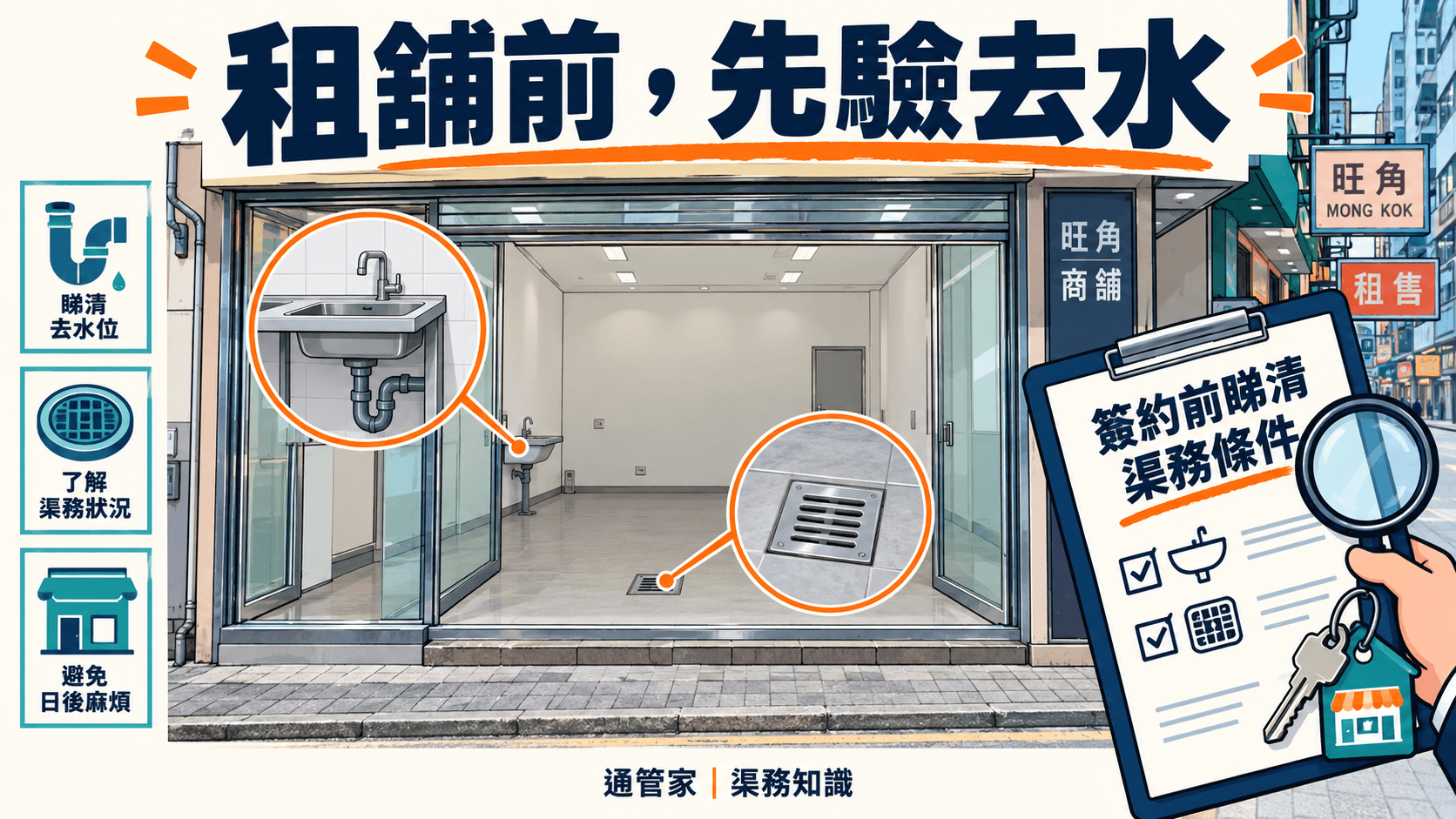
Running a tap briefly during a viewing does not prove that a shop's drainage will suit your new business. Before leasing, establish the intended use, drainage routes, condition and outstanding work. Discuss the findings with the landlord, fit-out team and relevant professionals. This checklist helps organise evidence; it does not replace lease advice, design or licensing approval.
Food businesses, beauty premises, laundries and ordinary retail shops have different equipment and drainage loads. List the proposed sinks, basins, washing machines, dishwashers, floor drains and other equipment, together with peak operating periods and cleaning methods. A system that suited the previous tenant may not suit your layout.
For food premises, read the FEHD Quick Reference Guide and have the premises, plans and licensing requirements checked by appropriate professionals. Clearing a drain or conducting a flow test does not establish licensing suitability.
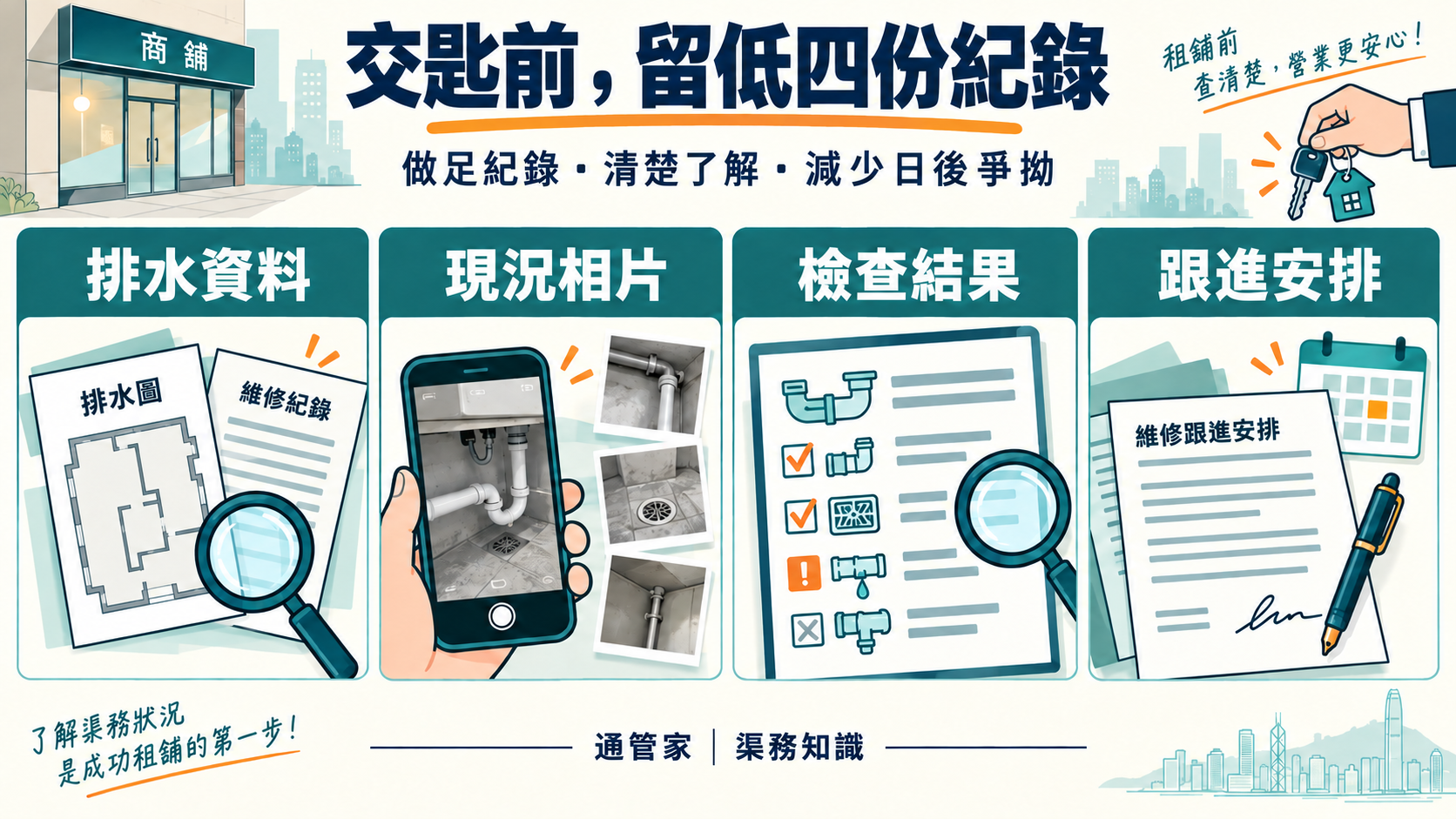
Missing records do not prove a defect, but should be recorded as an information gap. A statement that the previous tenant never complained is not an inspection report.
Odour does not necessarily mean a broken pipe, and a stain may reflect an old incident. Record the location and time before drawing conclusions. Stop testing and notify the responsible person if there is backflow, ongoing leakage or an electrical hazard.
With landlord and management permission, suitable personnel should agree the fixtures, operating conditions, observation points and stopping criteria. A short flow test reflects only those conditions. It does not reproduce peak business demand, severe rain or long-term operation.
Where several appliances discharge together, have their combined demand assessed professionally. Do not attempt an extreme test by opening every tap fully. Camera inspection may help examine concealed sections, but its report must identify uninspected areas and obscured views.
Describe facts such as slow drainage during a specified test or visible dripping at a cabinet connection. Include photographs, date and conditions without assuming the complete cause.
Examples include the final discharge destination, shared pipe condition, sealed connections or equipment capacity. Identify who will investigate, when a response is needed and whether the answer affects fit-out decisions.
Separate cleaning, pipe replacement, alterations, equipment repairs and reinstatement into defined tasks. Responsibility between landlord and tenant requires the relevant documents and professional advice; a pipe being inside the shop does not settle that question.
Do not assume an outlet outside the entrance is a wastewater disposal point. See stormwater and foul drainage identification and, for appliance issues, dishwasher and shared-drain checks.
Identify the pipe section, method, access limits, change-approval process, waste handling, reinstatement, tests and deliverables. Concealed pipes that cannot yet be assessed may be marked provisional or unresolved, with clear triggers for further investigation. The Consumer Council's repair-service complaint guidance also stresses clarity about the agreed work.
At handover, retain original photographs, drawing versions, equipment lists, test findings, completed and outstanding tasks, and agreed follow-up responsibilities. Instead of simply writing drainage normal, record which outlet was tested, when, how and what the test did not cover.
We intend to use the shop for ____, with equipment ____. Existing outlets are ____, and observed abnormalities are ____. Please confirm discharge routes, accessible inspection scope, recommended tests, missing information and matters needing specialist assessment. Please include location photographs, test conditions, limitations and separately defined work items.
No. The use, layout and application circumstances may differ and need verification.
Unblocking is not a complete condition assessment and does not establish that new equipment is suitable.
Decide according to the question being investigated and access. Not every section can be filmed completely.
That fact alone does not determine the decision. Assess the information gap, further investigation and effects on your plans.
No. It describes the inspected scope under the recorded conditions and should state its limitations.
Provide the proposed use, equipment list and site photographs to establish an appropriate inspection and reporting scope. Send the district and incident records through the PipeButler contact page and discuss the available drainage service scope. Appliance internals, electrical work, specialist design and statutory approvals require the appropriate professionals.
FEHD: premises selection guide; FEHD: layout plans; Consumer Council: repair-service disputes. Prepared in September 2026. Confirm applicable requirements with the relevant departments and advisers.