
Loading page…
Loading page…
Repeated outdoor blockages need evidence before root removal is recommended. Compare camera inspection, clearing, local repairs, lining and pipe replacement.
WhatsApp with the problem and district, and we will confirm available timing.
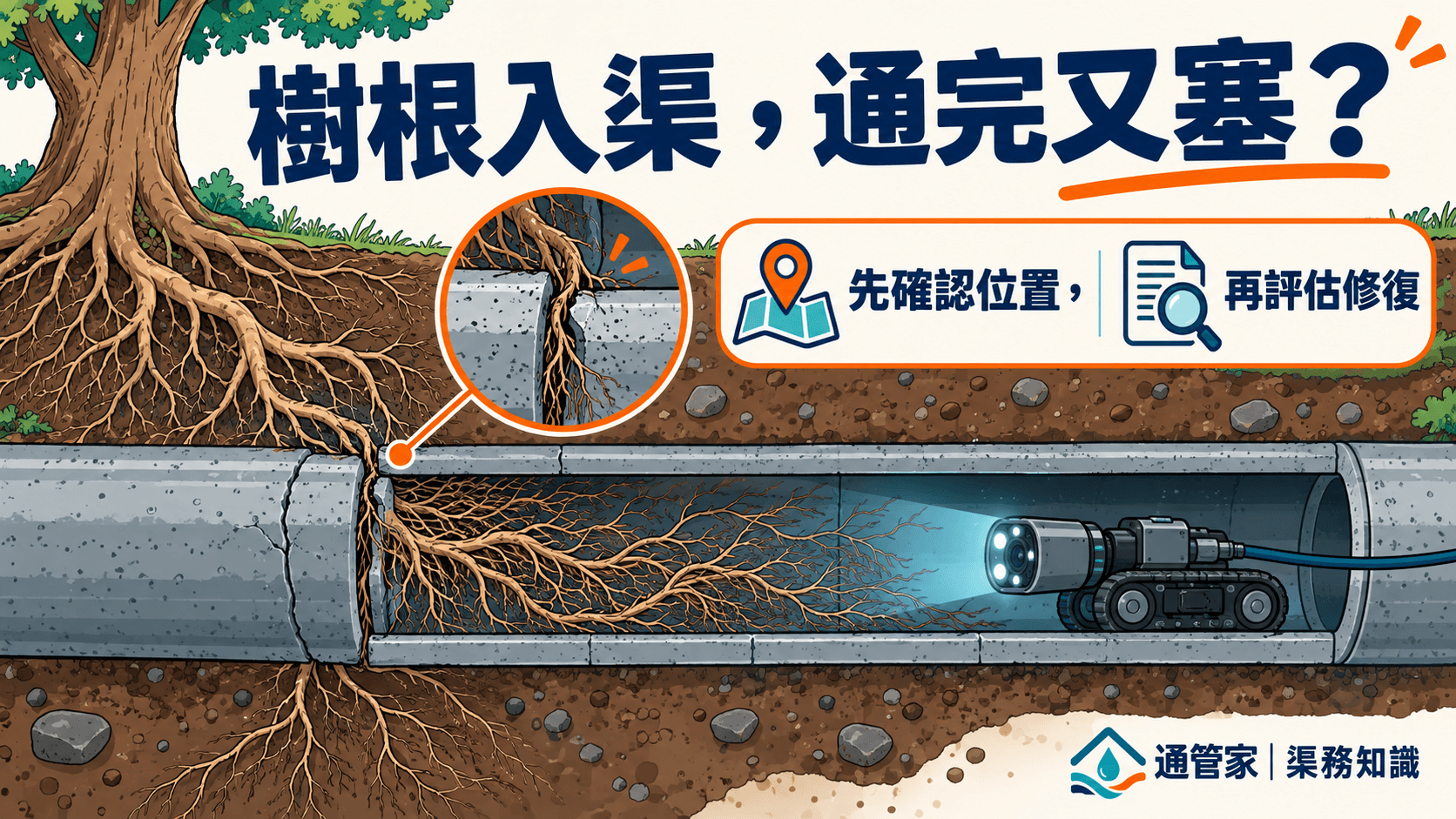
An outdoor drain that blocks again soon after clearing, with trees nearby, raises suspicion of root intrusion but does not confirm it. Silt, grease, foreign objects, displaced joints and damaged pipes can also cause recurring blockages. Record symptoms, establish the affected section, obtain interpretable camera evidence, then assess restoring flow separately from repairing defects.
Roots can enter through cracks, damage or defective joints and gradually restrict the pipe. Water Corporation's guidance on trees and underground services explains this risk. Its Australian species and planting-distance recommendations should not simply be transferred to Hong Kong. The local relationship between trees, drainage routes, materials and visible defects still needs investigation.
A root mass does not mean the entire drain needs replacement or that removing a nearby tree will repair every defect. Clearing the obstruction, repairing the entry point and managing a tree are separate tasks that may require different specialists and permissions.
No single observation confirms the cause. Backflow only during heavy rain may relate to stormwater loading or downstream conditions. Nearby trees alone do not justify root-cutting work.
A useful report identifies the access point, direction, inspected length and locations of suspected roots or defects, with retained footage. Ask where measured distances begin, whether surface locating is separate, and whether standing water, silt or bends obstructed the view.
A camera that cannot pass does not prove the uninspected section is damaged. Roots may hide the pipe wall behind them. Suitable clearing may first be needed to restore visibility, followed by reinspection. See the CCTV drain inspection guide for the general process; this article focuses on decisions after suspected root intrusion.
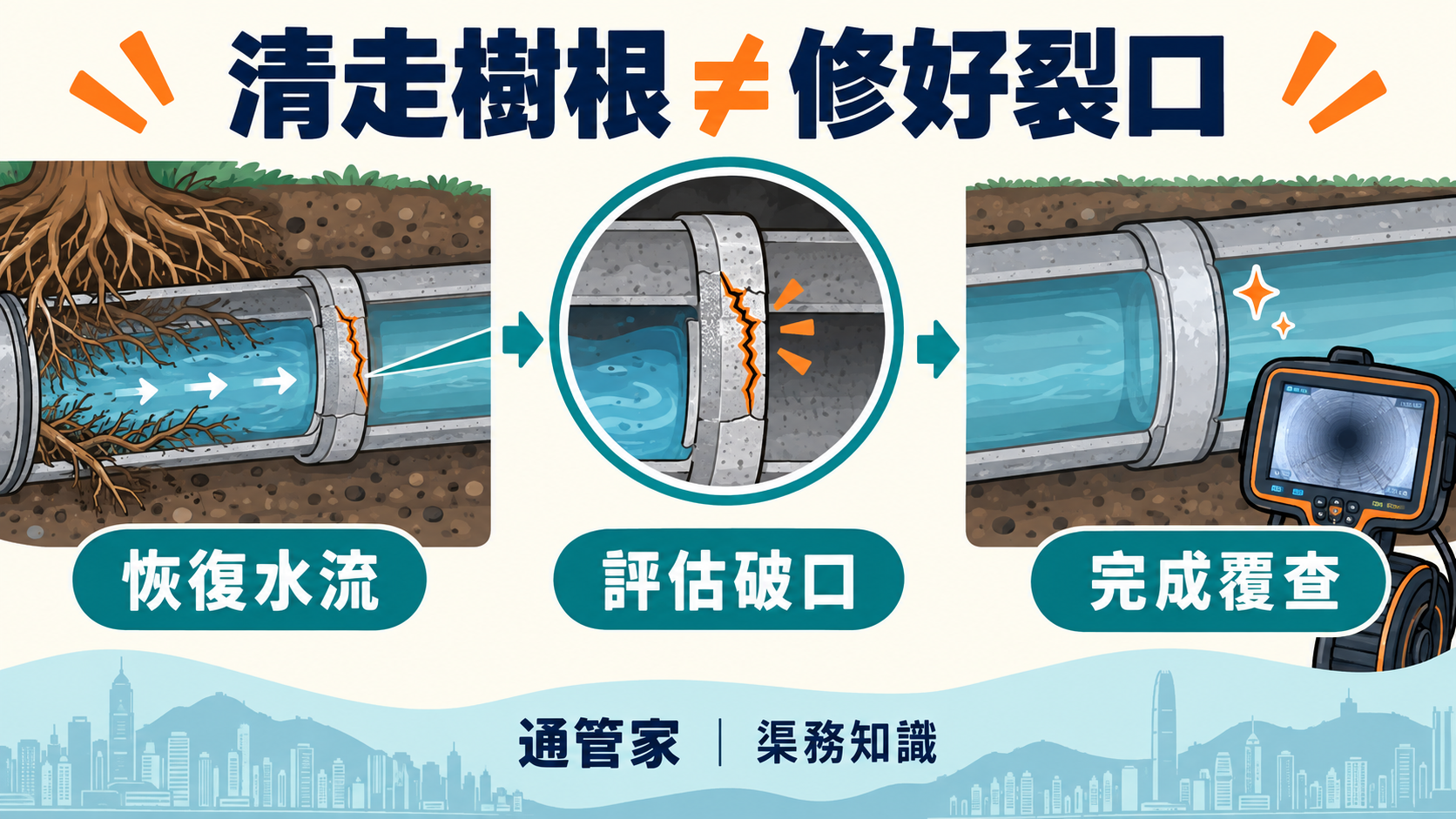
This removes the obstruction and restores flow and visibility. Tools must suit the material, diameter, access and condition. If an entry defect remains, the problem can recur. The work description should not promise a permanent cure without specifying a repair.
A concentrated defect that can be accessed safely may suit local repair. Define opening or excavation locations, underground-service checks, waste handling, reinstatement and testing as part of the scope.
Suitability depends on pipe geometry, integrity, branches, preparatory cleaning and system requirements. Ask how suitability is established, how branches are handled, how the internal diameter changes and how completion is verified. Lining cannot be assumed suitable for every collapse or severely displaced joint.
Compare wider replacement where defects are widespread or other methods are unsuitable. Define lengths, connections, supports and reinstatement, accounting for ownership and access. The pipe replacement work-planning checklist provides further guidance.
Chemicals do not repair cracks or replace a pipe-condition assessment. Do not pour gardening chemicals or strong acids or alkalis into drains. Root cutting, tree stability, slopes and public areas require the appropriate management and professional assessment so drainage work does not create another hazard.
Retain before-and-after footage, pipe references, test conditions and unresolved defects. Set reinspection timing according to site risk, treatment and professional advice; there is no universal interval. If the work was emergency clearing only, record the follow-up assessment as outstanding.
No. The source needs assessment using drainage routes, site information and appropriate expertise.
Restored flow describes that test. Cracks, displacement or defective joints may remain.
No. Compare defect extent, access and method suitability.
Not completely where sections remain unviewed. The report must state inspection limits.
No. Warranty terms must relate to a defined scope and conditions.
For repeated outdoor blockages, provide earlier records to discuss internal inspection and locating. Send the district and photographs through the PipeButler contact page and confirm the available service scope. Specialist design, electrical work and statutory procedures require the relevant professionals.
Water Corporation: trees and pipes; Buildings Department: drainage maintenance. Prepared in September 2026.