
Loading page…
Loading page…
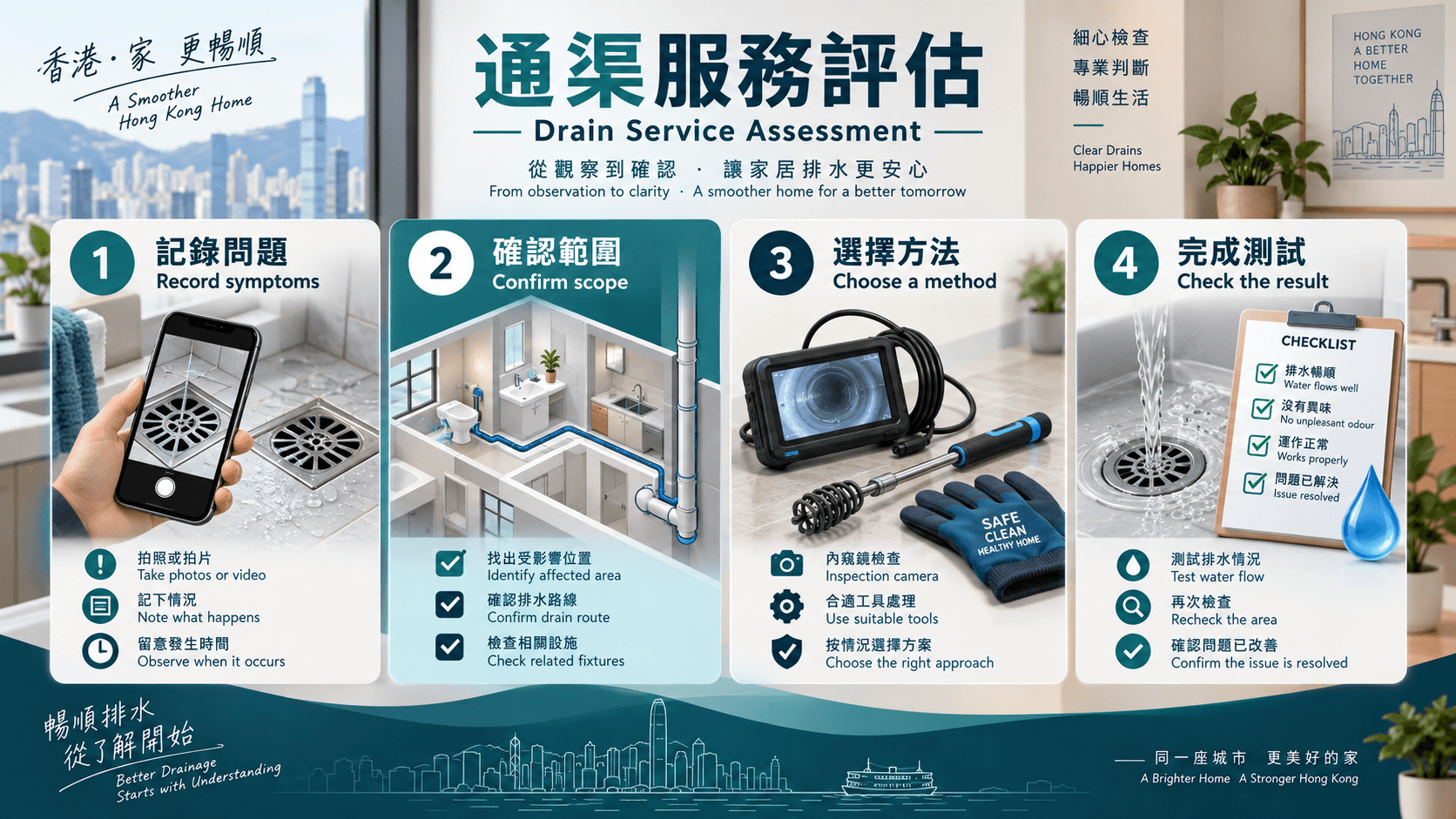
Prepare useful photos, establish the affected drainage section and agree tools, access, completion checks and follow-up before work begins.
WhatsApp with the problem and district, and we will confirm available timing.
Drainage work in Hong Kong varies with the blockage location, severity, pipe depth, safe access, equipment, reporting needs and urgency. A simple basin-trap restriction and a deep shared-drain fault require different preparation and methods. The first task is to establish what work is actually needed.
Ask four practical questions: What is included? What is excluded? What findings would change the scope? Will further work wait for my approval? Clear answers help prevent misunderstandings when the technician arrives.
This guide explains how common drainage situations affect the work plan and lists eight questions to settle before a visit. Take photos and videos, organise the details below and contact PipeButler to discuss the assessment.
Domestic unblocking, jetting, chamber desilting, CCTV and commercial grease-trap work are different services. A brief description cannot establish whether the site is readily accessible, needs specialist tools or involves shared drainage. Confirm the actual conditions and boundaries of the proposed work.
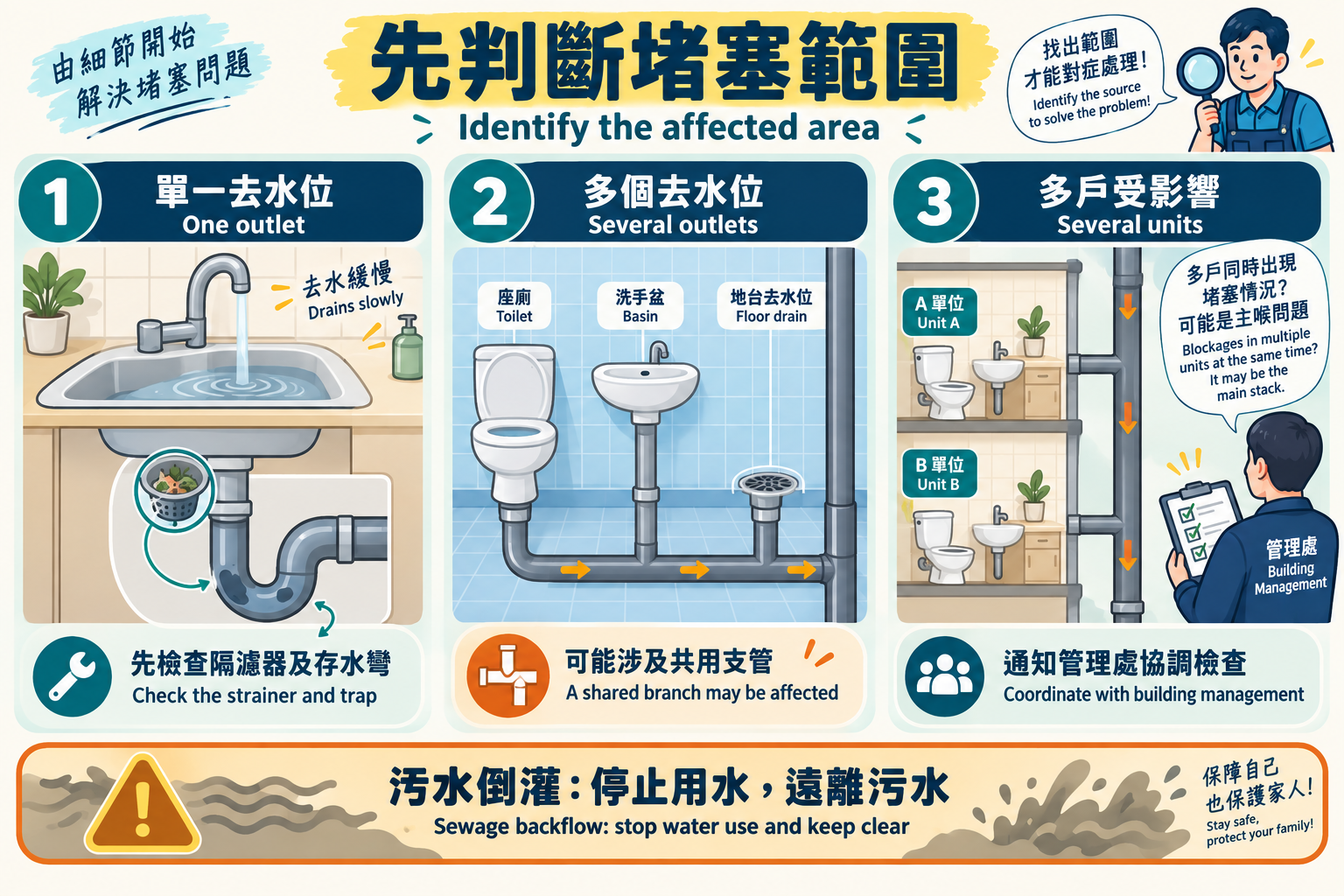
Basins, kitchen sinks, floor drains, toilets, balconies, chambers, shop channels and building branches require different tools and precautions. A restriction near a basin trap is often easier to reach than a concealed or external pipe. Toilet work also involves ceramic fittings, traps and backflow risks.
Slow drainage and complete blockage are not equivalent. Hair, soap or grease near an outlet may allow some flow. No flow, backflow, odour or several affected outlets may indicate deeper restrictions, shared pipes, full chambers or defects.
Hand tools, plungers or mechanical equipment may suit a simple restriction. Thick grease, longer runs, recurrence and high-volume commercial drainage may require jetting, suitable water supply, CCTV or desilting equipment, with additional preparation and personnel.
Some outlets open readily; others are beneath cupboards, behind ceilings, in narrow lanes or stairs, under floors or inside chambers. Dismantling traps, moving equipment and working at height or in hazardous locations require planning.
A planned daytime visit with clear images differs from an urgent night, holiday or storm call. Confirm actual availability, arrival arrangements and any site restrictions before dispatch rather than assuming every situation can be handled immediately.
Restoring flow should be followed by suitable testing, checks for backflow, removal of visible work debris and an explanation of remaining risks. Establish what testing, cleaning and follow-up are included.
Public service descriptions are useful introductions, but cannot replace assessment of the pipe's depth, diameter, tools, access and condition. Compare the actual tasks rather than treating all drainage visits as identical.
Send site images through PipeButler's contact page. Confirm the final service scope before work starts.
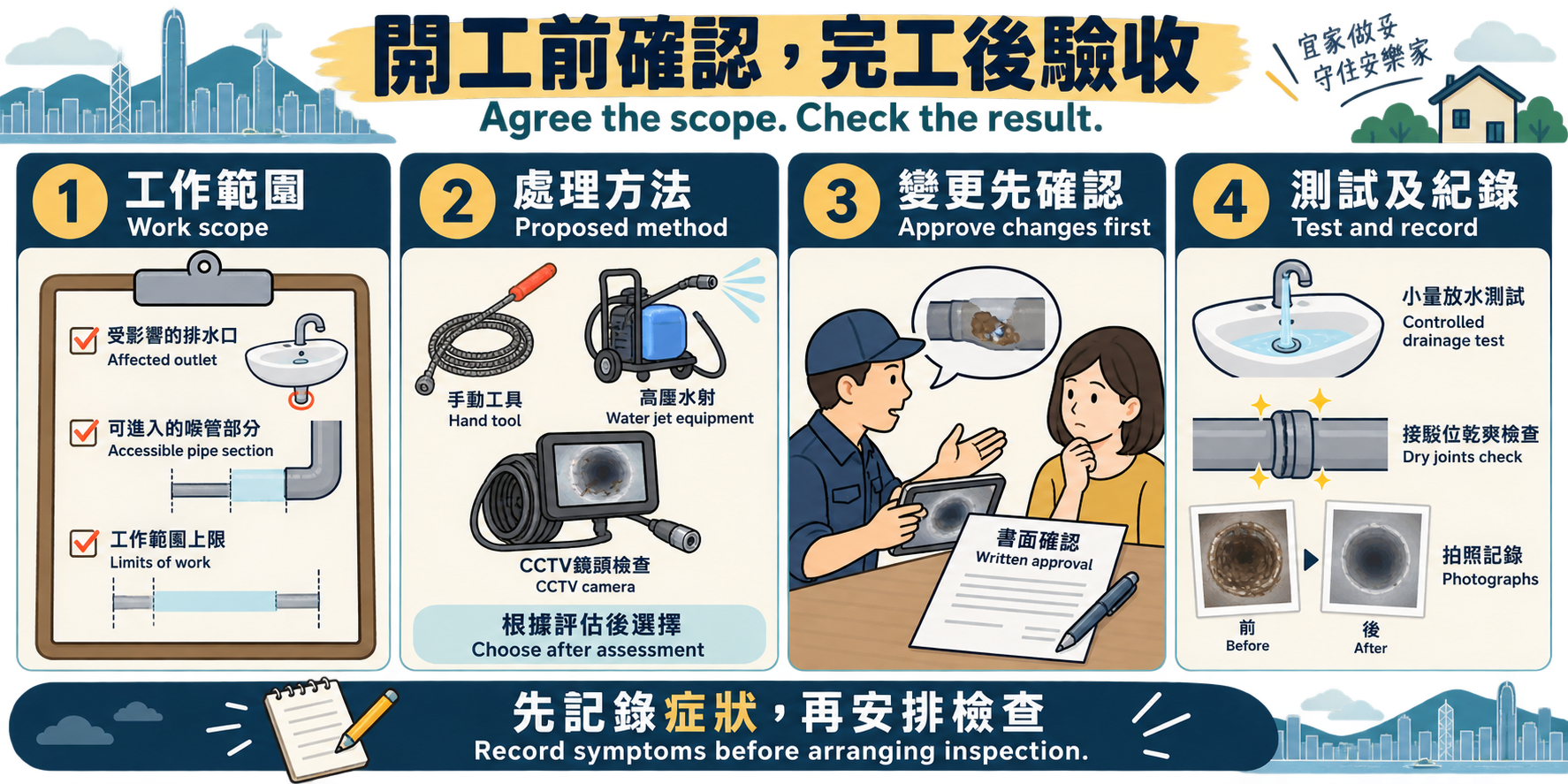
Clarify whether the booking is for assessment only or includes an agreed clearing attempt. Establish what happens if the inspection identifies a different problem or you choose not to proceed.
A reported toilet problem may involve the pan, floor drain, bathroom branch or shared building pipe. Name the section being addressed and reconfirm if the actual source lies elsewhere.
Basins, kitchen traps and some floor drains may need fittings removed. Agree who will refit them, check seals and joints, and handle any necessary replacement components.
If jetting or CCTV is proposed, ask whether recurrence, length, commercial grease or suspected damage justifies it. Specialist tools should answer the particular problem rather than be automatic additions.
Confirm night or holiday availability, remote access, parking, waiting arrangements and building entry rules before the visit. Urgent attendance still needs safe access and appropriate equipment.
Define a successful outcome. Briefly falling water may not establish normal drainage. Agree the next steps if an object, collapse, public drain or separate repair prevents completion, and what findings will be documented.
Keep a written record, such as WhatsApp confirmation, of the scope, exclusions and circumstances requiring a revised plan. Obtain agreement before proceeding beyond it.
After clearing, test normal flow and check for backflow. With recurring faults, ask whether further cleaning, CCTV or management action is recommended and what follow-up is available.
A brief message saying it is blocked does not establish tools or access. Send:
These details help distinguish ordinary unblocking, trap work, jetting, desilting and a shared-system investigation.
A trapped object, deeper restriction, dismantling need, unexpected sediment or specialist equipment requirement can legitimately change the plan. The important points are explaining the finding, presenting the options and obtaining approval before additional work.
These points call for clarification rather than assumptions about the contractor. Agree the reasons, boundaries and options before continuing.
Jetting can suit grease-coated walls, long deposits, commercial kitchens, recurring restrictions and external drains. CCTV helps investigate repeat faults, suspected cracks, collapse, incorrect connections, roots or construction debris, and can provide evidence for owners or management.
Hair near a basin outlet or a simple trap blockage may not need jetting. Conversely, repeated clearance every few weeks can leave wall deposits untouched and justify a different method.
PipeButler first reviews photos, videos and location details, then identifies the likely need for unblocking, cleaning, chamber work or another assessment. The scope, exclusions and matters requiring on-site confirmation should be clear.
If the site differs materially from the initial information—for example, a shared pipe, object, collapse, heavy sediment or additional equipment is involved—the options should be explained and agreed before continuing.
Contact PipeButler with the site details. Mention rising water, backflow, odour or an unusable toilet so urgency and access can be assessed.
Some straightforward tasks can be assessed from clear images and details. Deep restrictions, chambers, commercial kitchens, objects and shared pipes may require a site inspection before the final scope is established.
Check the applicable conditions, initial inspection, included tools, access arrangements, exclusions and what happens if clearing is unsuccessful. Specific written scope is more useful than an unsupported headline claim.
It involves specialist equipment, access, water control and condition assessment. It is selected for grease, longer runs, recurrence and commercial drainage, aiming to remove deposits rather than merely open a passage.
Arrangements vary. Confirm availability, dispatch, building access and site requirements before attendance.
Not necessarily. Deep grease, poor falls, old pipes, objects, chambers, grease traps or shared pipes may remain. Consider cleaning, CCTV or management follow-up rather than repeating local clearing.
A single private outlet can usually be assessed locally. Several units or outlets, common-area chambers and external shared pipes warrant simultaneous management notification.
WhatsApp PipeButler on 5340 0748 with the location, video, building background, urgency and chemical-use history. Agree the appropriate unblocking, cleaning or investigation scope before work begins.