
Loading page…
Loading page…
A trap water seal blocks drain gases. Learn why seals dry out or fail, how to maintain little-used drains and when recurring smells need investigation.
WhatsApp with the problem and district, and we will confirm available timing.
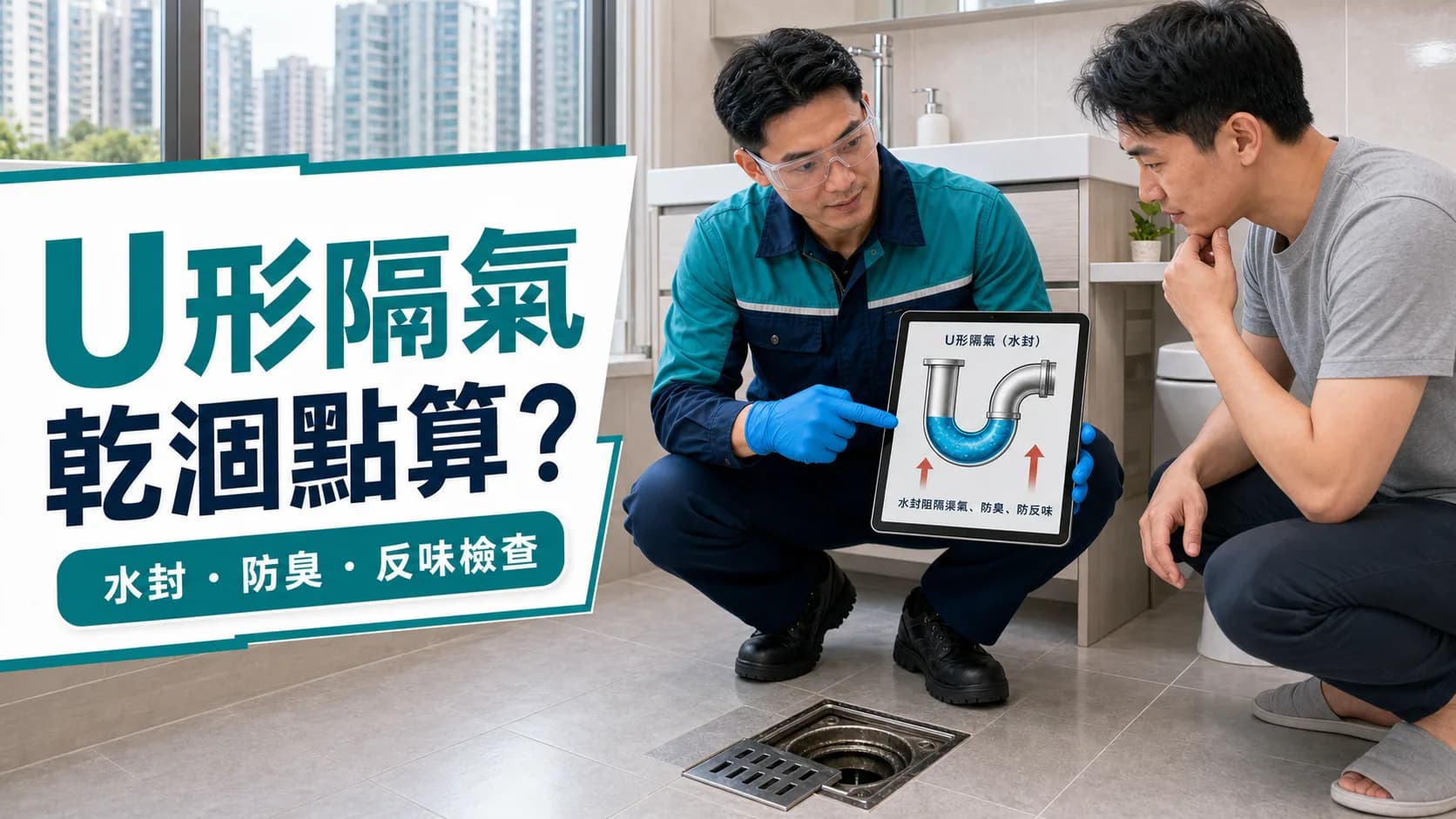
A U-trap is more than a curved pipe: its key feature is the water seal. A small amount of retained water blocks drain gases from entering the room. Evaporation, siphonage, deposits or pipe defects can make even a freshly cleaned bathroom smell.
For a little-used floor drain, first add about half a litre of clean water to replenish its seal, then remove accessible hair and dirt. If odour returns within days, several outlets smell or there are cracks or leaks, arrange investigation rather than relying on fragrance or drain cleaner.
The Chinese source refers to Buildings Department healthy-drainage information on effective seals at toilets, baths, showers, floor drains and sinks, and anti-syphonage arrangements that help prevent seal loss.
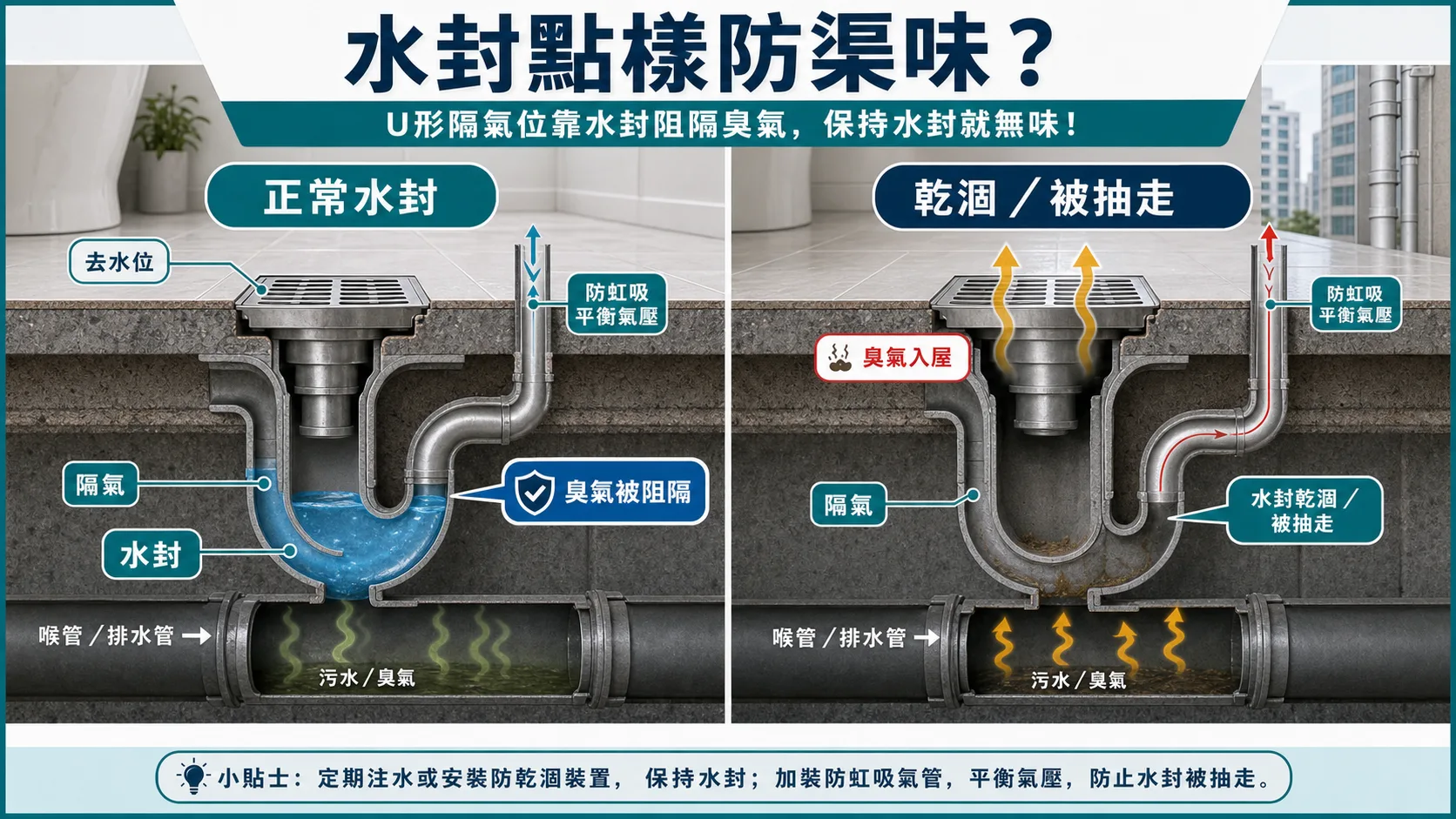
U-traps, P-traps and bottle traps differ in shape but share the purpose of retaining water as a barrier against gases and insects. The trap is the fitting; the water seal is the barrier it holds.
Bathroom floor drains, basins, baths, showers and kitchen sinks need an appropriate trapping arrangement. Missing, incorrectly fitted, removed, dry or siphoned traps can allow odour through.
Regularly used basins and baths replenish their traps, but a floor drain may receive little water. Travel, unused bathrooms, dry conditions and prolonged extraction can contribute to evaporation. The Buildings Department advice cited in the source is to add about half a litre of clean water to each floor drain at least weekly.
Hair, soap, skin debris, grease and sludge can collect near the outlet or inside the trap. The water may still block gases while the deposits themselves smell. Topping up only gives temporary relief if the material remains.
Shared high-rise drainage experiences pressure changes during heavy discharge. Removed, altered or ineffective anti-syphonage pipes or valves may allow seals to be drawn out. One top-up will not correct the underlying arrangement.
Moving basins, altering floors, removing false ceilings or replacing fixtures can disrupt seal depth, gradients, ventilation and connections. Do not remove anti-syphonage pipes or permanently seal outlets yourself. Appropriate professionals should assess alterations.
Mustiness, damp wall bases, ceiling seepage, wastewater marks or several smelly outlets suggest more than evaporation. Cracks, loose joints, deep restrictions and shared faults require investigation.
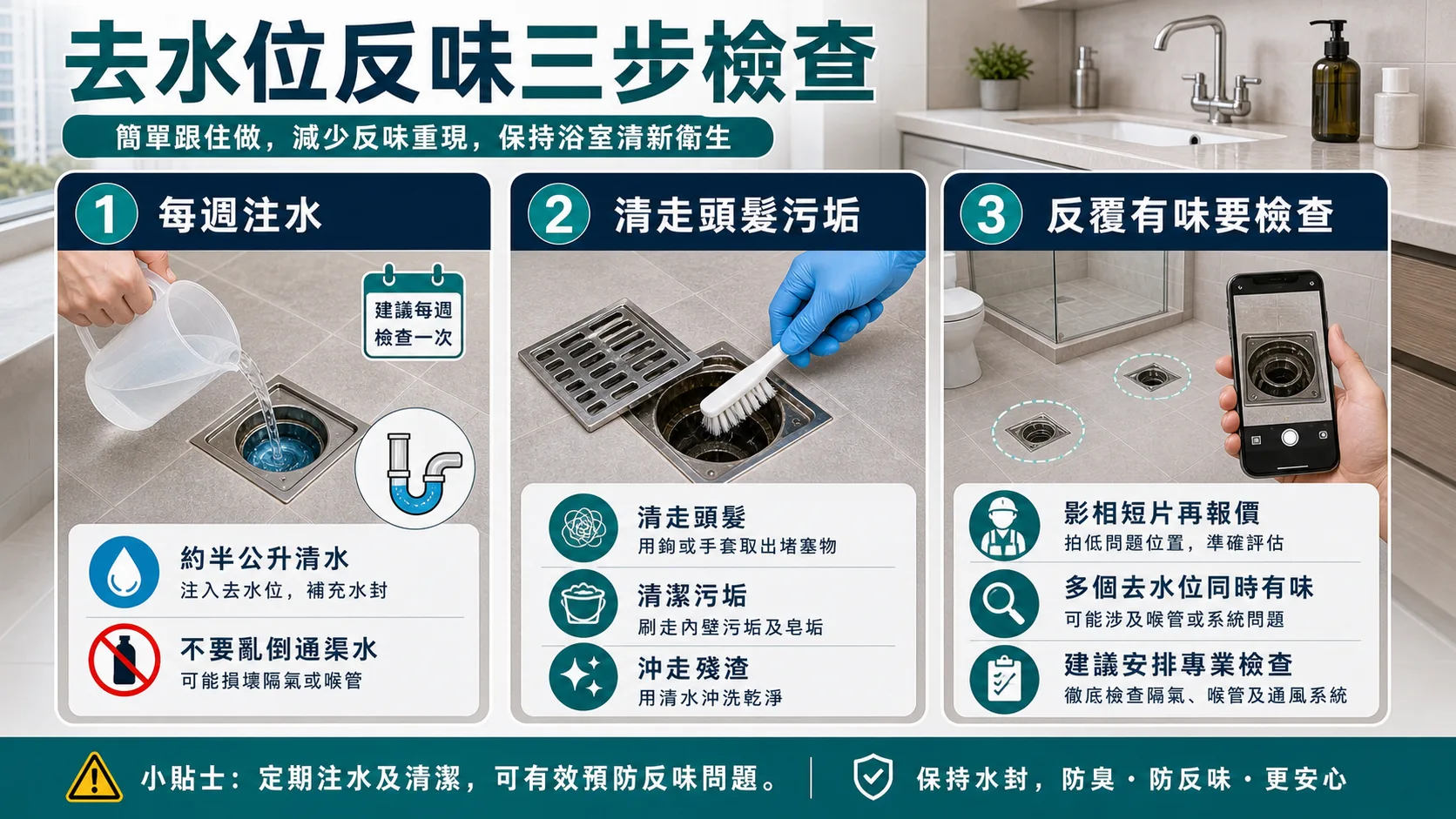
Clean water is the appropriate first step for evaporation. Accessible dirt needs removal, while ventilation faults, cracks and deeper restrictions need diagnosis. Chemicals do not repair structural or pressure problems.
Permanently sealing a floor drain can remove an important drainage route during leaks or overflows while only concealing the smell. Any temporary odour-control cover must retain drainage function, and the cause should still be investigated.
Send photos of floor drains and basin traps, timing, whether it began after travel, the number of affected outlets and any slow flow or leakage. These distinguish evaporation, deposits, blockage, ventilation and pipe faults.
On site, checks may cover the outlet, seal, trap, visible pipes, flow and smell source. A dry seal or accessible dirt may be straightforward; suspected cracks, deep restrictions or shared-system issues can require further inspection, cleaning or management coordination.
Read bathroom drain odour for a wider overview. If weekly replenishment has not helped, WhatsApp PipeButler on 5340 0748 with images for assessment.
U-trap or P-trap, depending on the shape and connection. Bottle traps are another design using the same water-seal principle.
Little-used floor drains deserve particular attention. The source cites Buildings Department advice to add about half a litre to each floor drain at least weekly. Frequently used sinks and baths are less likely to dry, but still need cleaning.
Possible causes include deposits, leaking joints or traps, shallow seals, failed ventilation, deeper blockage or a shared drain. Repeated symptoms need more than topping up.
They are not the first step. Use clean water for evaporation, remove deposits and investigate pipe or pressure faults. Never mix bleach, acidic or alkaline cleaners and drain chemicals.
This is not recommended because it affects drainage and conceals the problem. Temporary measures must preserve drainage and be followed by diagnosis.
Pressure changes may deplete the seal when pipes or valves are removed, blocked, altered or defective. This generally warrants professional inspection.
If odour persists after replenishment and cleaning, or several outlets smell, send PipeButler photos and videos to discuss odour investigation, unblocking or pipe inspection.