
Loading page…
Loading page…
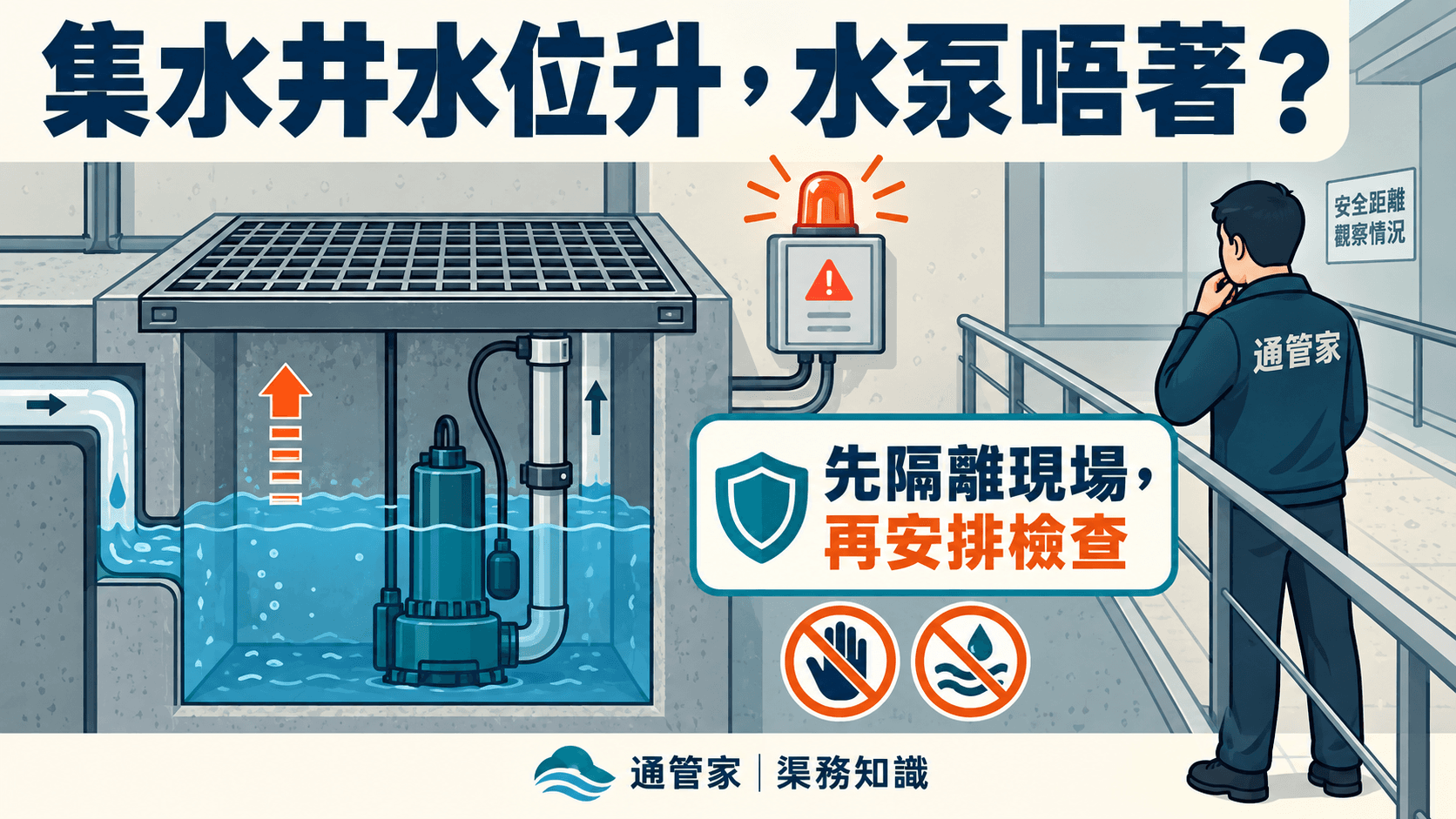
Rising sump water needs an immediate safety response. Record alarms, pump sounds and water-level changes, then coordinate pump, electrical and drainage specialists.
WhatsApp with the problem and district, and we will confirm available timing.
If sump water rises and the pump does not start, address personal and electrical safety before investigating drainage. Do not enter the sump, move a float by hand, open a control box or stand in water to reset a switch. In basements, car parks, basement shops and pump rooms, notify management or the electrical and mechanical maintenance contractor and isolate the wet area.
This guide covers information that managers can record from a dry, safe position and how to arrange professional checks. It is not a pump-dismantling or electrical-repair tutorial. Contact emergency services if anyone is trapped, electric shock is suspected or there is immediate danger.
Drainage from a low area may collect in a sump before being pumped along a designated discharge route. Level sensing, controls, the pump, discharge pipe and valves work together. A fault in any part can leave the water level high.
Stormwater, general drainage and sewage systems may have different equipment requirements. Check drawings, labels and maintenance records. Do not call every underground chamber a sewage chamber or discharge pumped water into a nearby stormwater drain without establishing suitability.
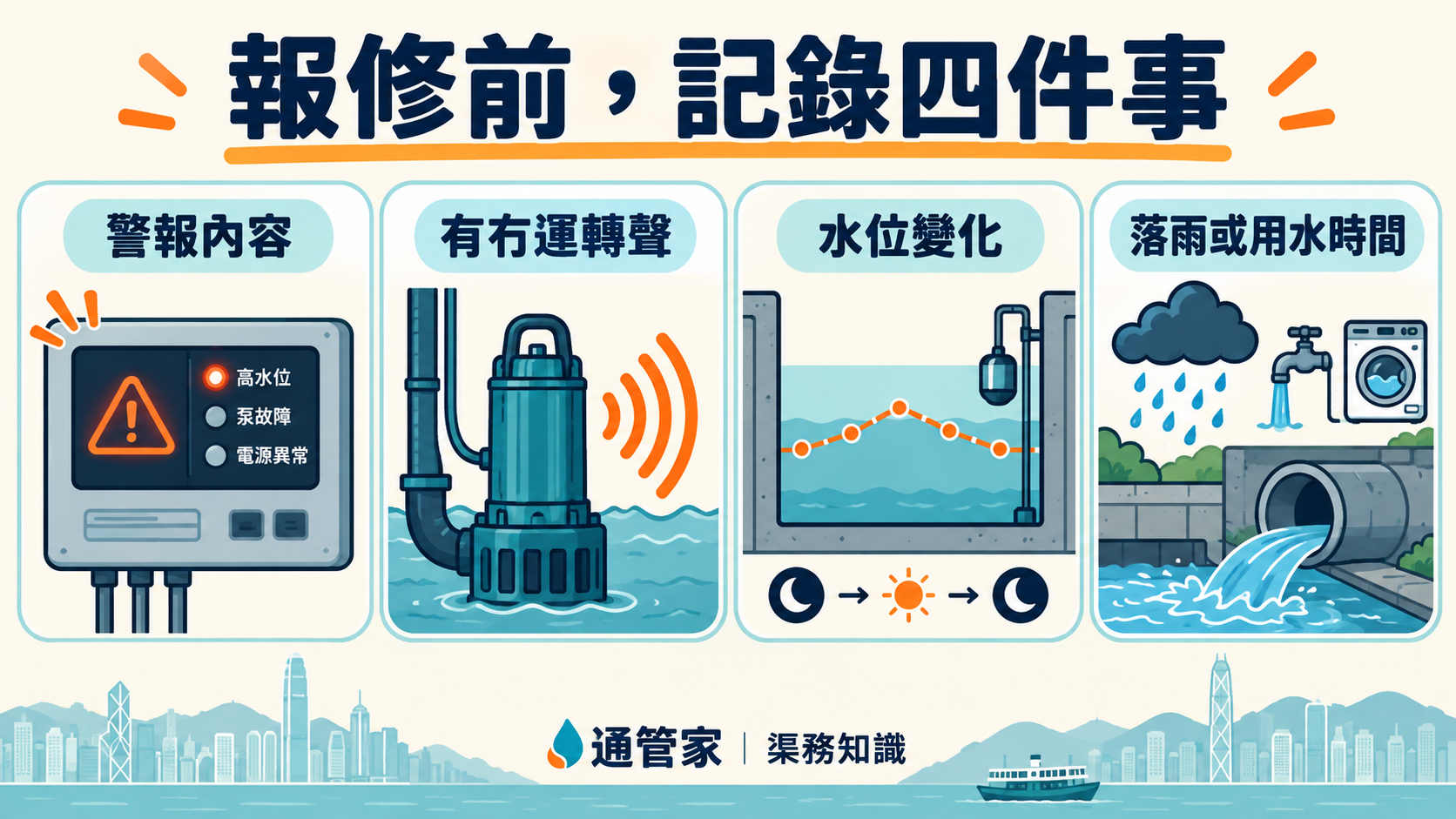
Possible causes involve supply, controls, level sensing or the equipment itself. From a safe position, record alarms, displayed status and any power failure. Do not open the box, test live circuits or repeatedly reset a tripped device. Grundfos's level-switch guidance identifies possible float obstruction, dirt, settings and component faults; replacement of the whole pump is not the only possibility.
A restricted discharge path, ineffective pumping or continued excessive inflow may need investigation. Motor noise does not prove effective discharge. Ask the contractor to check the pump, pipe and valves rather than only removing surface debris.
Record the frequency, whether it continues after water use stops, and any backflow or alarms. Causes may involve controls, level arrangements, return flow or other system conditions. Adjusting the float without diagnosis is not a general solution.
Assess inflow, rainwater routes, upstream debris, standby arrangements and downstream conditions together. The pump may not itself be defective. Do not install a larger pump without evaluating compatibility with the system.
Do not open enclosed chamber covers or enter a sump without the required professional arrangements. Do not approach rising water to film it. Underground and sewage facilities can present additional hazards requiring site assessment.
Separate diagnosis, cleaning, component or pump replacement, discharge-pipe work, controls and electrical work. Before replacing equipment, ask for the fault evidence and confirmation of system suitability. Selection involves more than comparing power ratings.
For related pipe blockages, see desilting versus unblocking. If inlet or outlet routes remain uncertain, list them as unresolved so separate contractors do not each finish a small task without anyone testing the complete system.
The contractor should check start and stop operation, falling water level, visible connections, alarms and applicable standby arrangements according to the equipment and site procedures. Record test conditions and limitations. Retain readings, photographs, completed work and outstanding defects. One successful test does not establish performance under every storm load.
Do not operate it yourself in an unfamiliar or wet electrical environment. Management and maintenance personnel should follow the model-specific procedure.
No. Effective pumping, the discharge route and inflow all need checking.
Only if that material contributes to the fault. Controls, equipment and downstream faults need separate attention.
Not without assessment of the system, discharge pipe and operating requirements.
Confirm the case and service scope first. This article does not promise electrical or internal pump repairs; suitable mechanical and electrical personnel should perform those tasks.
If the maintenance contractor suspects silt or debris in the sump or connected drains, provide their findings to agree the cleaning scope and division of responsibilities. Send the district, photographs and fault records through the PipeButler contact page and confirm the available desilting service. Appliance internals, electrical work, design and statutory procedures require the appropriate professionals.
Grundfos: level-switch problems; Grundfos: lifting-station troubleshooting. Prepared in September 2026. Model-specific manufacturer instructions and site safety procedures take precedence.