

Loading page…
Loading page…
Understand when a backwater valve may help, why it cannot replace source investigation, and what to check before installation and during maintenance.
WhatsApp with the problem and district, and we will confirm available timing.
A sewage check valve, drain non-return valve or backwater valve can sound like a permanent solution. In a suitable location it can reduce the chance of reverse flow entering a property, but it cannot simply be added to any outlet and does not replace unblocking, desilting, CCTV or shared-pipe repairs.
If sewage is already rising through a floor drain, toilet, bath, sink or manhole, stop water use, record video and notify management or the owner. Establish whether the source is an internal branch, shared pipe, manhole, building main, village-house external drain or public system. A check valve is one possible preventive measure, not a tool for immediately draining an active incident.
This guide covers lower-floor homes, older buildings, estate podiums, village houses and ground-floor shops: when valves may help, their limits, installation checks and avoiding a new blockage point.
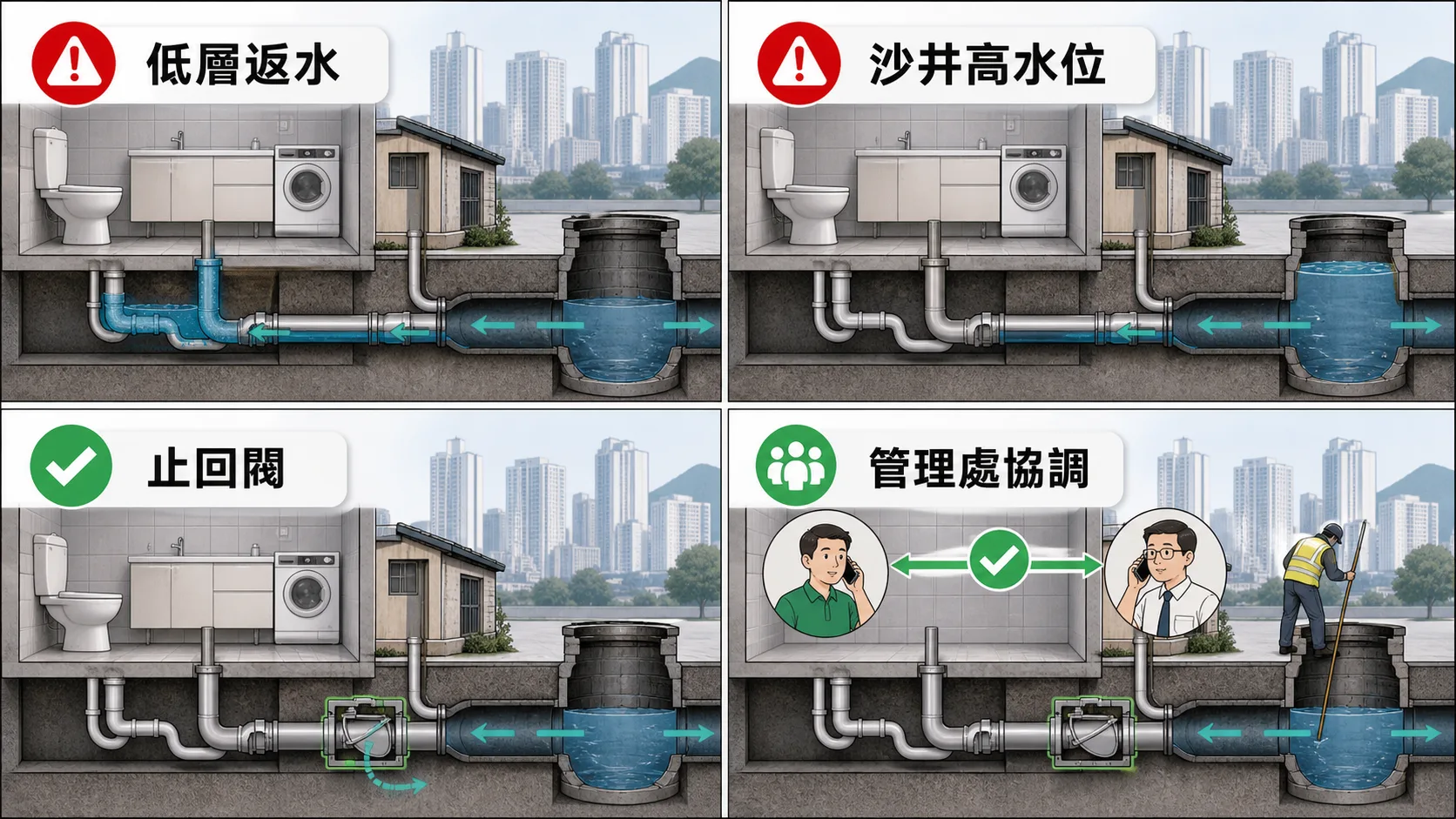
It permits normal-direction discharge and uses a flap or gate that attempts to close when water pushes backwards, reducing reverse flow. Drainage versions may be called non-return, backflow or backwater valves.
A drainage system is not one straight pipe. Hong Kong premises can connect floor outlets, toilets, basins, kitchens, washing machines, rainwater routes, manholes, shared branches, building mains and public drains. A valve affects only its own section. It cannot resolve downstream blockage, excessive water levels or incorrect connections throughout the system.
A floor outlet, village-house external branch or low-level drain with a documented reverse-flow problem may be considered if there is adequate installation, inspection and cleaning access. A technician must assess direction, diameter, fall and maintenance space.
Planning during bathroom, kitchen or external-drain alterations is preferable to forcing in a device later. Correct orientation, level, access and an opening for cleaning are necessary. Otherwise grease, hair, wipes, grit or stones can jam it and slow normal drainage.
A valve is better considered a second line of protection. Keeping drains clear remains primary, through manhole desilting, pipe cleaning, appropriate CCTV inspection and keeping wipes, cloth, grease and renovation sediment out.
Rising water, gurgling and smells across the bathroom, toilet, basin, kitchen and laundry suggest a downstream fault. See multiple blocked drains rather than adding a fitting to just one outlet.
High levels indicate possible downstream capacity or flow problems. Blocking one indoor entry route cannot lower the manhole level. Sediment, grease, rubbish or overflow usually require manhole investigation and cleaning before deciding on a valve.
Storms can overwhelm an already restricted system, particularly at lower floors, shops, village houses and podium levels. Public-road or public-drain flooding may require reporting through 1823 or the relevant department as well as management contact. See storm backflow response.
A valve that cannot be opened, cleaned or checked for direction is not a reliable safeguard. Grease, hair, tissue, grit and small objects can prevent the flap closing or opening fully, causing backflow or slow discharge.
Affected residents may assume their own outlet is responsible, but building drainage is shared. If nearby floors, podiums, ground-level units, shops or rear-lane manholes are affected, ask management, the owners' corporation or responsible party to check communal pipes.
Before installation establish where water rises, whether several outlets or units are affected and whether manhole or building-main levels are abnormal. A repeated problem at one private outlet differs from a building-wide or lower-floor shared issue, which requires communal drains and manholes to be addressed first.
Indoor outlets, entrance drains, rear-lane manholes, septic systems and external drainage can interact. A rain-related incident may not be a blockage at one toilet or bathroom outlet.
Leaves, grit, grease and hard objects in an external drain can jam a valve. Inspect the route and assess desilting or jetting before installation. See village-house septic and external drains where septic or foul-water systems are involved.
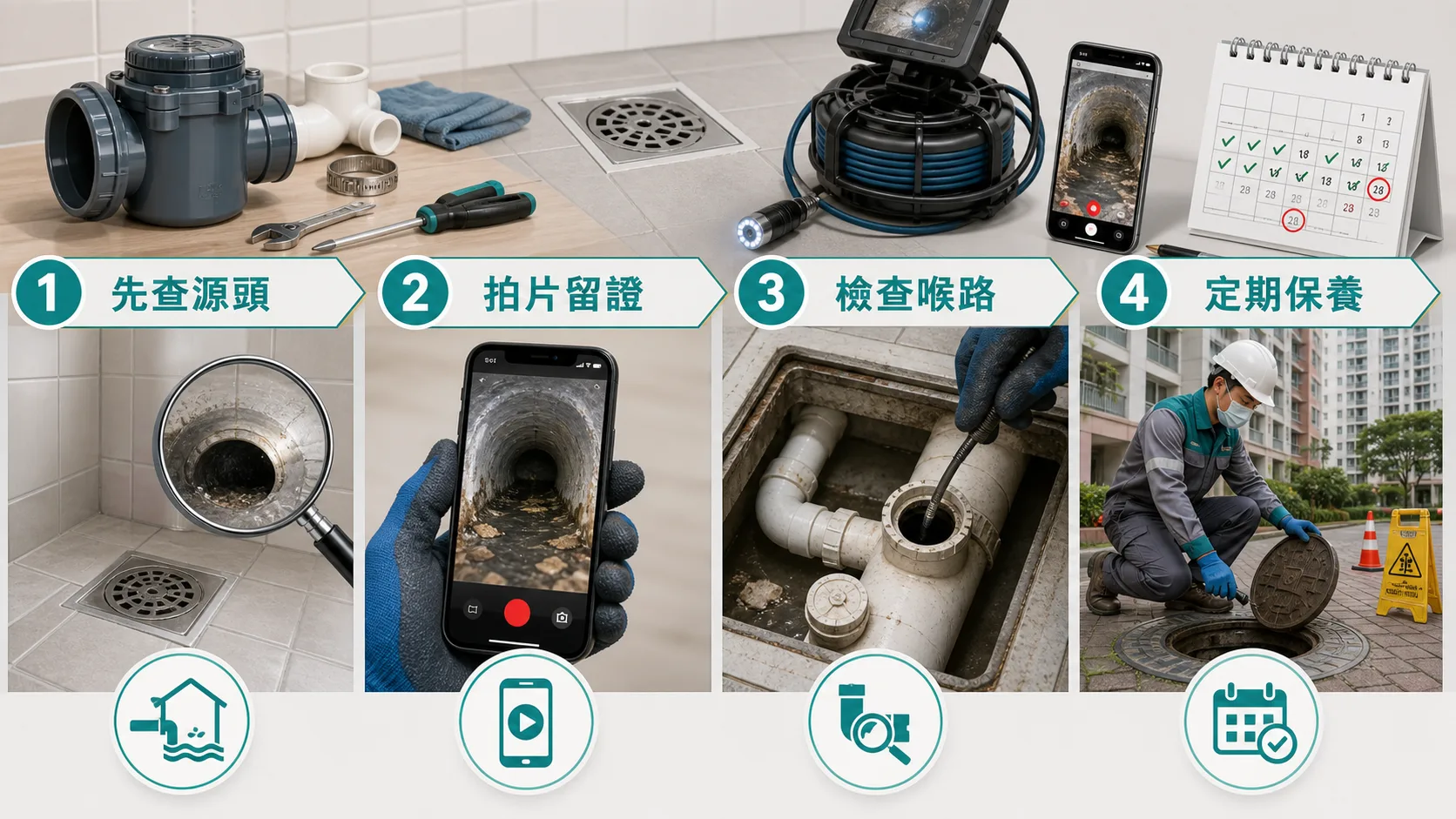
Film the location, flow direction, changing levels, smells, foam, visible manhole level, rainfall relationship and any previously observed reactions at other outlets when fixtures discharge. Use existing observations; do not flush or add water during active backflow merely to obtain footage. This helps distinguish branches, shared pipes, manholes and external drains.
Incorrect orientation or unsuitable placement can worsen routine discharge. Assess diameter, fall, junctions, access points, bends, traps, shared connections and whether the device can later be opened and serviced.
Installing over existing grease, grit, wipes, fabric or rubble hides an unresolved problem. Assess unblocking, jetting, desilting or CCTV first, then decide whether a valve is needed.
Do not alter shared pipes, external stacks, communal manholes or mall and estate drains without management involvement. Retain photographs, video and responses to support inspection, repair and any subsequent claim.
Check periodically that the flap moves freely and is clear of grease, hair, grit and objects. Watch for odours, slow flow, gurgling and unusual levels after rain. Restaurants, salons, shops, village houses and vulnerable lower-floor premises may need more frequent checks than ordinary homes.
Slower flow after installation, repeat blockages, sewage emerging elsewhere or persistently high manhole levels warrant reassessment of the whole route. The cause could be an uncleared downstream drain, unsuitable position, a jammed flap or shared drainage, rather than valve quality alone.
Active backflow or sewage indoors: stop discharge, control contamination and arrange appropriate clearance or desilting, followed by disinfection where needed.
Recurring backflow with an unknown cause: consider CCTV to identify obstructions, cracks, displacement, sediment or incorrect connections.
Rainy-season prevention: inspect manholes and assess cleaning and desilting before evaluating a valve in lower-floor premises, village houses, shops and previously affected sites.
Renovation: integrate suitable prevention, pipe changes and access into pipe installation planning, avoiding later wall or floor removal.
No. It reduces one reverse-flow route only when the pipe arrangement and location are suitable. Full manholes, blocked building mains, public flooding and pressure affecting several outlets still need source treatment.
Do not rely on a generic online fitting. Water seals, traps, diameter, fall, cleaning access and shared-pipe responsibility matter. Incorrect installation can cause slow flow, smells or blockages.
Yes. Flaps, bends and restricted fittings add resistance, especially with grease, hair, grit or wipes. Flow capacity and cleaning access must be considered.
Yes. Shared pipes, manholes, building mains and neighbours may be involved. Video and management records help establish responsibility and arrange shared-area inspection.
Yes, according to conditions. Recurrent restrictions, high manholes, rain-related backflow, slow drains or odours still require pipe and downstream-capacity checks.
If considering a valve, or after backflow in a lower-floor property, village house or shop, WhatsApp PipeButler on 5340 0748 with video, floor, affected outlets, manhole photographs and rain or water-use timing. We can assess whether clearance, desilting, CCTV, cleaning, disinfection or a suitably designed backflow device is appropriate.