
Loading page…
Loading page…
An outdoor drain is not automatically a wastewater disposal point. Learn how to check drawings, trace the purpose of outlets and respond to suspected misconnections.
WhatsApp with the problem and district, and we will confirm available timing.
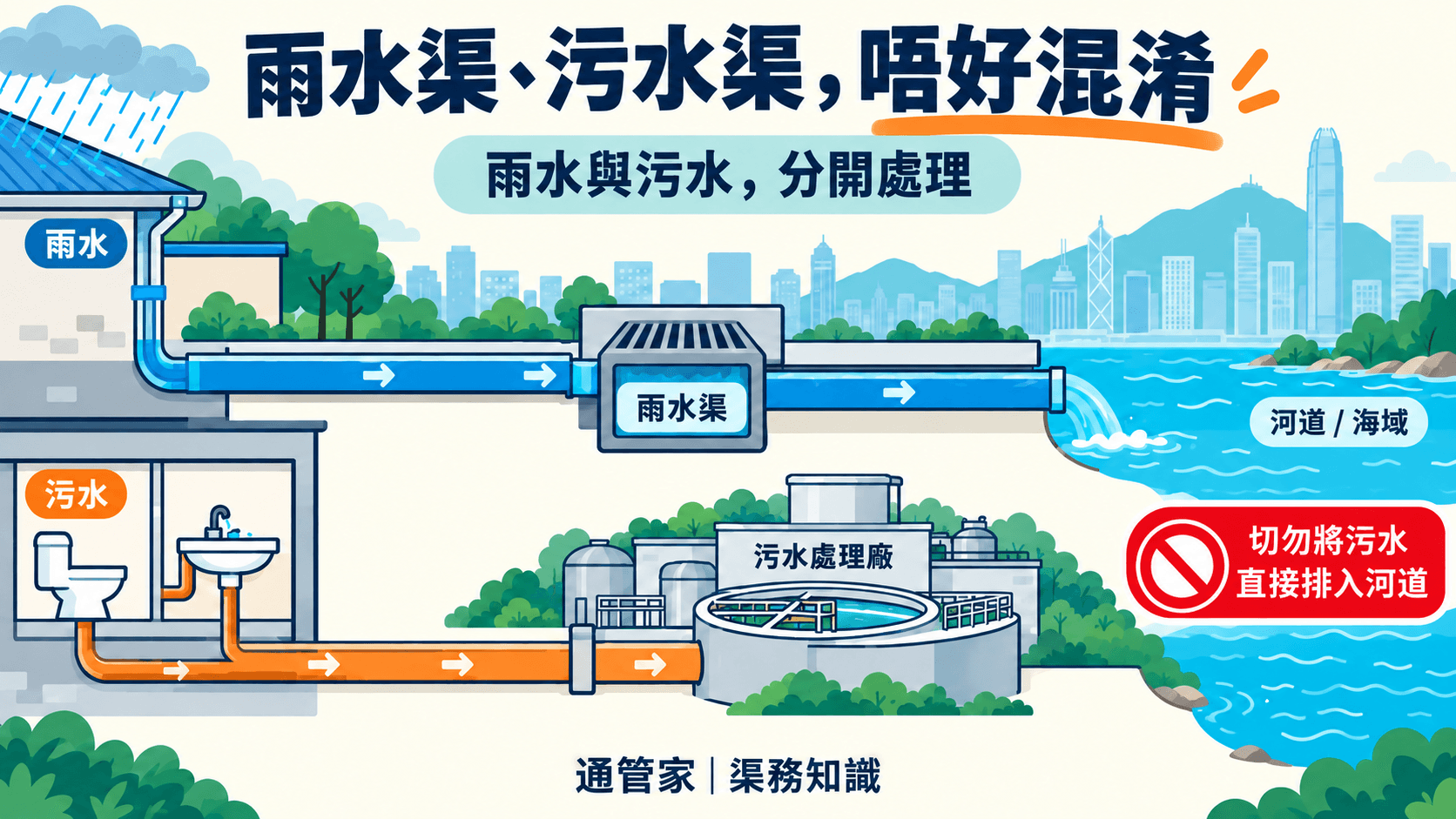
Stormwater drains mainly collect rainwater; foul drains receive the wastewater appropriate to that system. A grating, cover or visible flow does not identify a drain's purpose. Do not discharge floor-washing water, kitchen wastewater or renovation runoff into an outlet simply because it is nearby. Establish the drawings, actual connections and destination first.
The Drainage Services Department's explanation describes Hong Kong's separate stormwater and foul drainage arrangements. Stormwater drains convey rainwater towards waterways or the sea; foul drainage conveys wastewater towards treatment facilities. A foul connection into stormwater drainage may bypass treatment and pollute the environment.
This principle is not a complete connection plan for every private site. Individual properties may use pumps, pretreatment or other equipment, so consult their drawings and management records. Clear, odourless water is not automatically suitable for stormwater disposal.
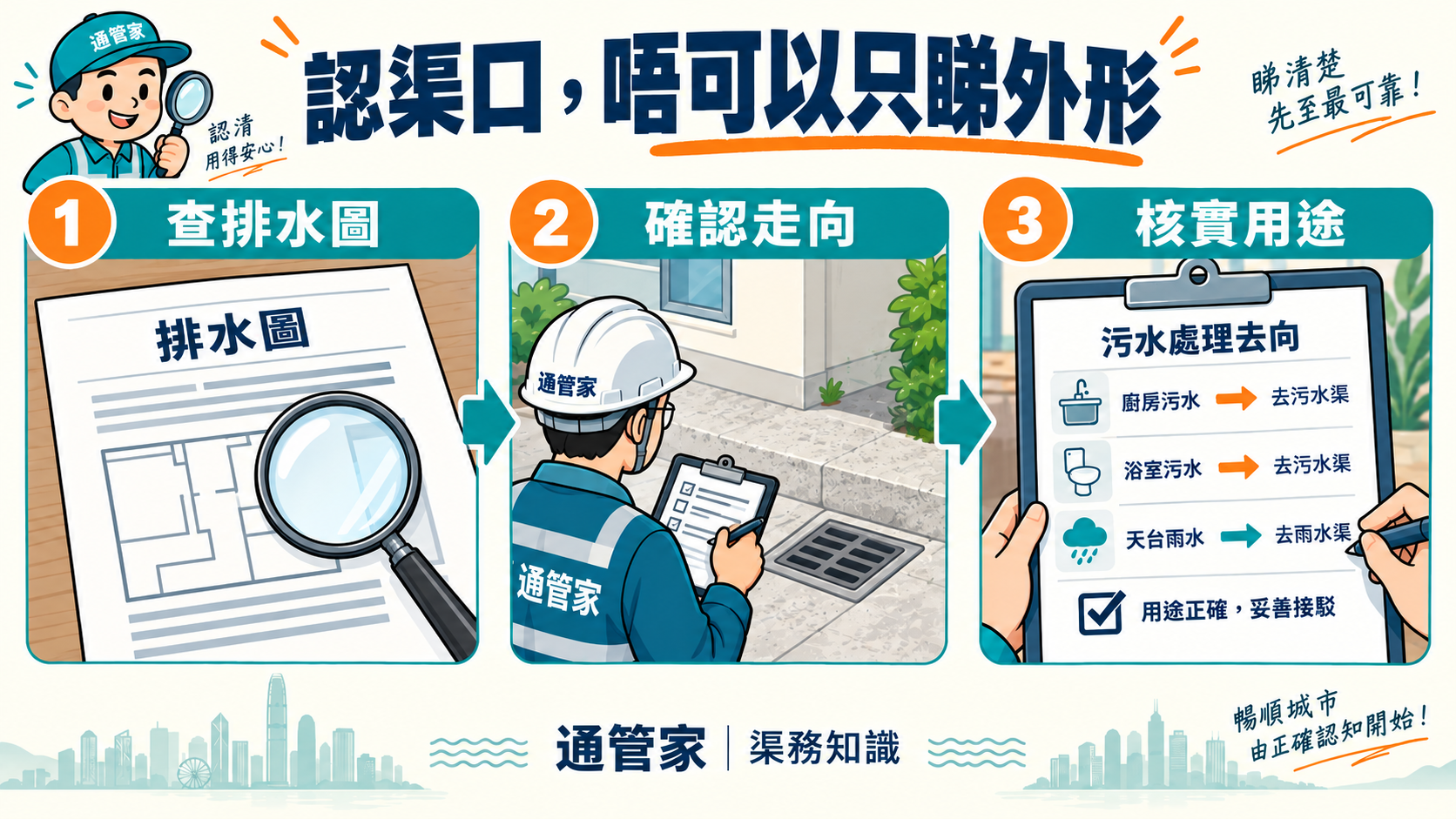
Ask the owner, management office or site operator for drainage plans, chamber references and alteration records. Identify the proposed outlet and ask what it receives, which equipment it passes through and which system it ultimately joins. We have always used it this way is not verification.
Suitable personnel should compare the plans with visible features and record discrepancies, concealed sections and unresolved connections. Do not lift heavy covers, enter chambers or pour large volumes of water to trace a route yourself. Professionals should select any further testing method and control its discharge.
Keep the outlet reference, location photograph, confirmed purpose, verifier and date. Mark unresolved outlets as awaiting confirmation so the next cleaning shift or fit-out team does not treat them as general disposal points. Establish site labels only after verification; do not copy colours from an online diagram.
Water containing detergents, grease, silt or paint residue is not rainwater simply because it is called cleaning water. Arrange collection, pretreatment or discharge according to its source and contaminants. The Environmental Protection Department's construction wastewater guidance explains management principles; confirm the appropriate arrangements for the site and applicable requirements.
Nor can every waste liquid be poured into a foul drain. Paint, solvents, concentrated chemicals and substantial solid residue require appropriate disposal. Not a stormwater drain does not mean suitable for everything.
Unexplained wastewater during dry weather, an appliance connected to an unidentified pipe, or persistent odour after alterations are reasons to investigate. Record the time, location, weather and observations from a safe distance, then notify management. These are clues, not proof that a particular resident or business has breached requirements.
Investigation normally needs to establish the source, drainage route and feasible correction. Do not cut pipes, seal drains or divert flow to another unconfirmed outlet yourself. Management should contact the appropriate departments where public drainage or pollution is involved.
A blocked stormwater drain may reduce rainwater removal, but removing debris does not correct a foul-drain misconnection. Equally, a correct connection does not prove adequate capacity or sound pipe condition. Record purpose and destination, flow condition and system condition separately.
For surface backflow, see manhole blockages and overflow. For pumping failures, see sump-pump problems. Neither assessment replaces confirmation of the outlet's purpose.
No. One fitting does not establish the route or destination.
It may have collected contaminants. Assess its source, contents and site arrangements rather than its colour.
No. Smell cannot replace drawing checks and site verification.
Do not conduct your own tracing test. Suitable personnel should assess the method, discharge and site conditions.
Ordinary clearing and a complete drainage survey have different scopes. Explain the investigation purpose and required records when arranging the visit.
For unclear drainage routes or recurring abnormalities, provide site drawings and incident records to agree an appropriate inspection. Use the PipeButler contact page and confirm the available drainage service scope. Electrical work, appliance internals, specialist design and statutory approvals require the relevant professionals.
Drainage Services Department: separate drainage systems; Environmental Protection Department: wastewater management. Prepared in September 2026.