

Sewage backflow in a lower-floor public-housing flat can be sudden: wastewater rises through a floor outlet, toilet, bathroom, kitchen or washing-machine drain, bringing smells, foam, dark water or solids. Do not keep flushing to test it or immediately add chemicals. Stop the affected discharge, protect people and belongings, record evidence and notify the estate office or management to establish the drainage scope.
Possible sources include an internal branch, shared pipes, high manhole levels, the building main or public drainage. Stop water use, record video and notify management first. Once the source is controlled, clean and disinfect sewage-contaminated areas. Private contractors may assist with unblocking, desilting, CCTV, odours or cleaning within an appropriate agreed scope; shared public-housing drainage and estate facilities must also be followed up by the responsible management body.
This guide explains immediate resident actions, useful evidence, possible sources and when drainage work, manhole desilting or post-backflow disinfection may be appropriate.
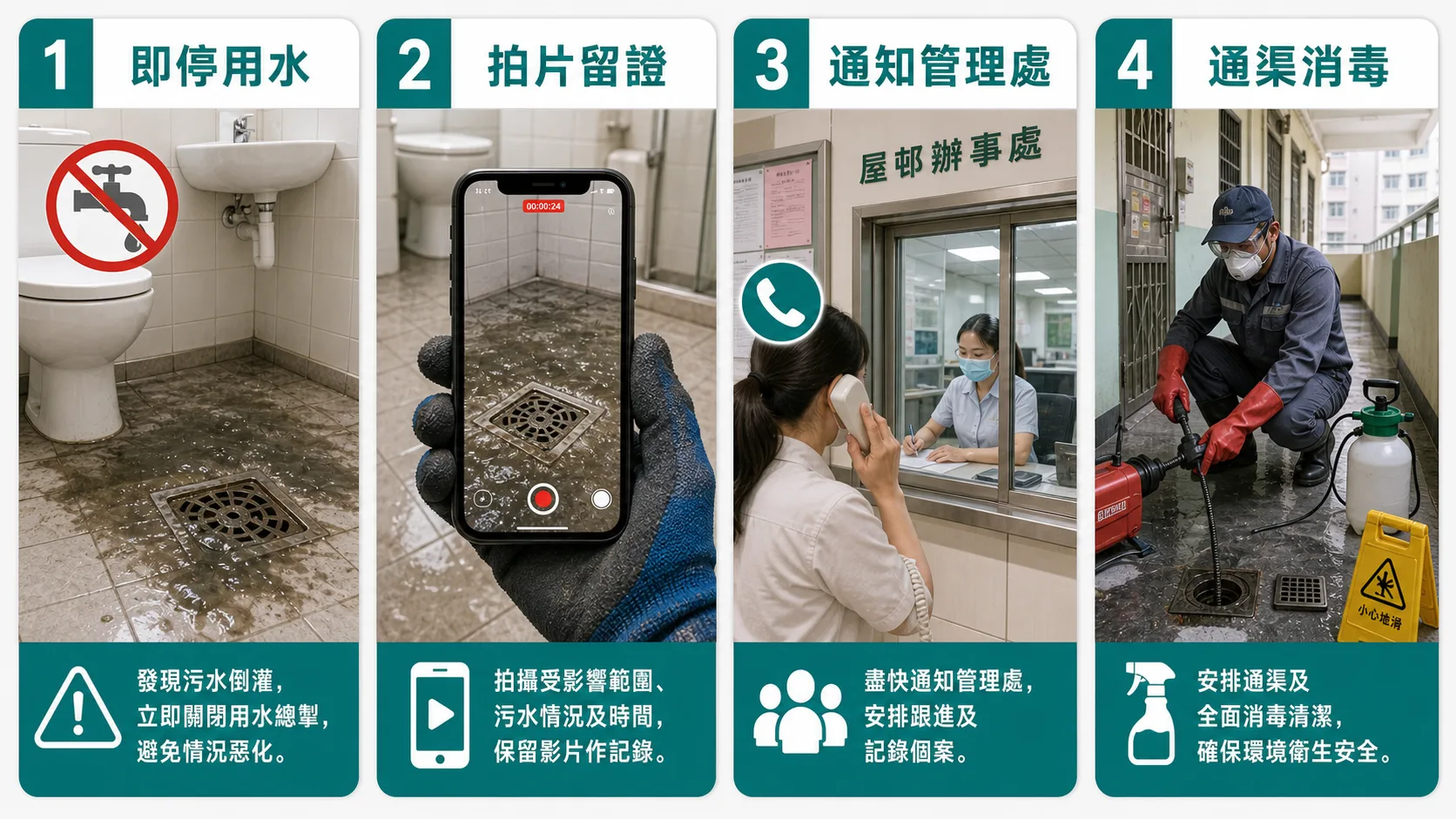
What should residents do immediately?
1. Stop flushing, showering, laundry and pouring water away
If the downstream pipe remains restricted, additional water is forced towards the lowest or weakest outlet. Stop using toilets, floor drains, washing machines, kitchen sinks and connected outlets, and ask household members not to discharge more water.
2. Avoid direct sewage contact
Do not walk barefoot through sewage or allow children, older people or pets near it. Use gloves and protective footwear when moving items. If appliances, extension leads or sockets are near water, prioritise personal safety and do not reach into a hazardous area.
3. Record evidence and contact management
Film the outlet or toilet involved, rising and falling levels, water colour, odour, foam, timing, rain, whether flushing or upstairs water use preceded it and visible external manhole conditions. Immediately contact the estate office, management or responsible maintenance unit.
4. Clean and disinfect thoroughly after backflow stops
Mopping and disinfection will be undone if sewage continues to rise. Control the source, remove contamination and clean, then disinfect and dry. Extensive contamination, strong odours or affected wall bases, wooden cupboards and skirting may warrant professional post-backflow cleaning.
Internal branch, shared pipe, manhole or public drain?
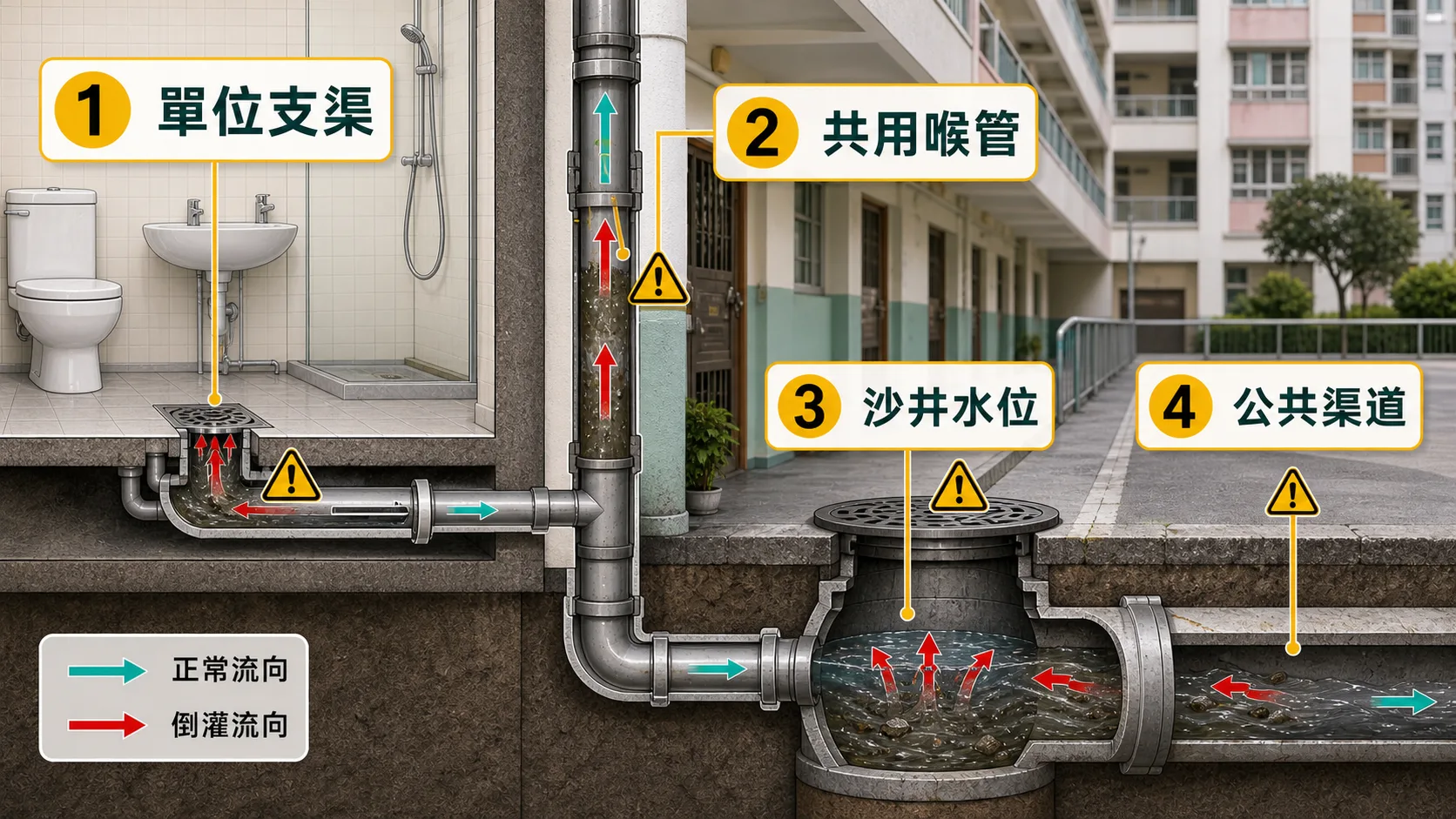
Only one outlet is affected
If one basin, bathroom outlet or kitchen drain is slow and others work normally, a nearby branch, trap or visible obstruction may be responsible. Report and record it first. Where private work is permitted, unblocking can be assessed on site.
Several outlets back up together
Water rise, gurgling and odours across toilets, bathrooms, laundry and kitchens suggest a more downstream issue. See multiple blocked drains and ask management to check shared pipes.
Neighbours or communal outlets are affected
Similar problems on the same floor, above or below, in other lower-floor flats or corridor drains suggest shared branches, a main or manhole. Management should establish the full area and arrange shared-area inspection rather than treating only one outlet inside your home.
Full manholes, rear-lane flooding or worsening after rain
High levels, sewage traces around covers and water in rear lanes or communal paths can involve manhole deposits or external drainage pressure. See manhole overflow. Public-road or public-drainage issues may also be reported through 1823 or the relevant department.
If backflow follows red or black rainstorm warnings or repeated heavy rain, include wet-weather drainage pressure in the assessment. See sewage backflow after storms rather than assuming one internal outlet is blocked.
What evidence should be recorded?
Cleaning removes many traces. Where safe, document information useful to management, maintenance staff, insurers or subsequent complaints:
- Location: toilet, floor outlet, shower, laundry, kitchen, corridor or manhole.
- Direction: rising through a drain or flowing in from outside.
- Date, time, rain and preceding flushing, laundry or upstairs water use.
- Extent: one flat, several same-floor homes, upstairs or downstairs neighbours, communal areas or manholes.
- Contamination: depth, odour, foam, solids and affected wall bases or furniture.
- Communications: when management, the estate office, technicians or departments were informed and their responses.
Video often shows changing levels and flow direction better than photographs. Keep a safe distance instead of holding a phone close to sewage.
Who should residents contact?
Estate office or management first: shared pipes, external stacks, manholes, communal paths and estate drainage generally require the responsible management body's inspection and arrangements. Report promptly and retain records.
Public roads or drainage: use 1823 or the relevant department's reporting channels where flooding or restrictions clearly concern public drains or roads.
Internal branches or cleaning: if management confirms residents may arrange work, or the controlled incident requires internal decontamination, assess unblocking, disinfection, odour investigation or pipe cleaning. Explain that the site is public housing, management's involvement, affected locations and agreed responsibilities before attendance.
Do chemicals, check valves or CCTV help?
Drain cleaner
Do not add it indiscriminately during backflow. Chemicals may return onto floors, increase skin, eye and inhalation risks, or mix with cleaning agents. See drain-cleaner safety; severe backflow needs source investigation first.
Check valves
A valve can reduce reverse flow on some pipe arrangements, but is not a universal answer. Shared-pipe restrictions, high manholes and public-drainage issues may make resident-installed valves unsuitable and raise management responsibilities. See check-valve suitability.
CCTV inspection
Recurring or unexplained backflow, suspected objects, cloth or renovation debris and a need to document the blockage location may justify CCTV. It provides better evidence than simply reporting a blocked pipe. Management should first confirm arrangements and responsibility for shared public-housing drainage.
Cleaning and disinfection after backflow
Confirm outlets no longer back up. Separate affected floors, wall bases, frames, skirting, toilet bases, cupboards and belongings by material. Remove dirt from washable hard surfaces before using disinfectant according to its label. Contaminated cardboard, fabrics, absorbent pads, carpets and materials that cannot be dried may need disposal.
Dry and ventilate promptly to reduce continuing dampness and contamination. Large affected areas, wooden cupboards, mattresses, electrical surroundings and areas frequently touched by children or older residents warrant professional assessment, alongside confirmed source control.
Reducing future incidents
- Keep wipes, towels, cloths, tissues, bags, grease, cat litter and renovation sediment out of toilets and drains.
- Report early slow flow, gurgling, smells or abnormal floor-outlet levels instead of waiting for backflow.
- Ask management to review shared pipes, manholes, maintenance records and similar nearby incidents for previously affected lower-floor homes.
- Before the rainy season, note manhole conditions, communal outlets, rear-lane pooling and past backflow records.
- For repeated incidents, seek photographs, video, CCTV or repair records locating the restriction rather than repeated temporary outlet clearance.
Frequently asked questions
Is management or the Housing Department always responsible?
Responsibility depends on whether the source is an internal branch, resident use, shared pipes, manholes, estate facilities or public drainage. Record evidence, report it and keep responses so the cause and responsibility can be established.
Can residents appoint a private drainage company?
Notify management first for shared pipes, estate facilities and managed areas. Private work may be appropriate within an authorised internal scope or for cleaning after source control, subject to responsibility and permission.
Can I immediately mop with bleach?
Do not rely on surface disinfection while sewage is still entering. Stop discharge, control the backflow, remove dirt and wash surfaces, then disinfect and dry. Never mix bleach, drain cleaner and other cleaning agents.
What if neighbours also have backflow?
Several affected flats suggest shared pipes, the building main, a manhole or external drainage. Management should coordinate assessment of the full area.
For sewage backflow in public housing or a lower-floor flat, WhatsApp PipeButler on 5340 0748 with video, affected outlets, floor, management contact status and contamination extent. We can assess suitable work within the agreed responsibility boundary and remind you to coordinate shared pipes and estate facilities with management.