
Loading page…
Loading page…
Distinguish indoor branches, chambers and septic tanks from soakaway or downstream drainage problems before arranging work.
WhatsApp with the problem and district, and we will confirm available timing.
Village houses, low-density homes and some detached New Territories properties have different drainage arrangements from urban flats. Alongside long outdoor pipes and chambers, there may be a septic tank, soakaway or another downstream discharge arrangement. Slow flow, high chamber levels, toilet backflow and outdoor smells need not originate at the same point.
Distinguish indoor outlets, chambers and septic tanks, and soakaway or downstream drainage. One slow outlet starts with its trap and branch; high chamber or tank levels may require desilting or sludge removal; rain-related backflow or several affected outlets suggests downstream capacity. WhatsApp PipeButler on 5340 0748 with location, floor, safe exterior photographs, visible levels and odour timing to assess unblocking, cleaning, odour investigation or CCTV.
The examples below relate to Yuen Long and other New Territories village settings. Avoid sewage contact and do not open tanks yourself when there is overflow, a strong smell or high levels.
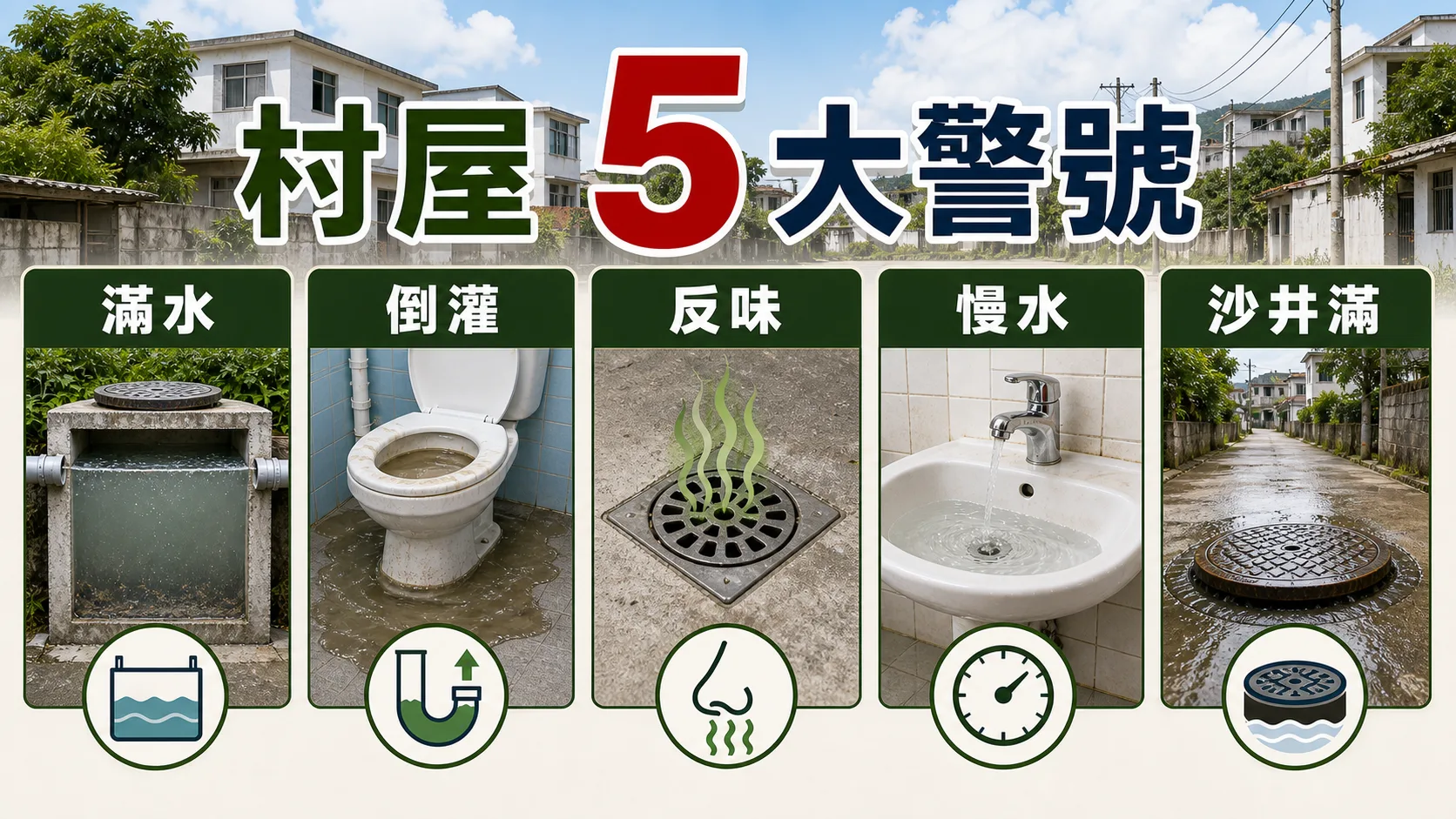
A professional inspection finding water near the cover or slow recession suggests restricted onward drainage. Tank sludge, an obstructed outlet, slow soakaway discharge, roots or silt may be involved. This should not be treated only as an indoor blockage.
Sewage returning indoors is a significant warning, particularly at several outlets, ground or lower floors, or with full outdoor chambers. Assess the downstream route rather than plunging just one outlet.
Dry seals, dirty traps and cracks can cause odour, as can chambers, tanks and downstream pressure. A stronger smell near a garden, parking area, village road or chamber, especially after rain, warrants outdoor-system checks.
Kitchen, bathroom, toilet and washer drainage affected together suggests more than one branch. Long horizontal and outdoor runs can accumulate grease, sand, paper, wipes, hair or roots.
Rain-related odour, slow flow and backflow provide useful clues about rainwater, groundwater, sediment and downstream capacity. See the rainy-season checklist and post-rainstorm sewage-backflow guide.
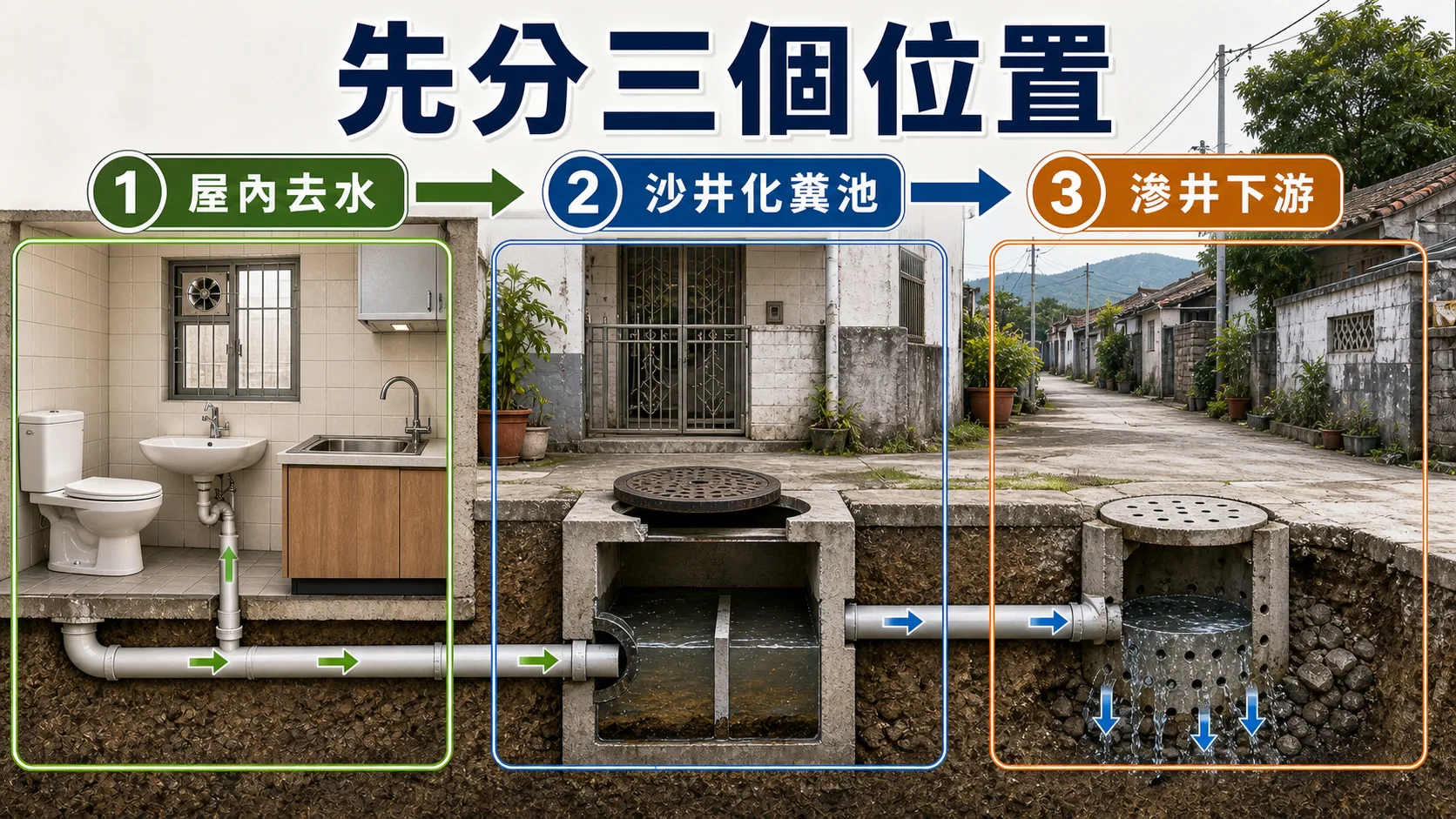
For one slow basin, sink, floor drain or toilet, inspect the accessible outlet and assess the trap and branch for hair, soap, grease or objects. Unblocking or cleaning may be appropriate.
High outdoor levels, a long interval since pumping, thick sludge or overflow warrant assessment of extraction, desilting and outlets. Solids accumulate and reduce effective tank capacity; a tank is not an unlimited store.
Rapid refilling after pumping or clearance, especially after rain, can involve a soakaway, downstream outlet, silt, roots or a shared/public boundary. Record the refill rate, rain relationship and affected areas for possible CCTV or sectional testing.
See Yuen Long village-house service coverage. PipeButler can assess desilting, clearance, cleaning, odour investigation, CCTV or post-backflow disinfection according to conditions. WhatsApp 5340 0748 with the information above or contact us to agree the scope.
No. One outlet may involve a trap, branch, hair, grease or object. Multiple affected outlets, high chamber levels and rain-related deterioration make tank, chamber or downstream causes more relevant.
No. Harmful gases, oxygen deficiency, sewage exposure and falls are possible. Record exterior conditions from a safe position and leave opening and work to appropriately equipped personnel.
Unblocking restores flow through a pipe restriction. Pumping and desilting address retained liquid and solids in tanks, chambers and outdoor sections. Both may be required.
Rainwater, groundwater, downstream capacity, chamber levels or soakaway condition may be involved. Record associated slow flow, backflow and changing levels for assessment.
Occupancy, water use, capacity, grease and solids entering the system and downstream conditions determine the interval. Monitor levels, odour and flow rather than relying on one universal period. A long-unmaintained system warrants inspection.