
Loading page…
Loading page…
Stop the backflow before cleaning. Follow the sequence of source control, contaminant removal, suitable disinfection and drying, with special care around food, porous materials and electricity.
WhatsApp with the problem and district, and we will confirm available timing.
After sewage backflow, the first instinct may be to mop, spray disinfectant or pour bleach. But if a toilet, floor drain or chamber is still overflowing, the surface will quickly be contaminated again. The correct sequence is to control the source, remove contamination and clean, then disinfect and dry suitable surfaces.
Stop using affected drains and keep children, pets and unprotected people away. Record the incident safely and arrange unblocking, desilting or management assistance. Once backflow has stopped, arrange cleaning and disinfection. Never mix bleach, drain cleaner, acidic cleaners or other chemicals.
This practical checklist for homes, ground-floor shops and lower-floor premises is not medical, occupational-safety or licensing advice. Food premises have additional requirements: the cited FEHD Food Hygiene Code requires operations to stop temporarily if sewage or wastewater backflows into a kitchen, food room or another part of the premises.
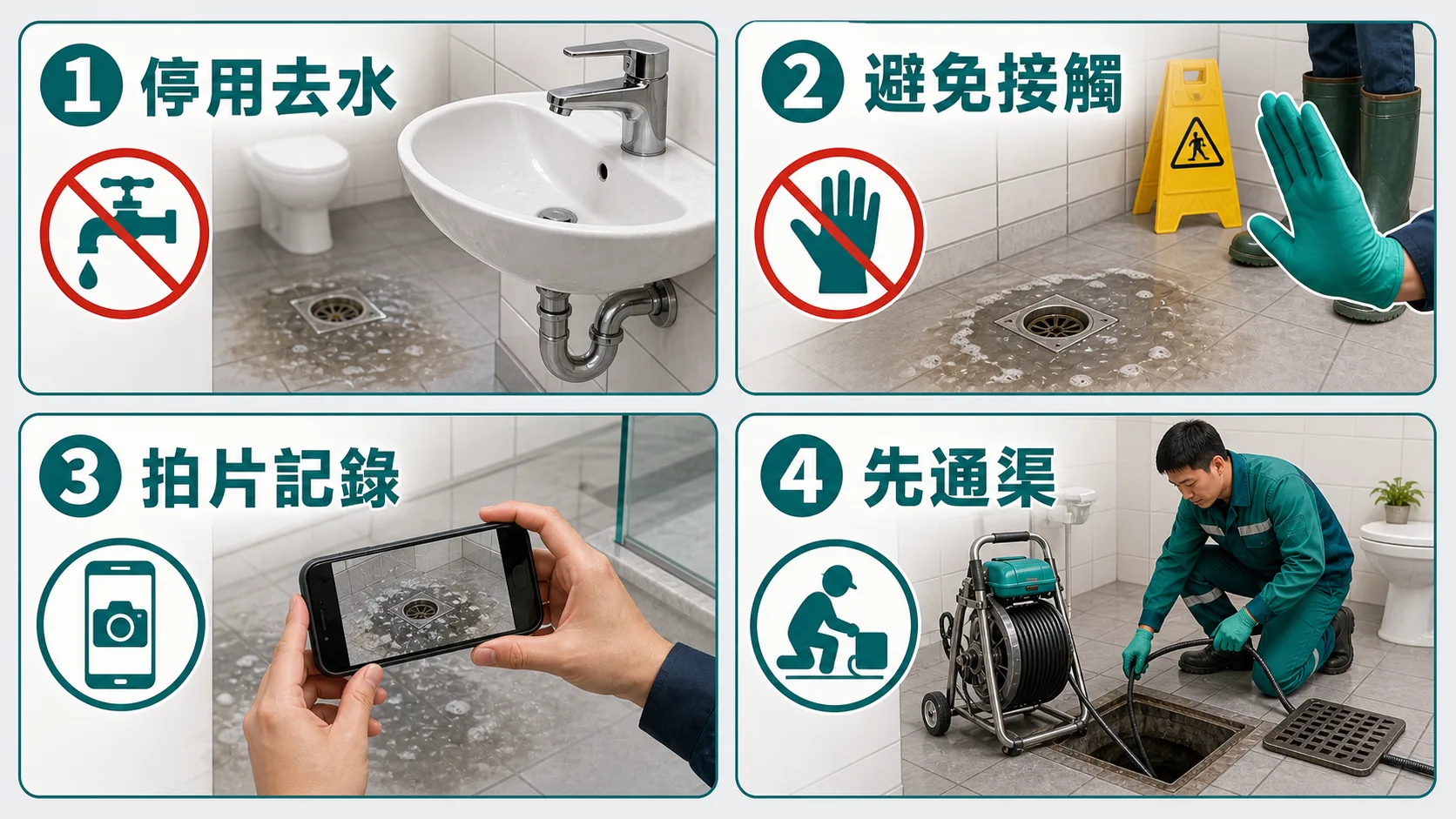
Stop flushing, showering, running connected taps or washing machines and pouring water into the affected system. Continued use can force more sewage indoors while the downstream restriction remains. Lower-floor units, ground-floor shops and village houses should pay particular attention to toilets, shower trays, floor drains and chambers.
Sewage and wastewater may be heavily contaminated. Cleanup requires appropriate waterproof gloves and closed, water-resistant footwear, with eye, face and clothing protection according to splash risk. Keep unprotected people, children and pets away. Anyone with wounds or health concerns should avoid cleaning and seek suitable medical advice or professional assistance.
Record the outlet where water emerges, affected area, level, appearance, observed odour, simultaneous backflow at other fixtures, management-notification time and chemicals already used. These details help distinguish private branches, shared pipes, chambers and external drainage and support discussions with owners, management or insurers.
Ongoing backflow needs appropriate drainage work, chamber attention, desilting or management of shared drainage. Disinfection alone cannot prevent repeated contamination while the source remains active.
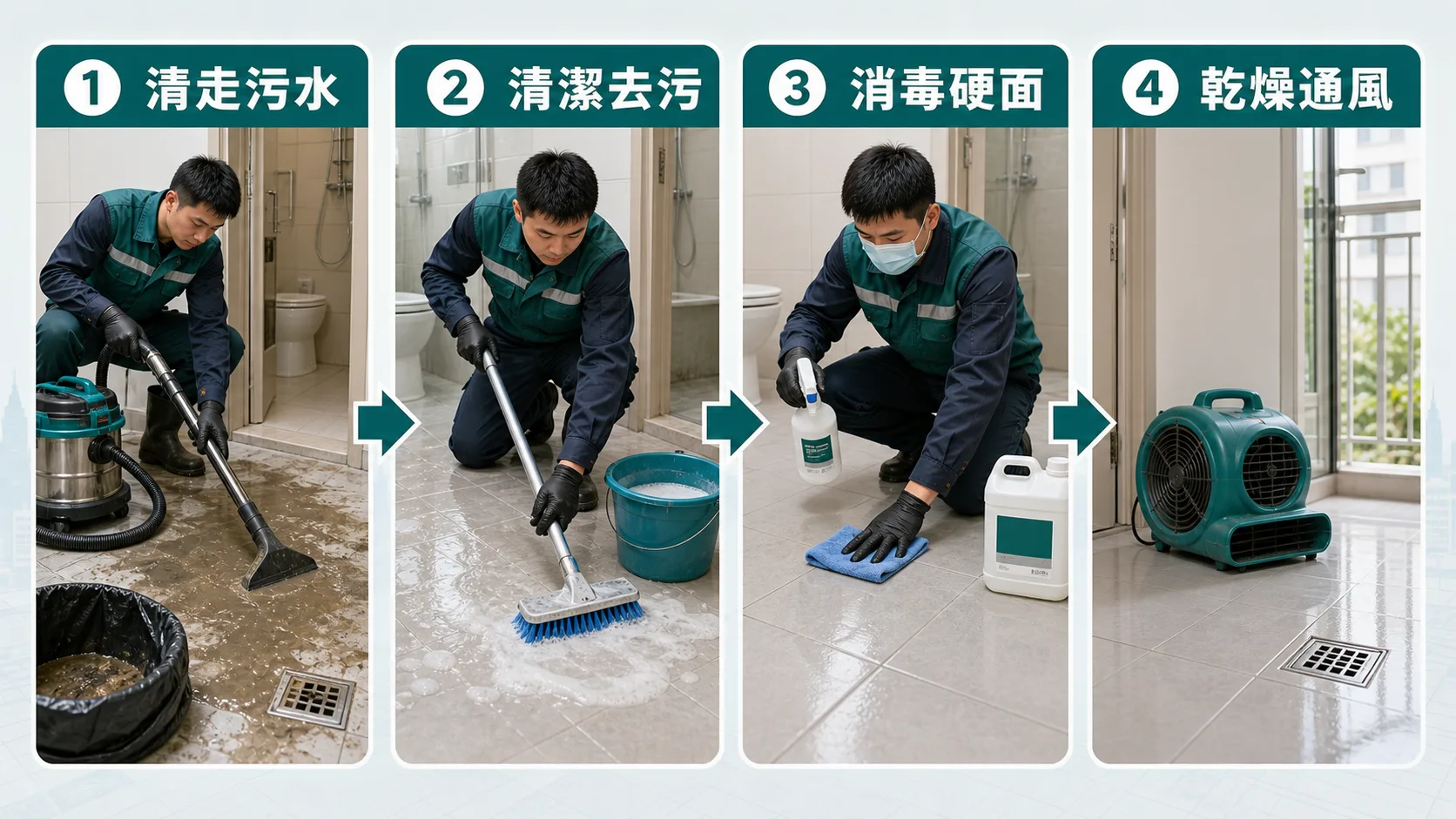
Remove standing water, sludge, tissues, food residue, sand and other contaminated material using appropriate methods. Do not sweep it into the same faulty floor drain. Extensive contamination, carpet, timber floors, cabinet voids, wall bases or nearby electrical equipment warrant professional assessment.
Cleaning comes before disinfection because dirt, grease and organic material can reduce disinfectant effectiveness. Clean compatible hard floor and wall tiles, covers and washable tools with detergent and water, then rinse or remove residues as appropriate.
Use disinfectant only after removing visible contamination and cleaning the surface. The cited Centre for Health Protection example for excreta-contaminated, compatible non-metal surfaces uses one part household bleach containing 5.25% sodium hypochlorite with 49 parts water, with a 15–30 minute contact period followed by rinsing and drying. This ratio cannot be copied for a different stock concentration: follow the product instructions and current official guidance. Never mix bleach with drain cleaner, acids, ammonia or other cleaning products. Tell the cleaning or drainage team about any chemicals already used.
Dry affected areas promptly. Only use windows, extractors, fans or dehumidifiers once chemical, electrical and other site hazards have been assessed. Check cabinet undersides, wall bases, skirting, door frames and beneath carpets. The cited indoor-air-quality guidance stresses correcting the water source and drying materials thoroughly. Persistent dampness, mouldy odour or drain smell calls for checks of concealed wet areas and drainage sources.
There is no single disposal list for every incident. Consider contamination, absorbency, layers, access, ability to clean and dry according to material instructions, and food or medical uses. These are assessment principles, not an insurance or restoration determination:
It may be suitable for already cleaned, compatible non-metal hard surfaces where the label and official guidance permit it. It is not the first step and should not simply be poured over sewage, grease or sediment. The cited 1:49 example applies specifically to stock containing 5.25% sodium hypochlorite; other concentrations need the appropriate dilution. Use cold water, suitable protection and ventilation, use diluted solution within 24 hours and never mix chemicals.
If strong drain cleaner, an acid, descaler or an unidentified product is already present, do not add bleach yourself. See drain-cleaner safety and disclose the product, quantity and timing when arranging help.
Food premises: the cited FEHD code requires temporary suspension of operations when sewage or wastewater backflows into the premises. Surface disinfection alone does not establish readiness to reopen. Control the source, isolate affected food and equipment, and follow applicable licensing, food-safety and authority requirements for cleaning and reopening assessment.
This is not solely a cleaning problem. A blockage, chamber sediment, common-drain restriction, recurring grease or inadequate downstream performance during a storm will not be corrected by disinfecting the floor. Water-seal faults may also require separate investigation where odour persists.
Depending on findings, arrange pipe cleaning, desilting, CCTV inspection or management checks of common pipes and chambers. See sewage backflow after heavy rain and multiple blocked drains.
PipeButler can discuss suitable unblocking, desilting, pipe cleaning, odour investigation and disinfection work. Send backflow footage, the affected area, outlet or chamber photographs, chemicals used and management's response through WhatsApp 5340 0748. Establish whether the source is controlled and agree the available scope before work.
The Chinese source recorded these references as reviewed on 18 August 2026. Product selection, protection, disposal and reopening depend on contamination, stock concentration, premises use and current official guidance.
Control the source first. Continued sewage inflow will recontaminate cleaned surfaces. Stop water use, address drainage and then clean and disinfect.
Remove sewage and solids first, clean with detergent, and then disinfect compatible hard surfaces using the appropriate dilution. Never mix bleach with other chemicals.
Assess each absorbent item for contamination, material and the ability to clean and dry it thoroughly. Items that cannot be restored safely may need removal. Obtain professional assessment for large areas or valuable materials.
Residual contamination, concealed moisture, a faulty water seal, deposits in pipes or a remaining partial restriction may contribute. Investigate the affected materials and drainage instead of masking the smell.
Yes, with the correct sequence: drainage source control, cleaning and then disinfection. Common-drain or multi-outlet incidents may also require desilting, pipe cleaning or management coordination.