

Loading page…
Loading page…
Learn how anti-syphonage arrangements protect trap water seals, why altered drainage can smell and when ventilation or connections need investigation.
WhatsApp with the problem and district, and we will confirm available timing.
An anti-syphonage pipe is not a spare or unnecessary pipe. It helps balance drainage pressure and protect trap water seals. If a seal is drawn out, drain gases may enter through a floor drain, basin, bath or toilet connection. Hong Kong residents often first encounter these pipes during renovation or when looking at external building drainage.
If smells began after renovation, outlets gurgle during flushing, odour returns shortly after replenishing a seal, or several outlets smell together, avoid sealing outlets or removing pipes. Record the symptoms and arrange an odour investigation or drainage-connection assessment.
This guide explains how anti-syphonage arrangements protect water seals, how alterations can cause problems, how simple evaporation differs and when a technician or building manager should investigate.
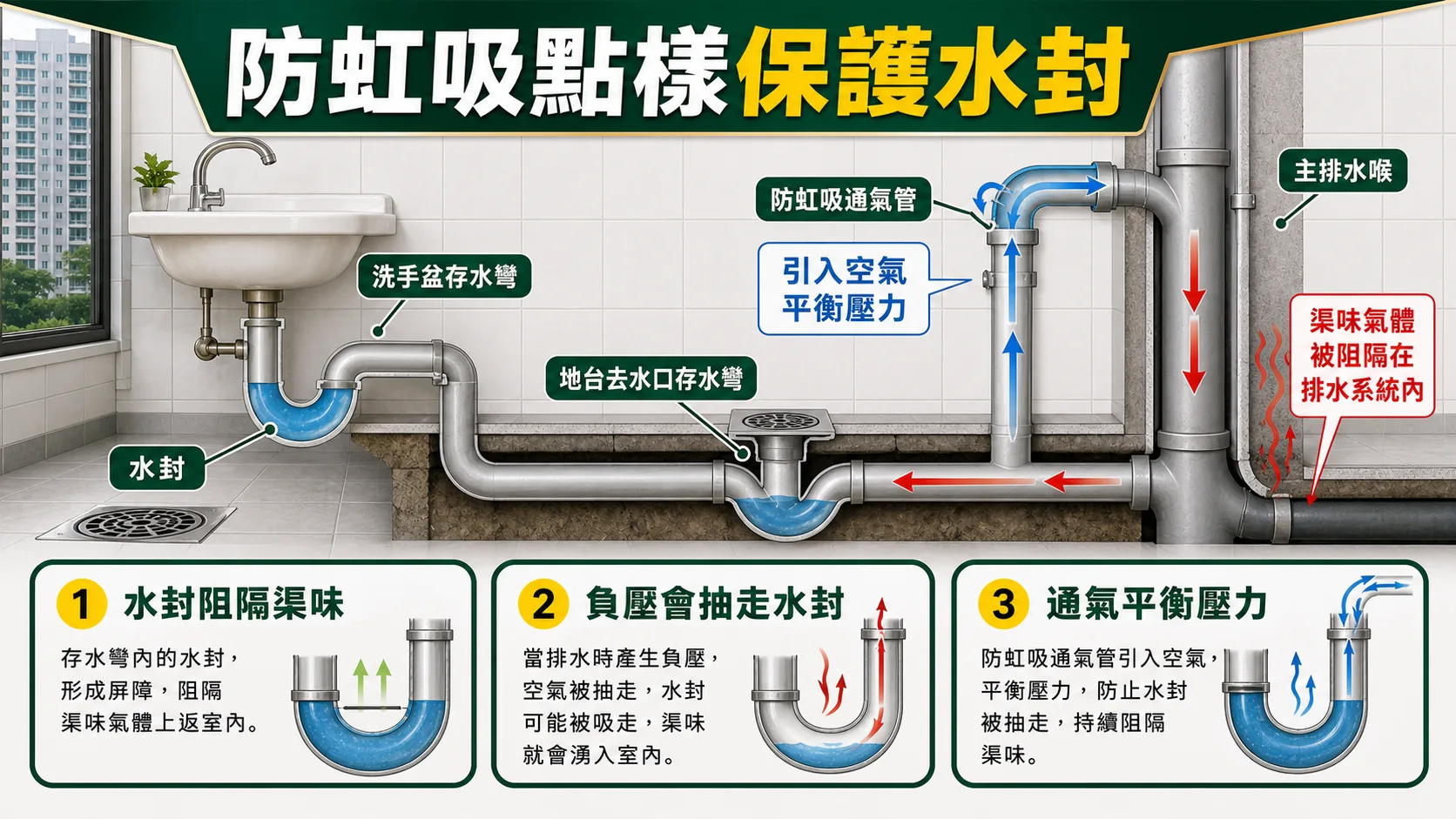
Basins, floor drains, baths, showers and kitchen sinks normally rely on water retained in a trap. This seal acts as a barrier against drain gases and insects. In a building, simultaneous discharge from different floors creates pressure changes inside the pipes.
Negative pressure can draw water out of a trap through siphonage. Appropriate venting or an anti-syphonage valve allows air in or helps manage pressure so the seal remains. Buildings Department drainage-health information also emphasises effective water seals and suitable anti-syphonage arrangements at toilets, floor drains and basins.
These signs do not prove an anti-syphonage fault. Hair, soap, grease, dry seals, cracked pipes and shared drains can also cause smells. Ventilation deserves attention where symptoms track discharge, gurgling, multiple outlets or recent alterations.
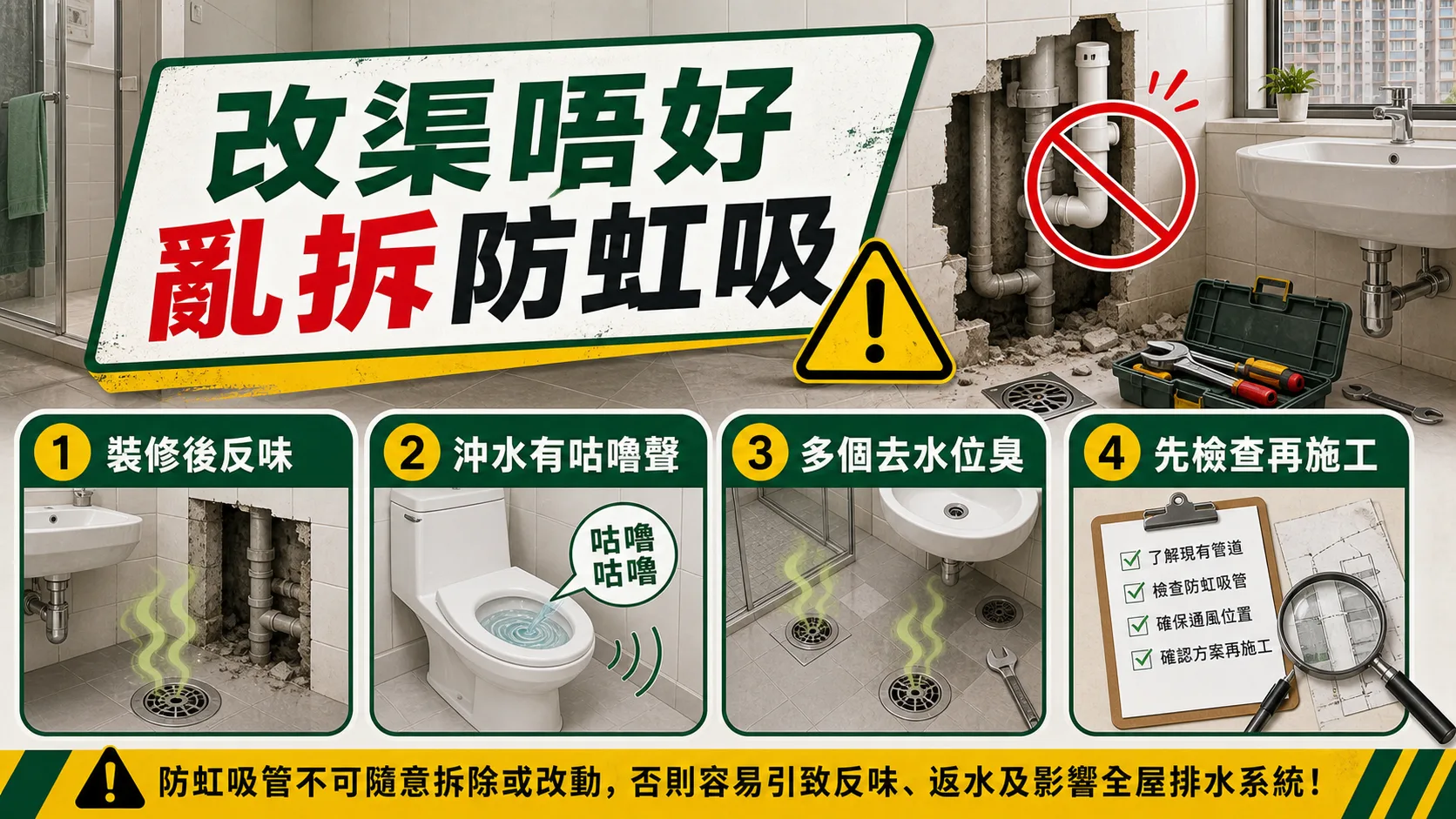
Risks include sealing pipes for appearance, overly long connections after moving a basin or toilet, misplaced traps, insufficient falls, removing existing anti-syphonage pipes and connecting outlets to unsuitable drains. Water may still flow initially while pressure and odour problems emerge in daily use.
The Chinese source refers to Buildings Department advice against unauthorised drainage alterations, including removal of toilet anti-syphonage pipes or basin bottle traps with anti-syphonage valves. Drainage installation, alteration and removal may require appropriately appointed contractors under the applicable framework. Do not treat drainage pipework as ordinary plastic tubing that can be removed without checking its function and requirements.
A rarely used bathroom, time away, dry weather or a floor drain that receives no water can develop odour as the seal dries. Add roughly half a litre of clean water and remove accessible hair and dirt. Sustained improvement may mean major work is unnecessary. See U-traps and water seals.
Rapid recurrence, gurgling every time a toilet or upstairs fixture discharges, several smelly outlets, symptoms after renovation or intermittent strong odour may need more than topping up. Pressure may repeatedly disturb the seal, or the layout may be unsuitable.
Slow flow, backflow, black sludge, damp walls, ceiling stains or musty smells also warrant checks for blockage, cracks, loose joints and shared drainage faults. See bathroom drain odour and warning signs of cracked pipes.
These details help decide whether to investigate seals, traps, ventilation, anti-syphonage protection, deeper blockage or use CCTV.
Start with visible outlets, traps, under-basin fittings, toilet connections, pipes, recent changes and symptom timing. A little-used drain may only need its seal replenished and accessible dirt removed.
CCTV is more useful for recurring blockages, unclear concealed routes, suspected renovation debris or concrete, low-floor backflow, cracks, displaced joints or documentation for management. If a removed vent, unsuitable trap or misplaced ventilation is the main concern, a connection inspection is often more direct than indiscriminate camera work.
One smelly basin or floor drain points first to its seal, trap and connection. Several outlets in one bathroom may share a branch or ventilation problem. Several flats, a whole floor, lower units or adjacent shops may implicate shared drainage; notify management or owners and retain records.
Public drainage blockages or flooding require the relevant reporting route, such as 1823. Neither routine cleaning nor blaming the building automatically resolves the issue: timing and extent provide the useful evidence.
Evaporated seals need water; dirty traps need hair, soap and sludge removed. Branch deposits may require unblocking or cleaning. Post-renovation odour may require reassessment of traps, seal depth, ventilation, anti-syphonage arrangements, connections and falls.
Before replacing or moving toilets, basins, sinks or drains, establish that the proposed layout preserves drainage and ventilation functions. Send photos and videos through PipeButler's contact page to discuss whether a site assessment is needed.
The terms generally refer to preventing siphonage from depleting trap water seals. A particular installation may use a vent pipe, anti-syphonage valve or specially designed trap; identify the actual arrangement on site.
Not always, but it increases the risk. Different discharge volumes and pressure conditions can expose missing ventilation later, causing repeated loss of the seal.
This is not recommended. Drainage alterations can involve building-control and minor-works requirements, as well as seal, ventilation, gradient and connection design. Have an appropriate person assess it.
Yes, for a dry seal in a little-used drain. Regular replenishment is part of Buildings Department advice. Rapid recurrence, gurgling or symptoms after renovation require further investigation.
No. Blockage, poor ventilation, seal movement, branch layout and shared drains can all contribute. Investigate when it accompanies odour, slow flow or several affected outlets.
Clear slow flow or blockage warrants drainage assessment. Persistent post-alteration smells, gurgling and multiple affected outlets require the connections, traps and ventilation to be assessed together, potentially involving both trades.
WhatsApp PipeButler on 5340 0748 with outlet and under-basin photos, visible pipes, a flushing video and details of alterations. These support an odour investigation, unblocking, CCTV or connection assessment.