
Loading page…
Loading page…
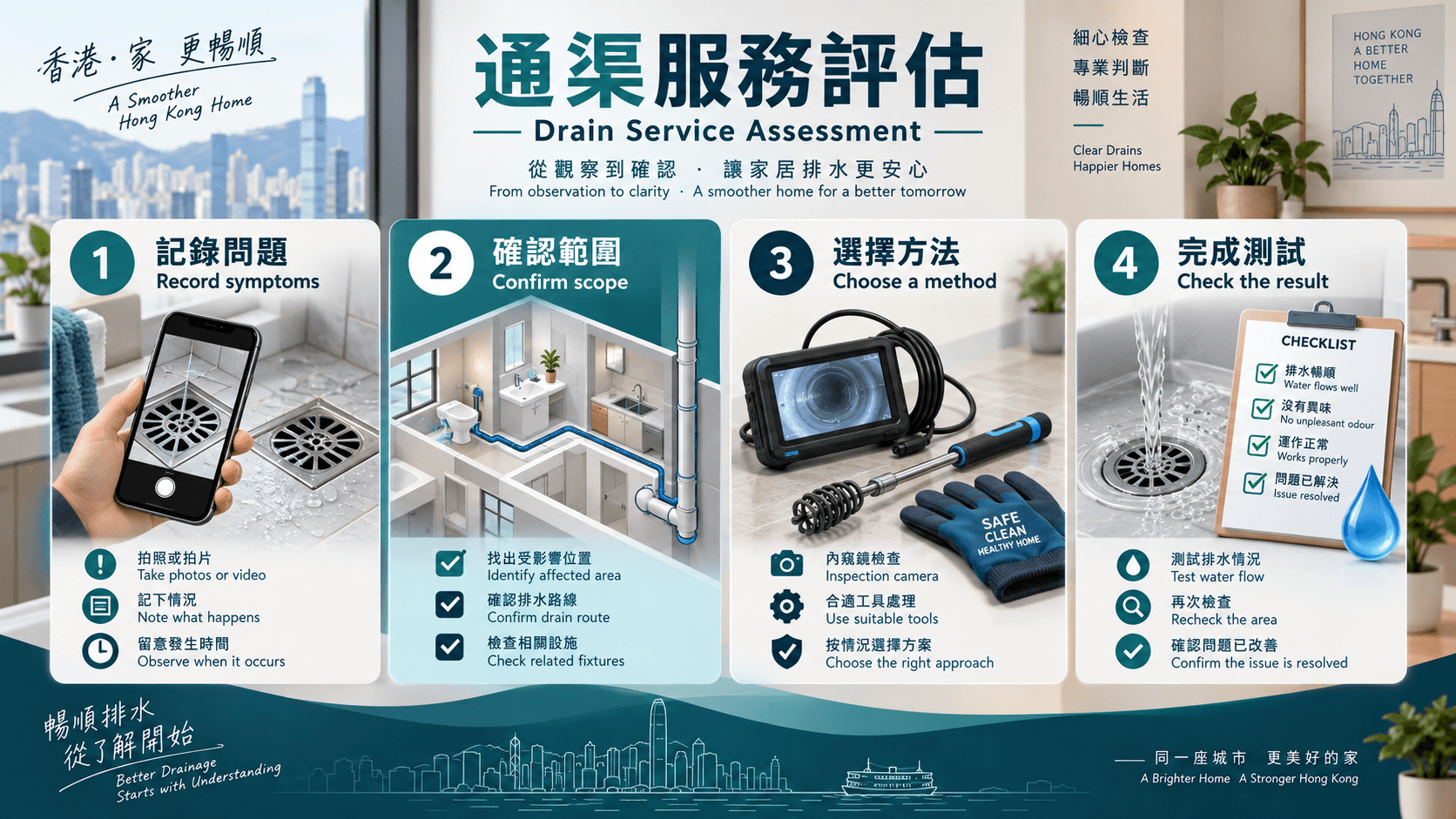
Compare drainage companies through site assessment, suitable equipment, written scope, approval of changes and recorded drainage tests.
WhatsApp with the problem and district, and we will confirm available timing.
When searching for a recommended or highly rated drainage company, avoid letting promises of round-the-clock service or immediate attendance replace a proper assessment. Drain clearance is not one standard product. A blocked toilet or slow outlet may involve a fixture, trap, branch, building main, manhole, grease, a hard object or chemicals already in the pipe. A reliable approach starts with the site, then the tools and scope, followed by agreement before work.
Ask which outlet or pipe section will be treated, what equipment is proposed, how a change of scope will be approved and whether drainage will be tested afterwards. These questions help prevent misunderstandings better than a star rating alone.
For work-planning factors see planning a drainage assessment; for household tools see choosing drain tools. If chemicals have already been used, read drain-cleaner safety.
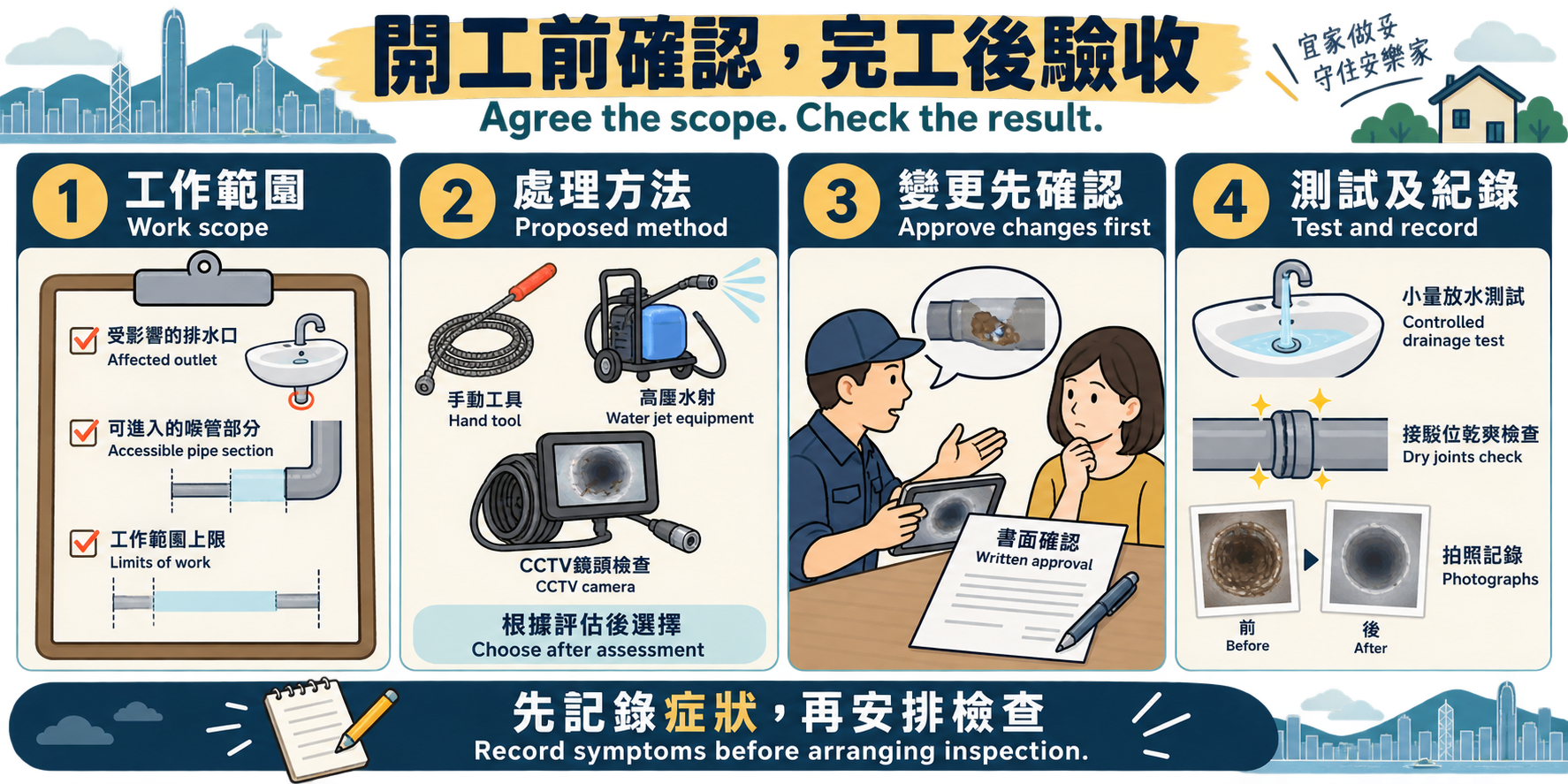
A headline promise may describe only a simple job and omit night work, dismantling, jetting, manholes, CCTV, severe backflow or several outlets. Send photographs and video before attendance and ask for the included work, exclusions, possible changes and what happens if no work proceeds.
Toilet paper, shower hair, sink grease, industrial sediment and overflowing manholes need different approaches. A firm recommendation for jetting or CCTV before asking about symptoms may be premature. See jetting suitability and when CCTV is useful.
Unblocking might mean one outlet, a branch, horizontal pipe, manhole, building main or commercial grease trap. Confirm the section, testing, basic clean-up, other connected outlets and how a newly discovered fault elsewhere will be assessed and agreed.
Keep before-and-after images, test video, equipment used, a description of deposits and the technician's recommendations. These assist recurrent faults, tenancy discussions, management follow-up, business records and insurance enquiries. See recurring drain blockages.
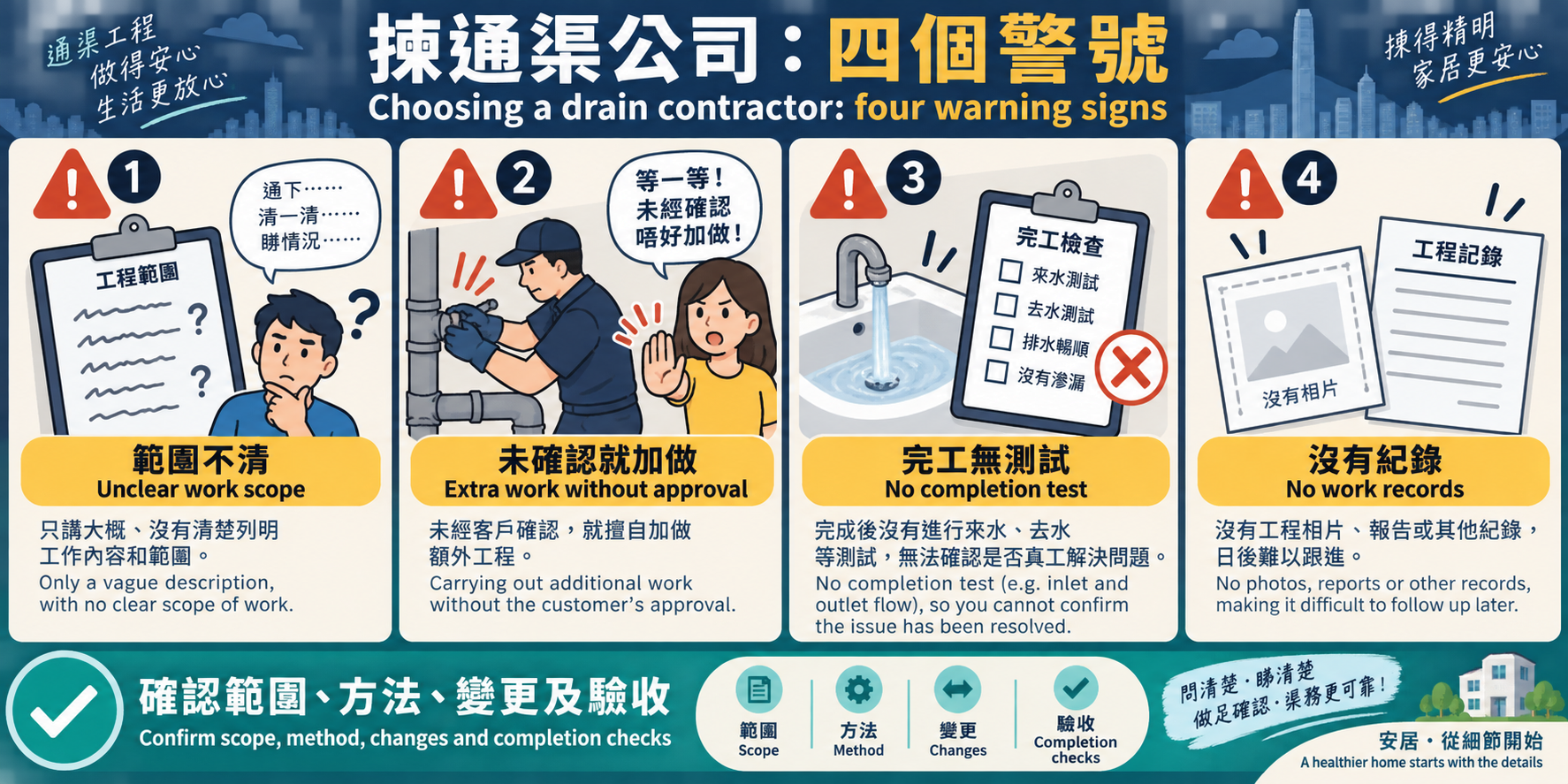
An offer that does not explain included and excluded work or conditions for attendance is insufficient for a decision. Request written confirmation of the basic scope and circumstances requiring a new proposal.
Without identifying the toilet, basin, floor outlet, kitchen sink, manhole or pipe section, disagreement over included work is likely. Several blocked outlets require assessment of internal versus shared drainage.
A site condition differing from photographs may reasonably require a revised proposal. If no reason, new equipment or revised scope is explained and there is pressure to agree immediately, pause and ask for clarification before authorising it.
After work, testing appropriate to the situation should check flow speed, backflow, gurgling and smells. A quick intervention without verification may only create a small passage through deposits and allow early recurrence.
Clear information helps distinguish unblocking, pipe cleaning, desilting, odour work, disinfection or management-led shared-drain repairs.
Reviews are useful but should not be the only criterion. Site judgement and equipment choice matter. Consider whether the company explains its proposal, reviews photographs and video, has relevant experience, explains scope changes, tests drainage and keeps records.
Domestic toilet reviews alone do not establish suitability for manholes, industrial units, restaurants, grease traps, basement flooding or sewage backflow. Such work may require desilting, jetting, CCTV, disinfection and management cooperation.
PipeButler first reviews photographs and video to assess the likely location, tools and risks, then confirms the service scope. Ordinary clearance is assessed against the outlet and site conditions. If jetting, desilting, CCTV, odour work or disinfection may be appropriate, the reason and urgency should be explained before work.
When comparing drainage companies, WhatsApp PipeButler on 5340 0748 with the location, backflow video, chemical-use history, multiple affected outlets and urgency. We can assess an appropriate approach and agree the scope before starting. Use the contact page for booking and assessment.
Do not rely on one ranking. Compare clarity of the proposal, suitable equipment, written scope, testing and records. Ratings are one input.
Clarify availability, dispatch arrangements, access, holiday or storm conditions, equipment requirements and the agreed work before the visit.
It can be, for deep grease, sediment, long runs or recurring restrictions. The technician should explain why ordinary tools are insufficient and the revised section and method, then obtain your agreement.
Ask which section was treated, what tests were completed, what deposits were found and whether pipe-wall build-up or shared drainage could be involved. Recurrence needs reassessment rather than repetition alone.
Establish responsibility first. Owners, occupiers and management coordinate private premises and shared building areas. Public drainage or road flooding may require 1823 or the relevant department.