
Loading page…
Loading page…
Compare drainage maintenance contracts using an asset list, defined work, emergency arrangements, inspection evidence and renewal reviews.
WhatsApp with the problem and district, and we will confirm available timing.
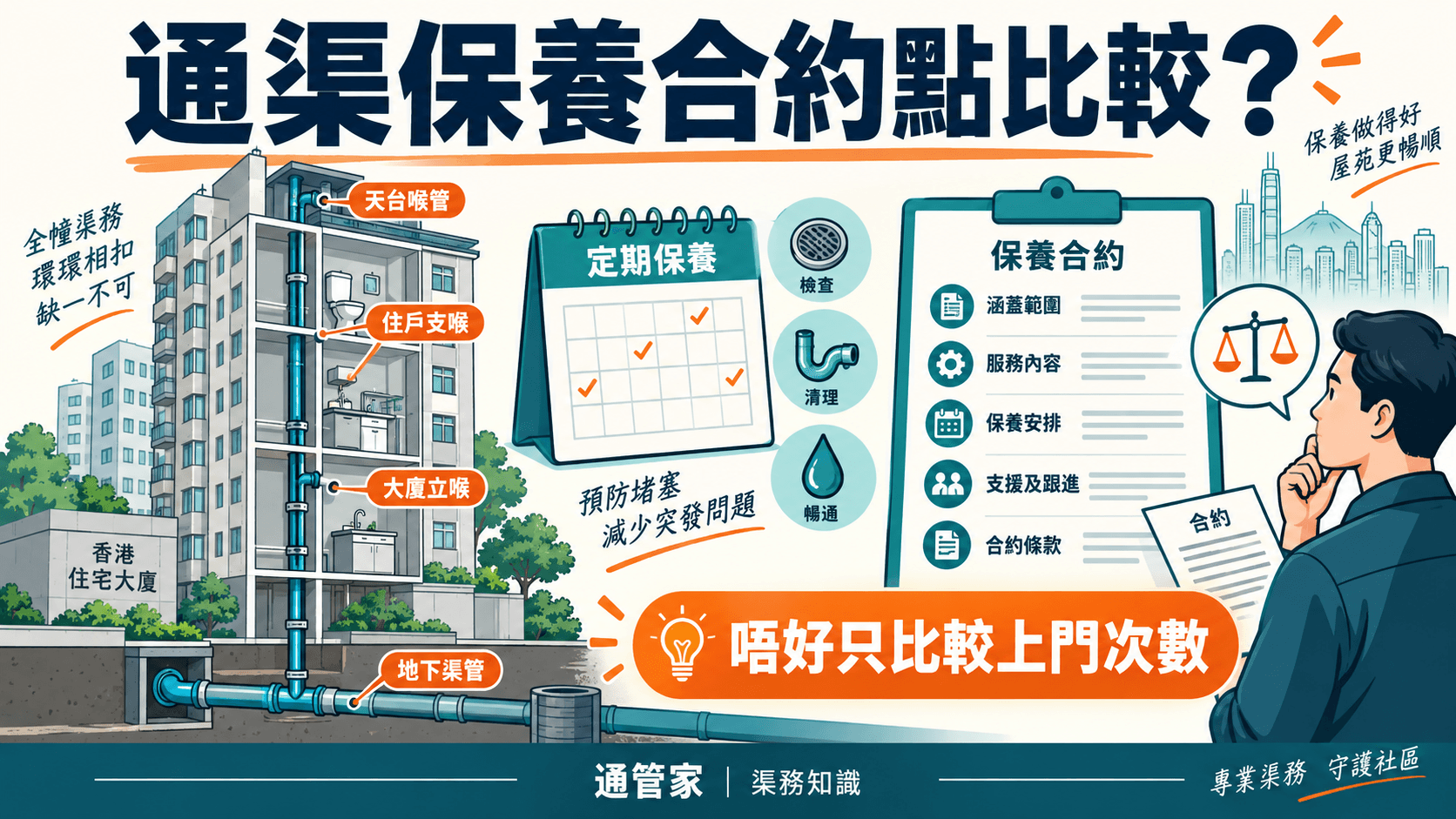
Two contracts described as annual drain maintenance can cover very different work. One may cover only nominated chambers; another may include internal pipe cleaning, camera inspections or emergency attendance. Compare the assets, methods, frequency, exclusions and completion records using the same checklist.
Use available drawings and management records to list stormwater drains, foul drains, inspection chambers and associated equipment. Assign a location reference to each asset. Identify what belongs in this contract, what another contractor maintains, and any inaccessible or unconfirmed sections. Without this list, contractors may interpret the whole building differently.
Compile previous backflow, repeated blockages, complaints and repairs. Discuss frequency according to use, risk and condition instead of applying the same monthly or quarterly schedule to every building. Regular clearing does not permanently repair structural defects.
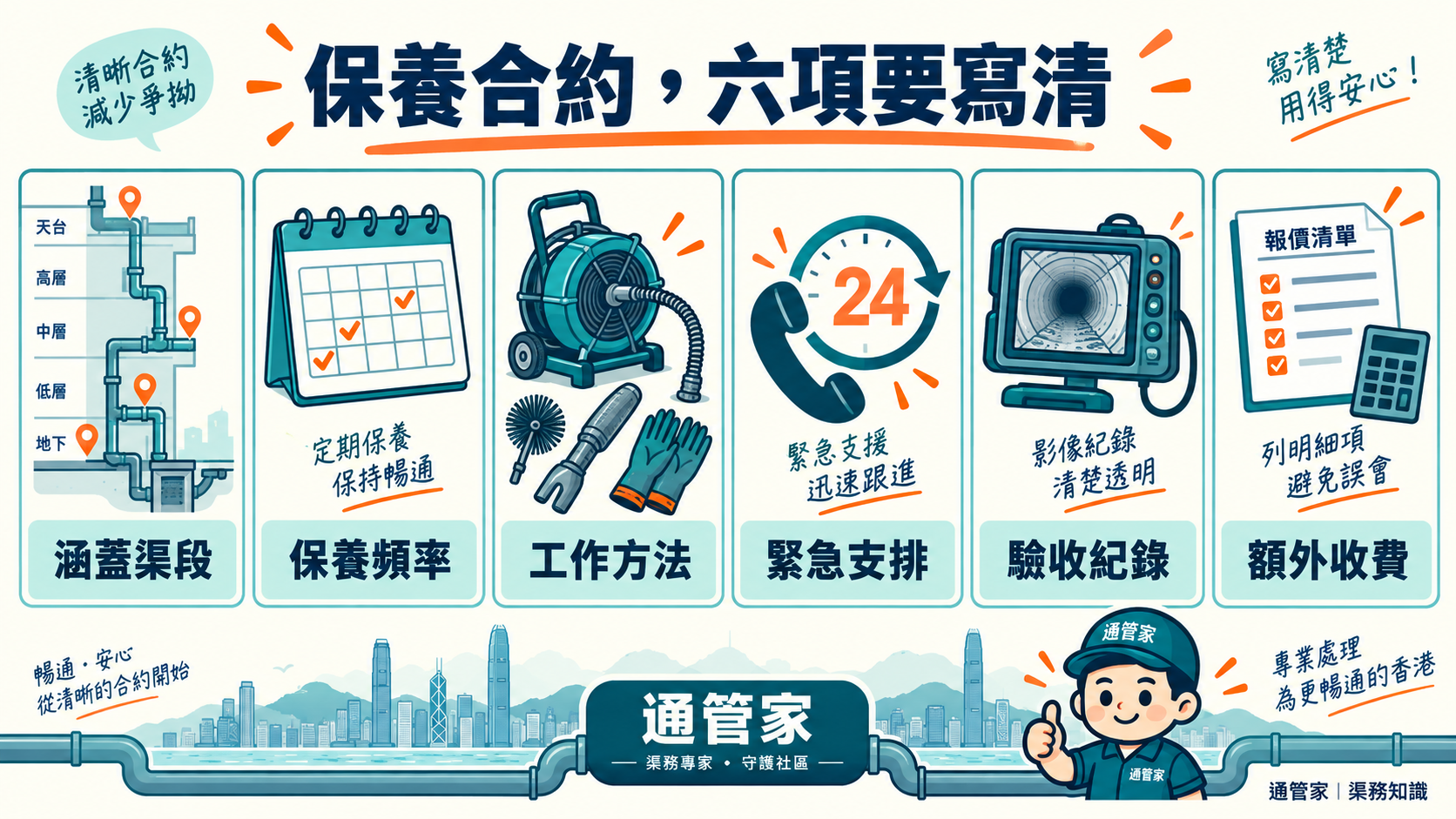
The guide to desilting versus unblocking helps distinguish these tasks. Methods must suit the pipe material and condition; a machine name is not a guarantee of results.
Answering a call, accepting a case, dispatching staff, arriving and completing a repair are separate milestones. State service hours, reporting channels, the milestone covered by any commitment, and exceptions such as weather, road conditions and access. A 24-hour telephone service does not mean every fault can be repaired immediately.
Clarify arrangements for nights, public holidays, repeat attendance, additional workers and specialist equipment, including who can authorise changes. Agree the emergency contact and approval process in advance so work is not delayed by an unavailable decision-maker or expanded without clear authority.
Check these details consistently. Mark unanswered items as awaiting clarification rather than assuming they are included.
Specify access permissions, isolation of chambers and work areas, resident and business notifications, water arrangements, permitted noisy working hours and waste responsibilities. Chamber entry, electrical work and other specialist activities need appropriate personnel and procedures. An ordinary drainage maintenance contract does not automatically include them.
Verify insurance, experience and required qualifications against the actual work. Where subcontractors are used, clarify how communication, supervision and records are coordinated so responsibility remains clear.
Record at least the date, personnel, asset references, completed scope, methods, abnormalities and photographs. For flow testing or camera work, document test conditions, direction, distance and limitations. A chamber blocked by a vehicle, an unopened cover or a section the camera could not pass must be marked incomplete or unresolved, not normal.
The Buildings Department drainage maintenance guidance emphasises ongoing maintenance and accessible inspection points. Records should tell the next technician what was examined instead of merely stating that drains were cleared.
Maintain an action list with location, evidence, impact, temporary measures, next steps, responsible person and target date. For recurring blockages, ask whether deposits remain, use is contributing, access was incomplete or a structural defect is suspected. Any further investigation or repair needs its own defined scope.
For example, if a chamber repeatedly drains slowly soon after cleaning, renewal should not simply increase cleaning frequency. Review the records and consider upstream sources, downstream restrictions or pipe defects. This is a decision-making example, not a PipeButler case study or performance promise.
Complaint numbers can change because of occupancy, weather or other building works. Assess service delivery together with the drainage system's condition rather than using one number to claim success.
That depends on the specified assets, attendance limits and exclusions. Obtain written confirmation.
Frequency must suit the risk and the work. More visits cannot replace necessary defect repairs.
First align the work scope and deliverables, then assess capability and contractual arrangements.
Not necessarily. Match inspection to its purpose and site conditions, and define when additional camera work is appropriate.
Maintenance cannot remove every weather, external-system or structural risk. Commitments should relate to controllable tasks and clear conditions.
Prepare the chamber list, fault history and required records to discuss suitable cleaning and inspection work. Use the PipeButler contact page to provide the district, photographs and maintenance history, and confirm the available desilting service scope. Electrical work, specialist design and statutory approvals require the relevant professionals.
Buildings Department: drainage system maintenance; Consumer Council: defining repair work and avoiding disputes. Prepared in September 2026. Confirm procurement and contract details for the property and proposed work.
This article is a buying guide for comparing contracts. For a PipeButler proposal, provide the property, pipe and chamber list, incident history and document requirements to agree scope, frequency, quotation and call-outs item by item.