Loading page…
Loading page…
Kowloon Bay · Private estate · HOS / PSPS · Public rental housing · Commercial & restaurants
Occupied 1980–85 · depot-podium private estate, HOS and public housing
Kowloon Bay is an area of reclaimed land on the western side of Kwun Tong District, and most of its housing was occupied between 1980 and 1985: Telford Gardens above the MTR depot, the Private Sector Participation Scheme estate Richland Gardens, the public rental Kai Yip Estate and the HOS court Kai Tai Court.
Last reviewed ·
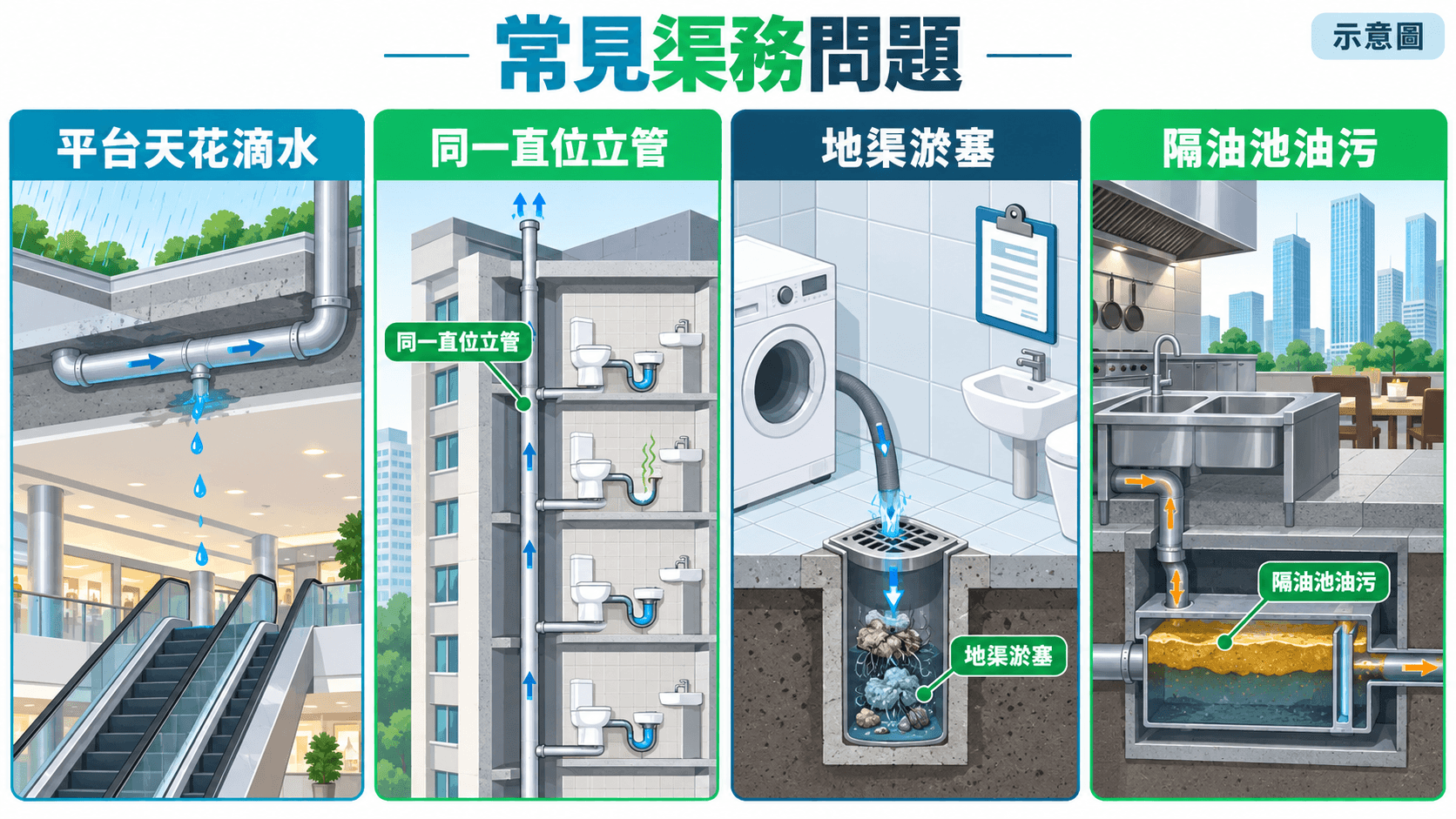
Choose the problem you are seeing to read the likely cause and next step.
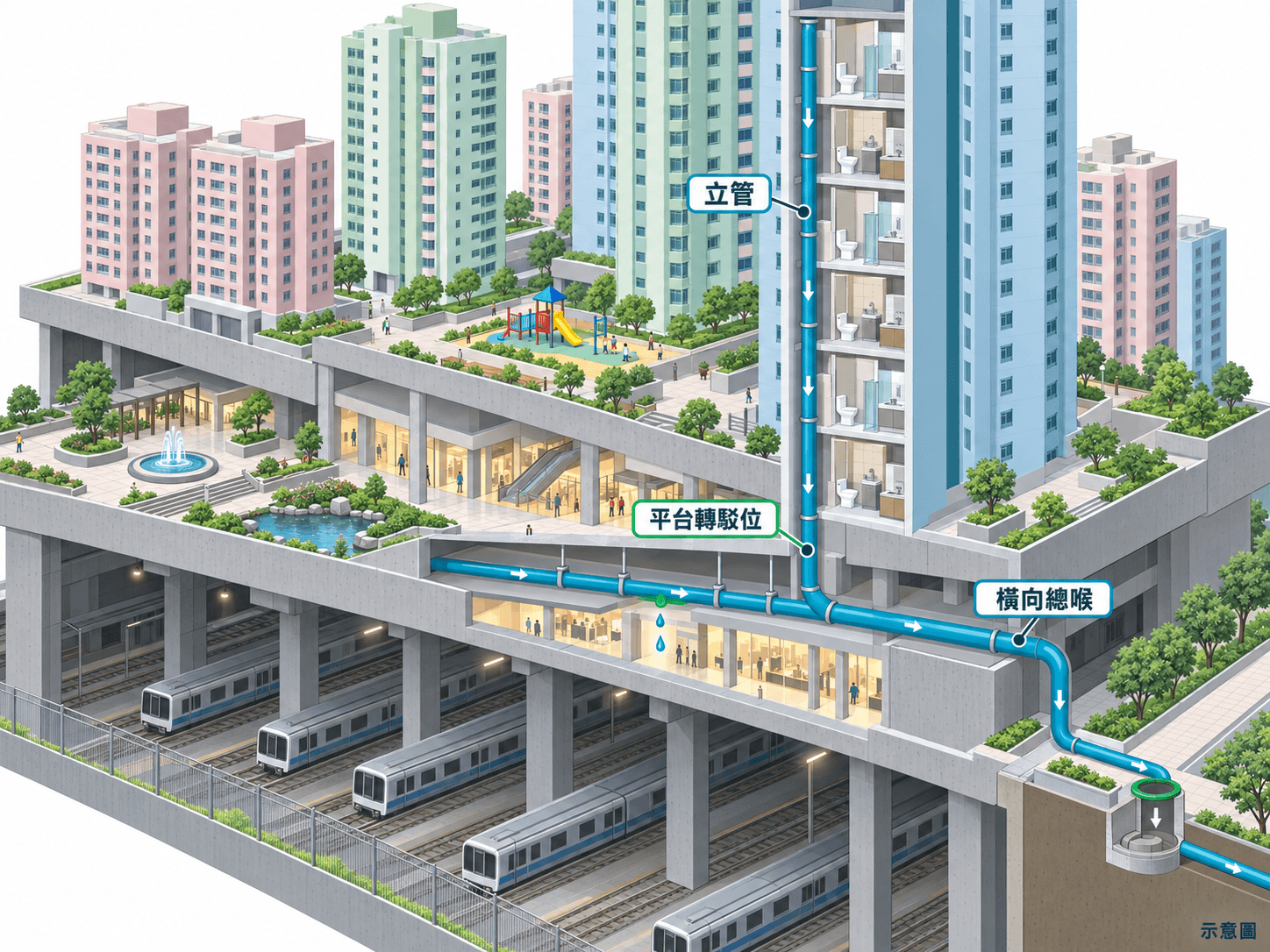
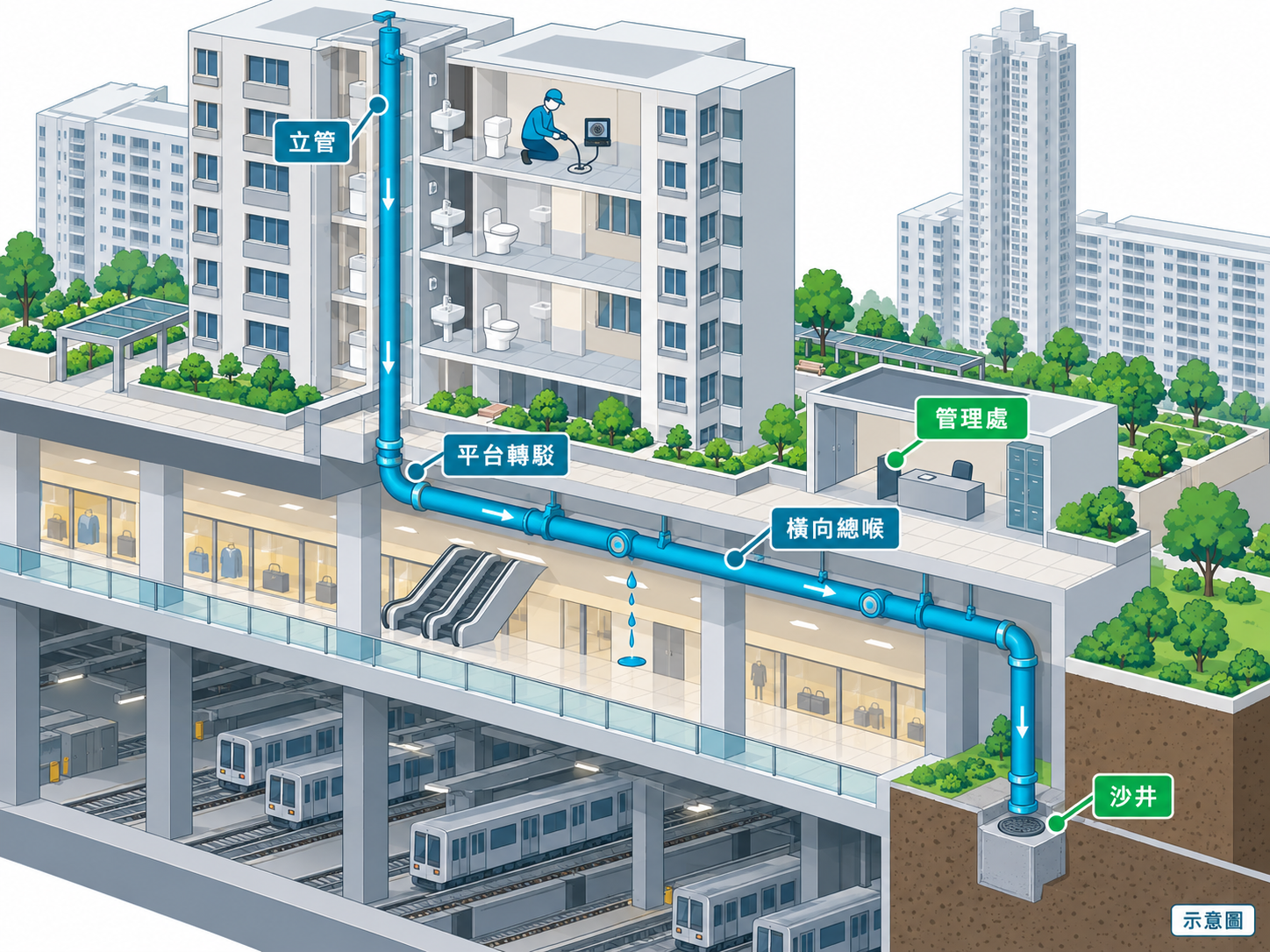
The clearest difference at a podium estate is that a leak need not show up in a flat. HK01 reported on 28 July 2018 that sewage leaked above an escalator in Telford Plaza; shopkeepers at the time suspected it came from the flats overhead, and mall staff carried out repairs that evening (the Telford Gardens page covers the case in full). By design, a podium estate's stacks turn into horizontal collector pipes at podium level, with more bends and horizontal runs, so trouble may show first in a podium, mall or car-park ceiling. If you see a drip like that, or drains on the low floors slow down, it is worth having the management office check the shared pipes, and booking a separate visit for the branch pipes and traps inside your flat.
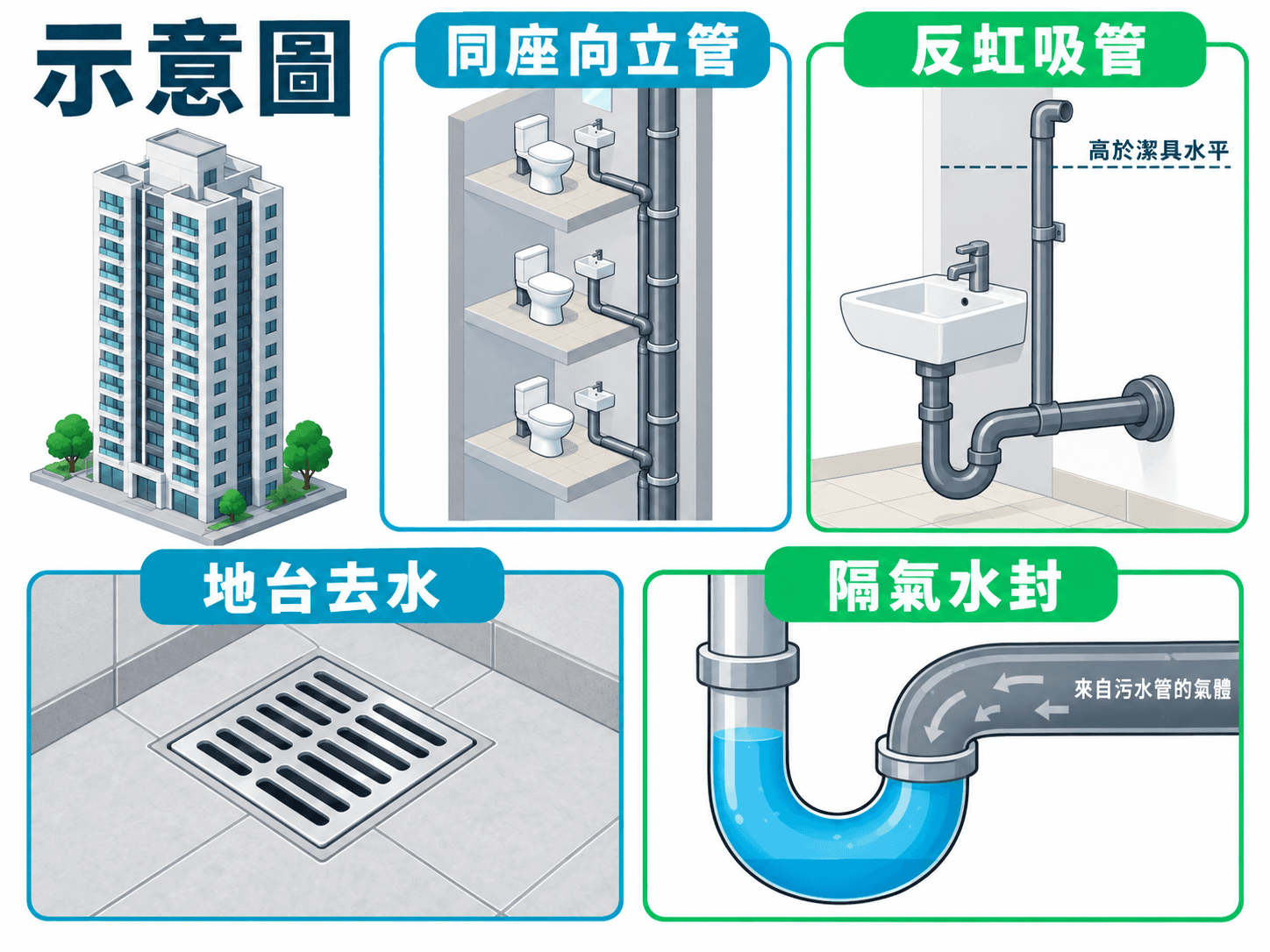
The Centre for Health Protection announced on 10 December 2020 that seven COVID-19 cases had occurred in D units on four different floors of Block 6 at Richland Gardens, and said that, before the relevant departments had finished inspecting the block's toilet vent pipes, quarantine orders would be issued to the asymptomatic residents of those D units and symptomatic residents sent to hospital. This was a public-health investigation and the press release did not say the pipes were defective. As a general inference from the design of 1980s blocks, though, flats in the same vertical line share a stack and vent pipe, so an altered trap or a dry floor drain in one flat may affect more than that flat. The Buildings Department advises pouring about half a litre of water into every floor drain at least once a week.
Kai Yip Estate was occupied in 1981, and Housing Authority data give flat sizes of about 18.2 to 39.6 m². By design, washing machines in small flats usually sit in the bathroom or kitchen and discharge straight into a floor drain or sink trap, where lint, detergent residue and hair build up. Public-housing tenants can have the work arranged through the estate office: repairs arising from normal wear and tear are the Housing Authority's own responsibility, and where the job falls on the tenant-to-pay list (from 1 January 2026), clearing a blocked basin, sink, floor drain, bathtub or toilet outlet costs HK$300, as does renewing a PVC trap of 50 mm diameter or less.
Most of the Kowloon Bay business area is reclaimed land; office towers have been added since 2006 and the MegaBox mall opened in 2007. By the nature of these uses, restaurants, food courts and office pantries are concentrated here. The Environmental Protection Department says grease deposits reduce the capacity of sewer pipes and cause sewage overflows and offensive odour, and requires all restaurants to install grease traps. Sinks and floor drains inside a shop or office are for the tenant or owner to arrange, and the building's main drains and shared manholes for the management office; see the Kwun Tong and Kowloon Bay business buildings page for details.
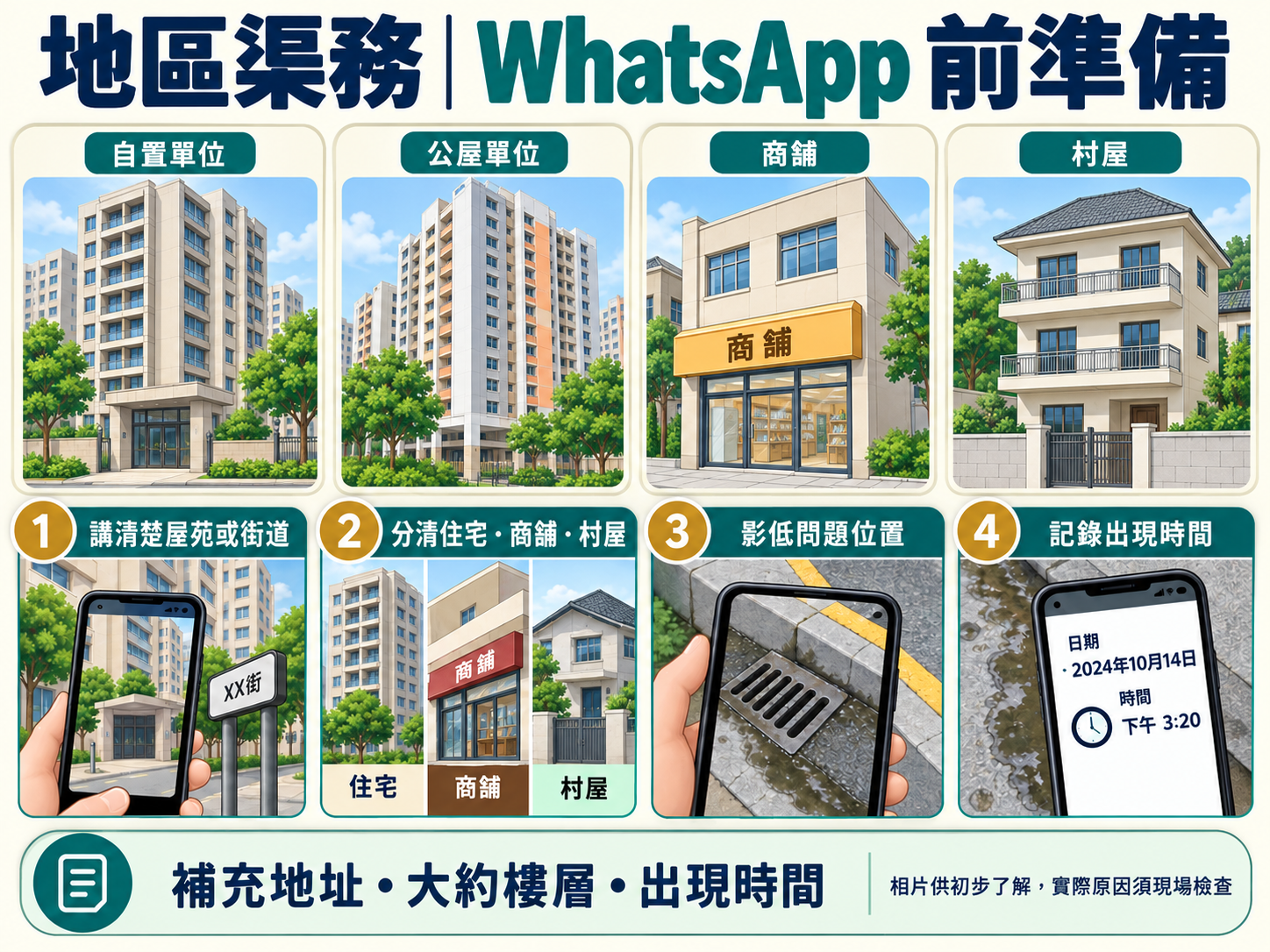
Photos or a short video on WhatsApp help us tell a single-fixture blockage from a shared-stack problem.
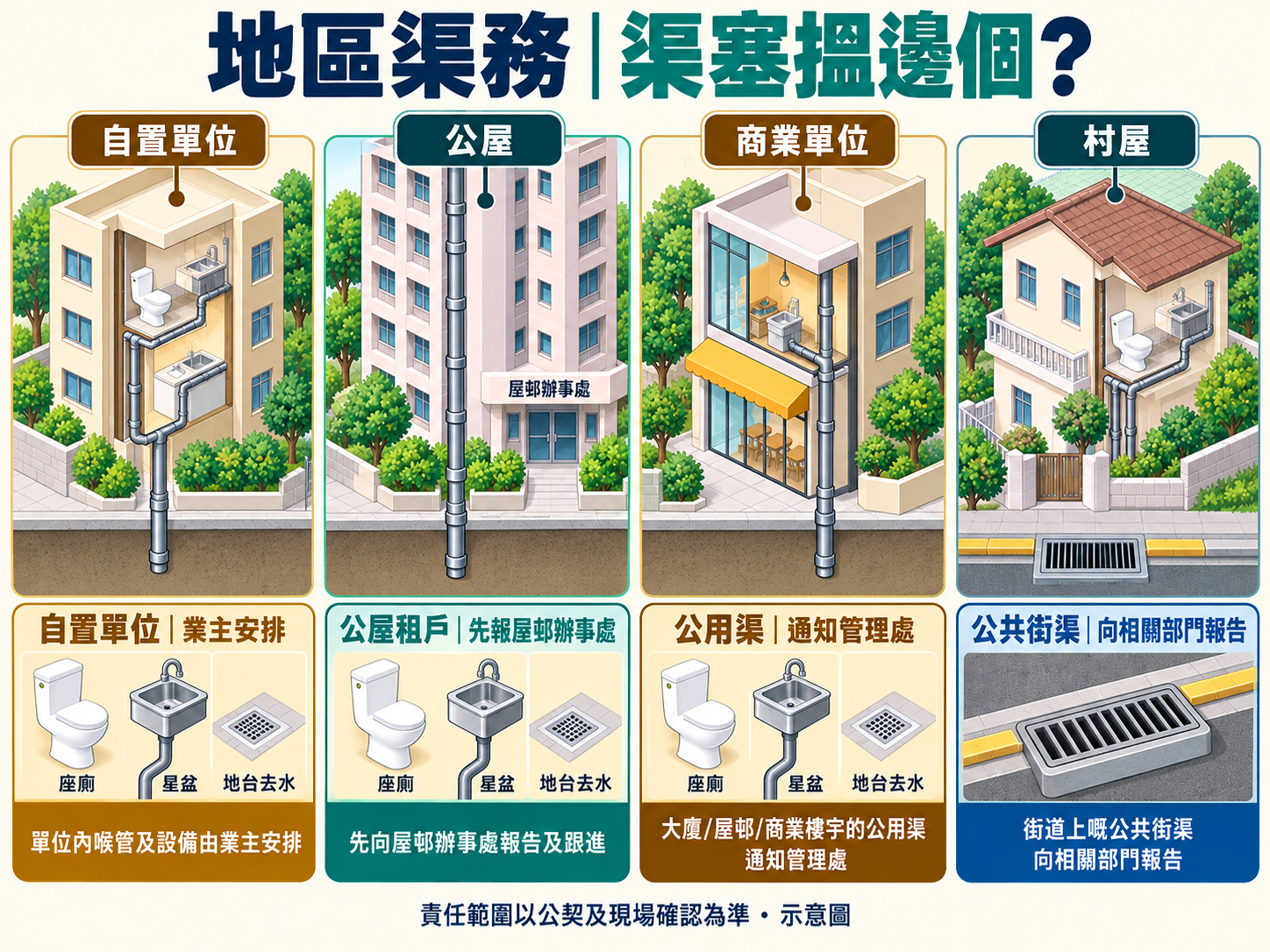
Kowloon Bay is an area of reclaimed land on the western side of Kwun Tong District, and most of its housing was occupied between 1980 and 1985: Telford Gardens above the MTR depot, the Private Sector Participation Scheme estate Richland Gardens, the public rental Kai Yip Estate and the HOS court Kai Tai Court. Ownership differs, and so does who to call about a blocked drain: owners of private and HOS flats arrange their own in-flat work and report shared pipes to the management office or owners' corporation, while public-housing tenants go to the estate office first. Amoy Gardens and Tak Bo Garden are close to Kowloon Bay station but are actually in Ngau Tau Kok.
"Kowloon Bay" was originally the name of a bay. Today it usually means the reclaimed land south of Ngau Chi Wan and west of Ngau Tau Kok, bounded on the east by Kwun Tong Road and the Kwun Tong Business Area. From 1981 the land gradually became industrial areas, cargo yards and housing: Richland Gardens and Kai Yip Estate in the north, with Telford Gardens, above the depot, becoming the focal point of the area. Amoy Gardens, Tak Bo Garden and Lower Ngau Tau Kok Estate are near Kowloon Bay station but belong to Ngau Tau Kok, so their drainage information sits on the Ngau Tau Kok and Amoy Gardens pages.
The main estates were completed at around the same time but are of different types. Telford Gardens is a private estate whose 41 blocks are only 11 to 26 storeys high because of the height limits around Kai Tak Airport at the time. Richland Gardens is a Private Sector Participation Scheme estate occupied in 1985. Kai Yip Estate is a public estate occupied in 1981 whose six blocks are of the old slab and triple-I types, and next door Kai Tai Court, originally planned as Kai Yip's second phase, was built instead as old cruciform HOS blocks. That makes the main housing in the area roughly 41 to 46 years old this year, the same generation as Amoy Gardens.
As a general inference from building age, the original pipes in these blocks have been in use for more than 40 years and most flats have been renovated, so branch pipes, traps and connection points can differ from flat to flat even within one estate; the estate name alone tells you little. The other difference is structure: at Telford Gardens the flats stand on the podium above the depot and the shopping mall, so by design waste has to transfer through the podium level before reaching the ground-level drains; the other estates are not built over the depot. Telford Gardens and Richland Gardens each have their own page.
Note: statements based on building age and type are general inferences, not findings for any particular flat.
Choose an enquiry route for your premises and work scope.
Pantry, washroom and shared-drain enquiries, with scope agreed before work
Scope and booking detailsUnit outlets, shared pipes and chamber enquiries assessed with site access
Scope and booking detailsDiscuss a defined maintenance scope using assets, usage and incident records
Scope and booking detailsA clear process from enquiry and assessment to an agreed scope of work
Tell us the drain problem and district and ask about available timing.
Confirm timing based on the district and schedule, then inspect the blockage or odour issue.
Explain the proposed approach, scope and price before agreed work begins.
Use suitable tools for the site conditions and agreed scope of work.
After the agreed work, test drainage and explain the observed result and any next steps.
PipeButler is an independent drain-service provider with no affiliation to the developer, owners' corporation, management company or Housing Department of the places above. Facts come from public sources checked on the dates shown; work on common drains or common parts follows the management office's and deed of mutual covenant's arrangements.
WhatsApp with the problem and district, and we will confirm available timing.