
Loading page…
Loading page…
Ngau Tau Kok · Private estate
Occupied 1981–1987 in four phases · 19 blocks · floor-drain traps & odour
Amoy Gardens, at 77 Ngau Tau Kok Road, was occupied in four phases from 1981 to 1987.
Last reviewed ·
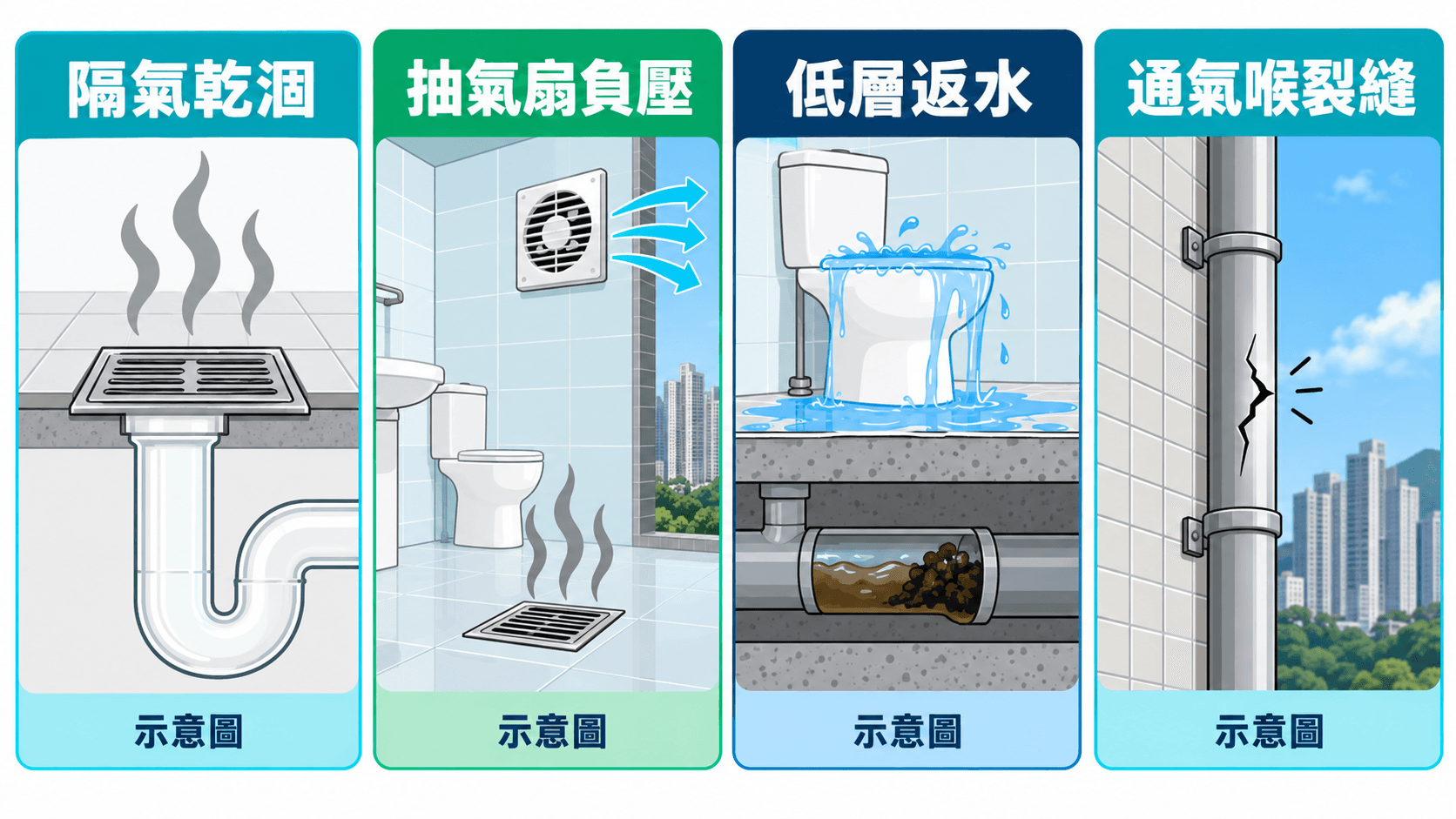
Choose the problem you are seeing to read the likely cause and next step.
The Department of Health found that most households at the time cleaned the bathroom floor by mopping instead of flushing it with water, so the U-traps on the floor drains dried out and lost their water seal. A rarely wetted bathroom floor, long trips away or an empty flat produce the same result. Start by pouring about half a litre of water into each floor drain every week; if the smell persists, the trap may be damaged or altered, or the branch pipe may be leaking.
When investigators tested a Block E flat, air flowed back from the soil stack through the dry floor drain into the bathroom when the door was closed and the exhaust fan was running. So a smell that appears when the fan is switched on is an important clue that the floor drain or another fixture has an inadequate water seal. The fix is to restore or replace the trap and check the vent and drain connections, not to mask the smell with fragrance or bleach.
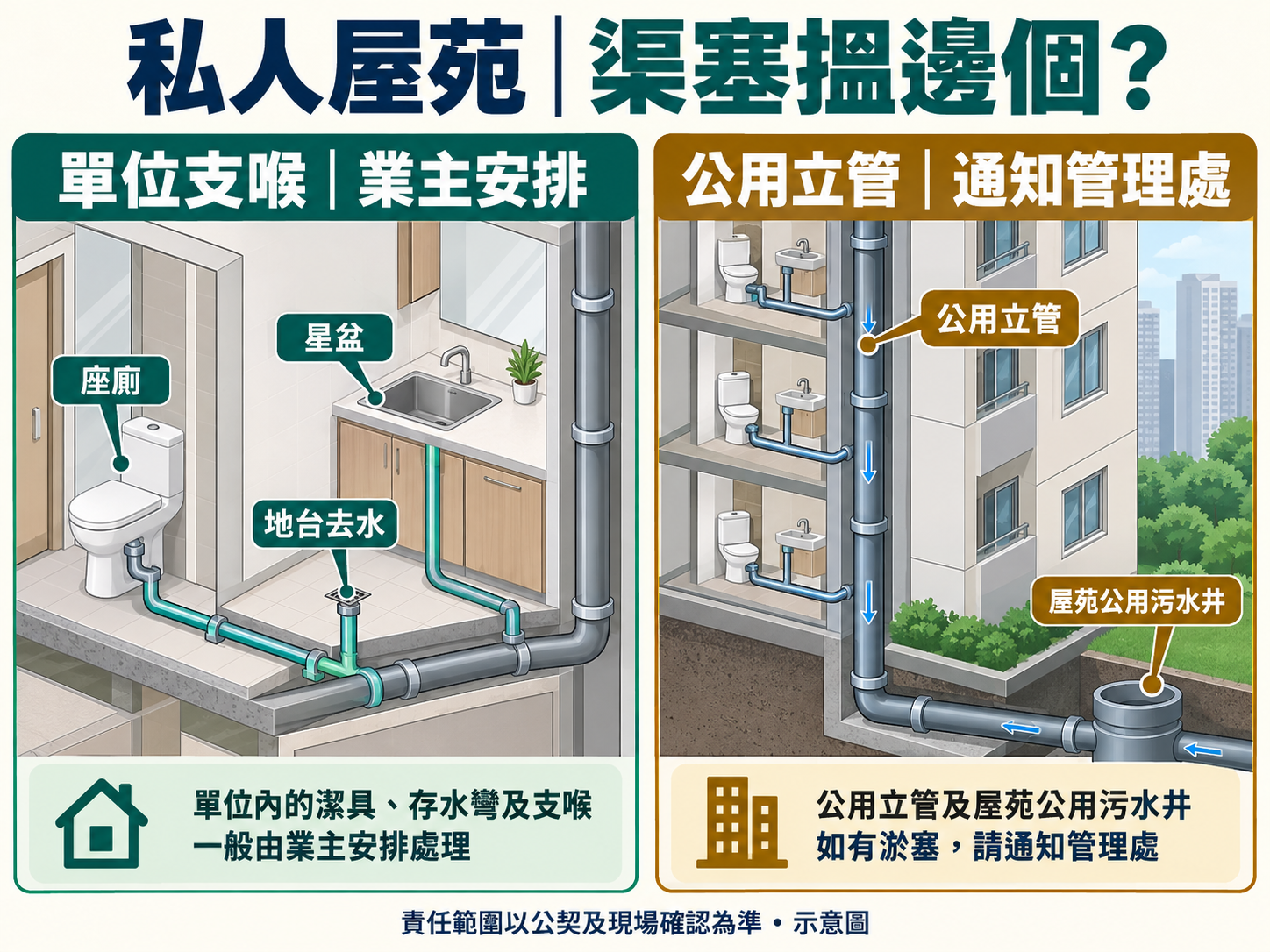
Each soil stack serves every floor in the same vertical line. By design, if the lower part of the stack or its outlet is narrowed by grease, tissue or debris, water from the floors above may back up first at low-floor toilets and floor drains. In that situation it matters whether the branch pipe in the flat is blocked or the shared stack is: the first can be cleared by a call-out, the second should be reported to management immediately.
The 2003 investigation found a large visible crack in a sewer vent pipe on the 4th floor of Block E, and gas escaping from it could spread through the light well. If the smell is strongest near a window, the light well or exposed pipes, or you can see cracks, rust stains or loose brackets on external pipes, include the shared pipes in the check and report it to the management office.
Most flats approaching 40 years old have been renovated, and renovation can replace the original traps with shallower types or remove anti-syphonage pipes. The Buildings Department warns that unauthorised changes to the drainage system can cause water seals to fail, and altering traps or anti-syphonage pipes is minor works that must be carried out by a registered minor works contractor. If the smell started after a renovation, check these points first.
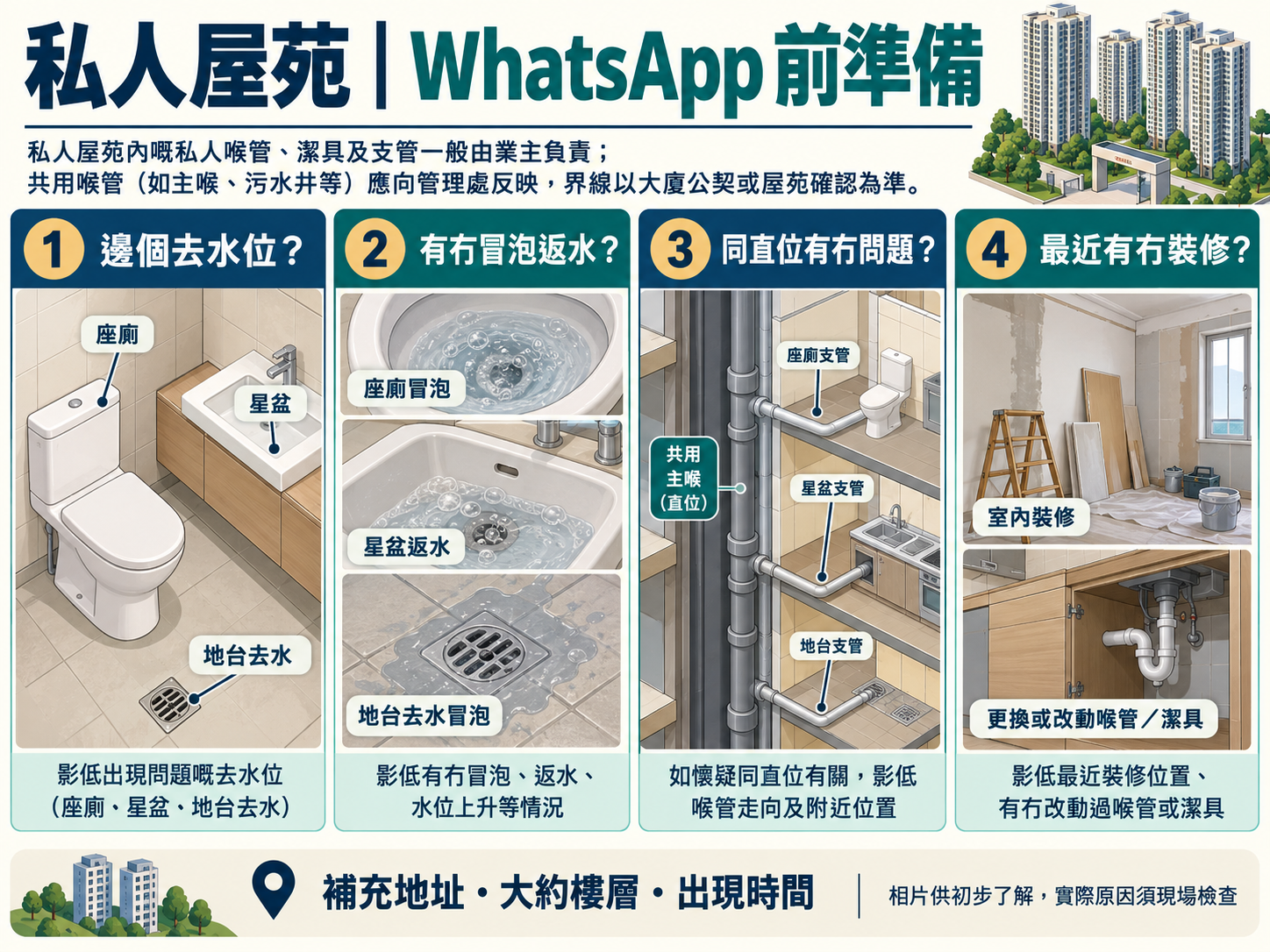
Photos or a short video on WhatsApp help us tell a single-fixture blockage from a shared-stack problem.
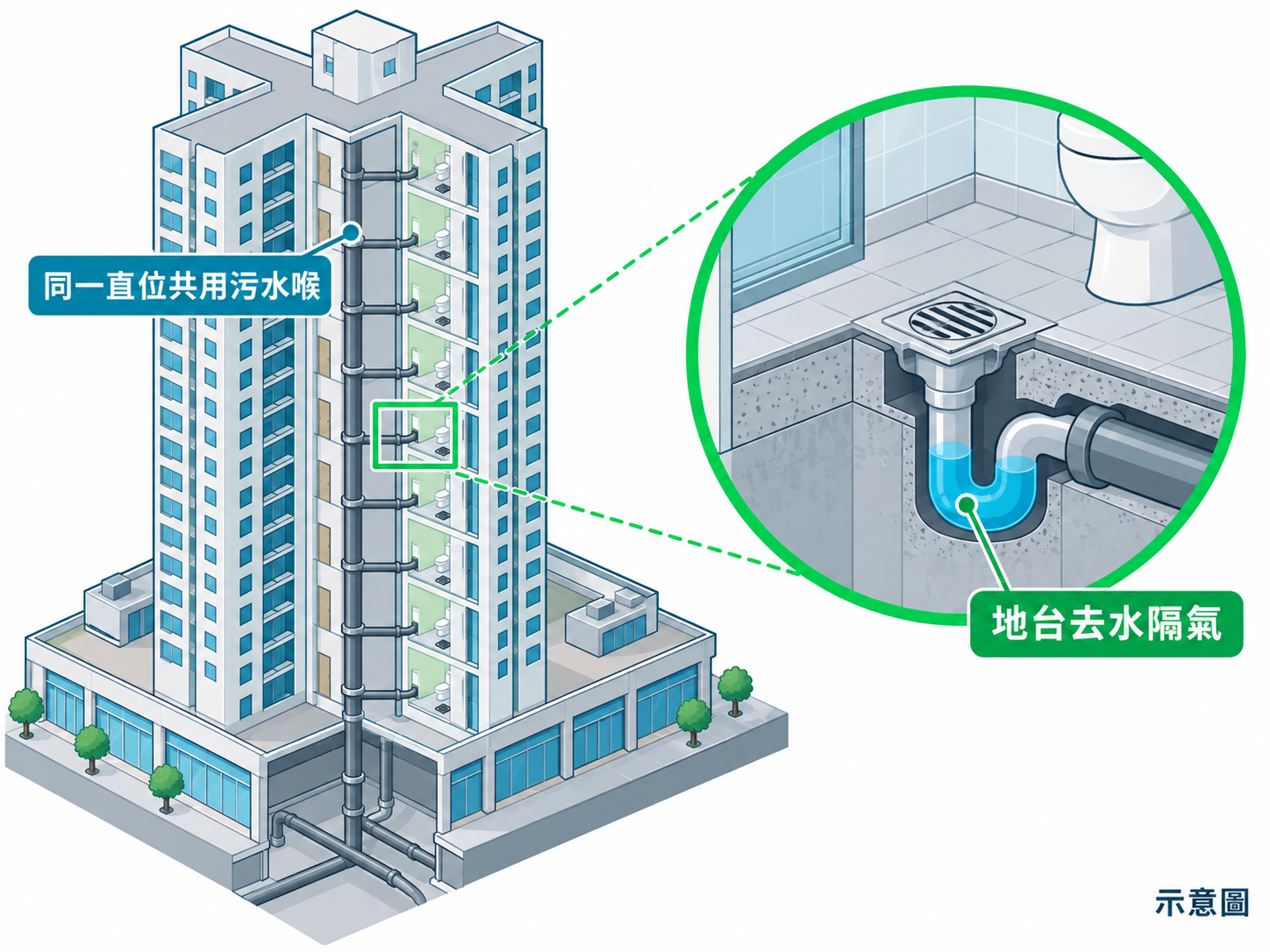
Amoy Gardens, at 77 Ngau Tau Kok Road, was occupied in four phases from 1981 to 1987. Each block has eight vertical soil stacks, and each stack serves the toilet, basin, bathtub and bathroom floor drain of the same flat position on every floor. When a bathroom smells, a floor drain gives off sewer odour or a toilet drains slowly, the first step is to separate a problem in the flat (trap water seal, branch pipe) from one in the building's shared pipes, then decide between unblocking, odour work or reporting to management.
The Department of Health's 2003 investigation documented the drainage layout at Amoy Gardens: each block has eight vertical soil stacks, each collecting effluent from the same flat position on every floor. The toilet, basin, bathtub and bathroom floor drain all connect to that stack, and each fixture has a U-trap whose water seal blocks sewer air. In other words, flats in the same vertical line share one stack, so a fault in one flat's branch pipe or trap does not always stay in that flat.
The first phase was occupied in 1981 and even the last phase is close to 40 years old. As a general inference from building age, estates of this generation were typically built with cast-iron or early plastic pipes, and after decades of renovation the branch pipes, trap types and connection points often differ from flat to flat. Flats range from about 371 to 607 sq ft (gross), so bathrooms are small and the floor drain sits close to the exhaust fan, which affects how odour behaves.
After the 2003 outbreak, the management company repaired a cracked sewer vent pipe on the 4th floor of Block E, and the government asked for a comprehensive inspection of the drainage system in every block. The condition of any particular flat today depends on its own and its block's renovation and repair history, and cannot be judged from the estate name alone.
Note: statements based on building age and type are general inferences, not findings for any particular flat.
A clear process from enquiry and assessment to an agreed scope of work
Tell us the drain problem and district and ask about available timing.
Confirm timing based on the district and schedule, then inspect the blockage or odour issue.
Explain the proposed approach, scope and price before agreed work begins.
Use suitable tools for the site conditions and agreed scope of work.
After the agreed work, test drainage and explain the observed result and any next steps.
PipeButler is an independent drain-service provider with no affiliation to the developer, owners' corporation, management company or Housing Department of the places above. Facts come from public sources checked on the dates shown; work on common drains or common parts follows the management office's and deed of mutual covenant's arrangements.
WhatsApp with the problem and district, and we will confirm available timing.