
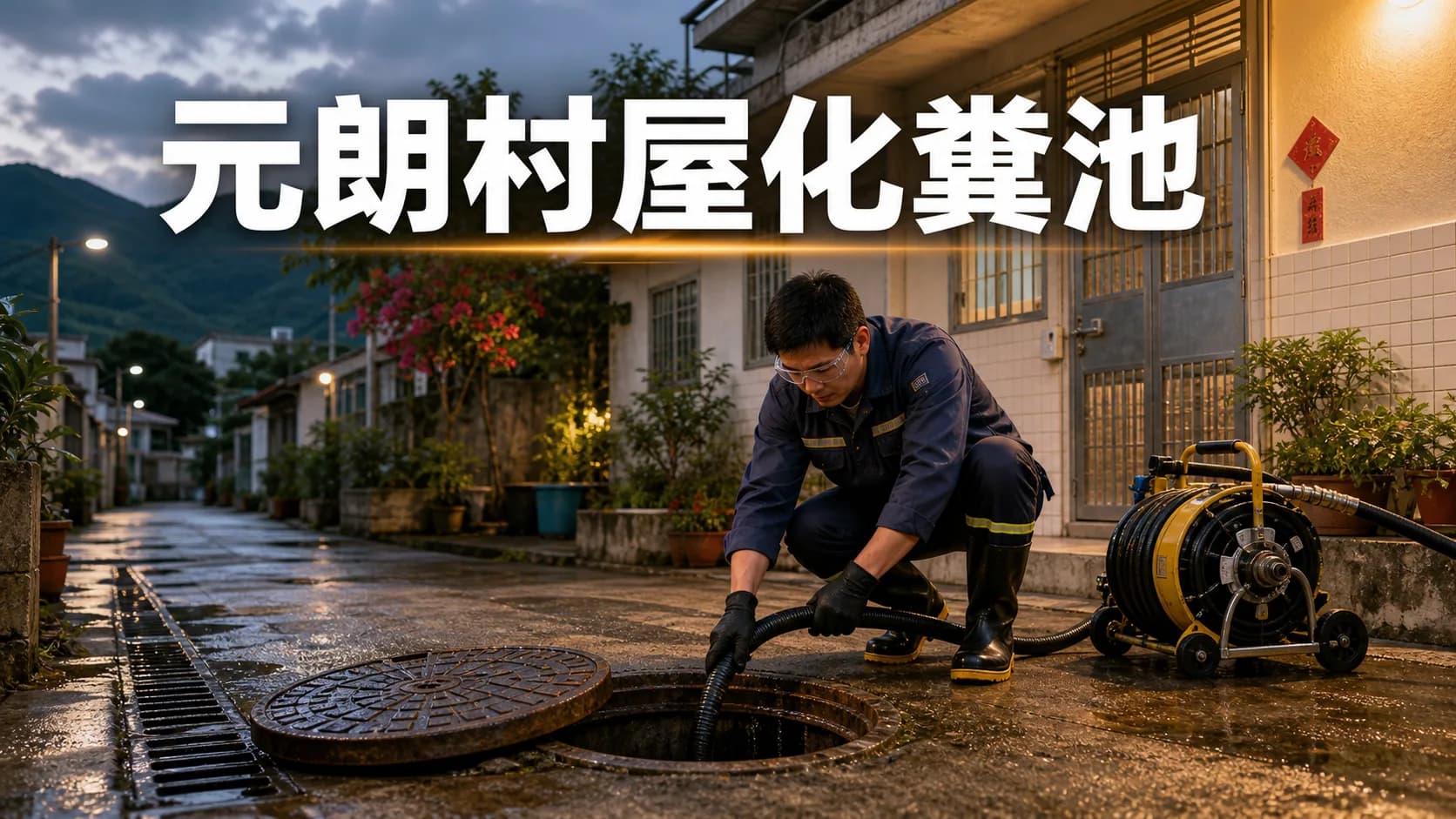
Village houses and low-density homes around Yuen Long, Fairview Park, Palm Springs, Ping Shan, Hung Shui Kiu and Tin Shui Wai can have drainage arrangements very different from urban flats. Long outdoor drains, inspection chambers, septic tanks and downstream discharge points may all be involved. A toilet backing up, a full chamber, a septic smell outside or slow drainage after rain may originate beyond the nearest indoor outlet.
If there is a high tank or chamber level, sewage backflow or a strong smell, stop using the affected drains, avoid sewage contact and record visible water levels and affected areas from a safe position. Arrange assessment for desilting and sludge removal, unblocking or pipe cleaning. Do not open or lean into septic tanks, chambers or pits yourself. Never mix drain cleaner, bleach or strong cleaning chemicals.
See our Yuen Long service area for local arrangements. The following checks distinguish the indoor drain, chamber, tank and downstream sections.
Four parts of the drainage route to distinguish
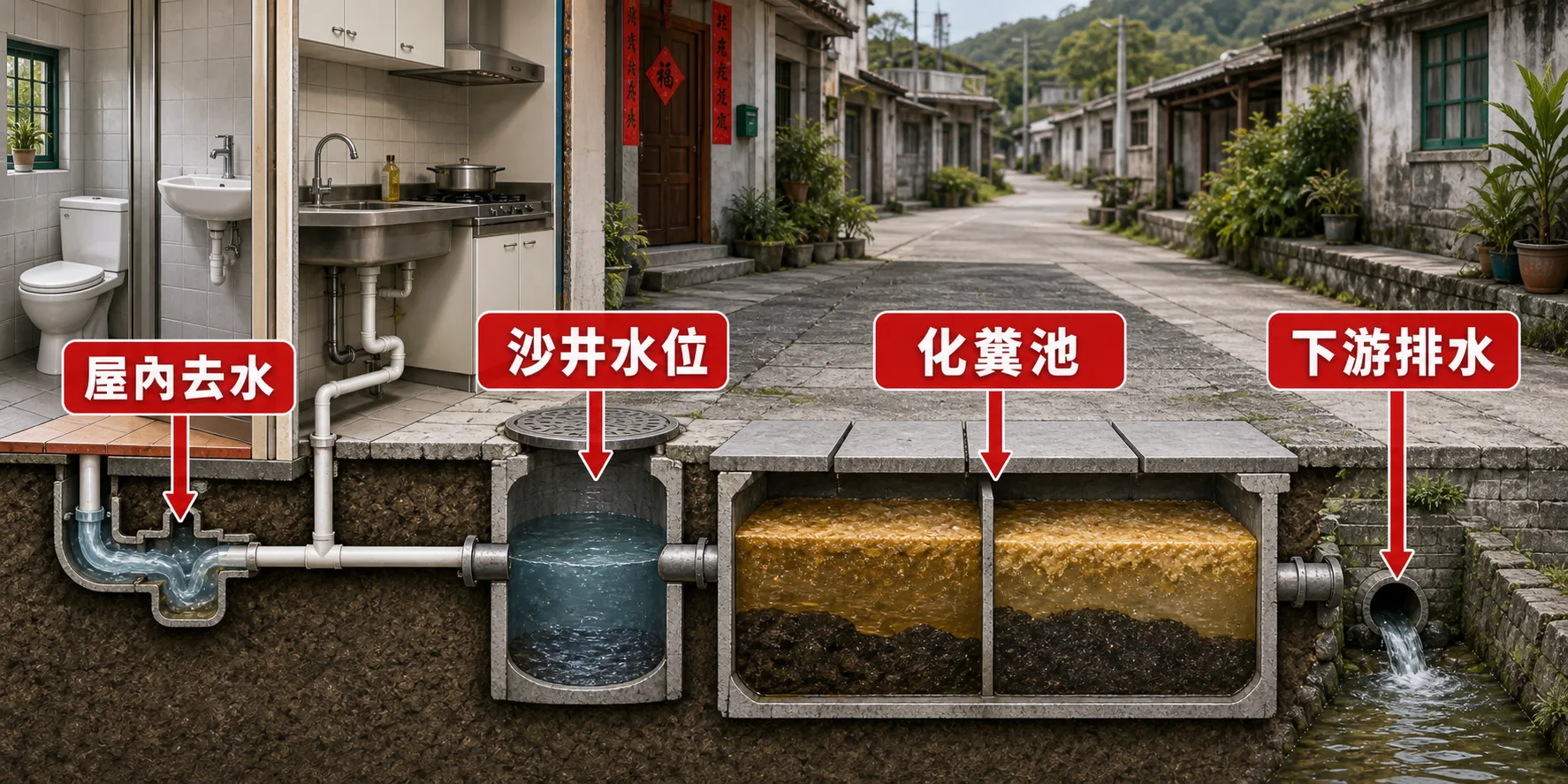
1. Indoor drainage
If just one basin, kitchen sink, floor drain or toilet is slow, check the nearby trap and branch pipe for hair, grease, paper or an object. Local unblocking or cleaning may be appropriate; a single slow outlet does not prove that the septic tank is full.
2. Inspection chamber level
A persistently high outdoor chamber level, sewage rising when a chamber is professionally opened, or several slow outlets on one line can indicate an outdoor restriction, chamber sediment or insufficient downstream drainage. Treating just one indoor outlet may be inadequate.
3. Septic tank
A septic tank separates solids, scum and liquid but has finite capacity. Long intervals between cleaning, excessive solids, a blocked outlet or unsuitable material reduce its effective capacity. Odour, high levels and several slow outlets together justify assessment of sludge removal and the outlet.
4. Downstream drainage
If the system fills again soon after cleaning, especially following rain, investigate downstream pipework, soakaway or discharge arrangements, silt, roots and drainage boundaries shared with others. Sectional testing or CCTV may help explain the returning high level.
Five warning signs requiring attention
A persistently high chamber level: downstream flow may be restricted, or sediment may occupy too much chamber or tank capacity.
Toilet or floor-drain backflow: sewage is entering the property. Stop using the drains rather than flushing again or washing the floor.
A septic smell outdoors: smells near gardens, parking spaces, village roads or chambers warrant examination of the outdoor wastewater system.
Several outlets draining slowly: simultaneous kitchen, bathroom, toilet and washing-machine problems are unlikely to be confined to a single fitting.
Deterioration after rain: rain-related backflow or odour is useful evidence about downstream drainage, groundwater or outdoor pipes. See the pre-rainy-season checklist.
Four initial actions
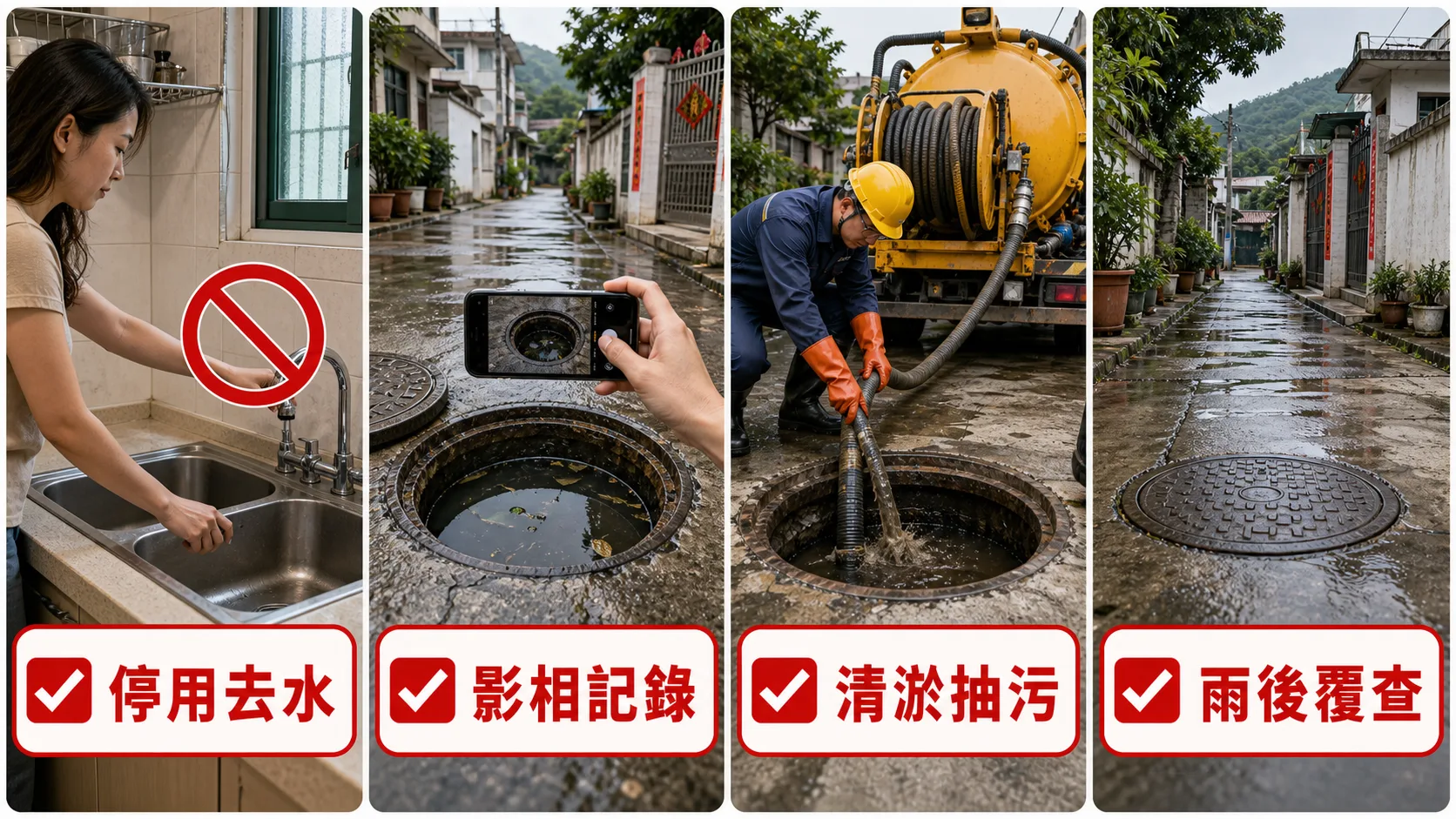
1. Stop using the drains
Pause flushing, showers, washing machines, floor washing and large discharges. With the downstream route blocked, added water can emerge at the lowest or weakest point. Pay particular attention to ground-floor, low-level and outdoor outlets.
2. Record what is happening
From a safe position, record the chamber exterior, visible water height, direction of sewage movement, backflow and odour locations, and changes after rain. A short video can show rising levels and flow direction more clearly than one photograph.
3. Arrange desilting or sludge removal
Thick deposits, sludge, high levels or overflow in a chamber, tank or outdoor section require suitable equipment. Forcing a tool into an indoor outlet will not necessarily reach these deposits. Sludge removal and ordinary unblocking address different parts of the problem.
4. Review after rain
Some Yuen Long village-house problems appear mainly during heavy rain. Record whether levels, smells and slow drainage return after the work. This helps determine whether further downstream investigation or CCTV is needed.
Choosing unblocking, sludge removal, pipe cleaning or CCTV
Unblocking: usually addresses one indoor outlet, a short branch, a toilet obstruction or another local restriction.
Desilting and sludge removal: addresses high levels, sludge and accumulated solids in chambers, septic tanks and outdoor sections. It restores available capacity rather than merely making a passage through an obstruction.
Pipe cleaning: may be suitable for long horizontal runs containing grease, soap deposits, sand, root fragments or recurrent restrictions. Rapid recurrence after unblocking suggests that deposits may still narrow the pipe.
CCTV inspection: may help with repeated blockages, an unknown location, suspected roots or cracks, unclear connections or evidence for a report. Read when CCTV inspection is useful.
Odour investigation: smells remaining after unblocking may relate to water seals, traps, chambers, the tank, downstream pressure or cracks. Arrange source investigation rather than simply adding fragrance.
Cleaning and disinfection: once backflow has stopped, sewage-contaminated floors, cupboard bases, parking spaces or frequently used garden areas may need appropriate cleaning and disinfection. See handling sewage backflow.
Why does the blockage return after ordinary unblocking?
A village-house system may run from indoor branches through long outdoor pipes, chambers and a septic tank to its downstream destination. Opening the nearest obstruction can temporarily improve flow while chamber sediment, tank solids and downstream deposits remain.
Rainwater and silt are another consideration. Gardens, parking areas, village roads and outdoor drains can contribute leaves, sand, roots, paper and grease. If slow drainage and odours mainly follow rain, include the outdoor and downstream sections in the investigation.
Read desilting versus unblocking and share photographs or video to clarify the appropriate work.
What not to do yourself
- Do not enter or lean into a septic tank, chamber, drain pit or suspected confined space.
- Do not mix strong drain cleaner, bleach, insecticide or unknown chemicals in a septic system.
- Do not keep flushing large volumes to test a system already backing up or showing high chamber levels.
- Keep wipes, nappies, cotton buds, cat litter, cooking oil, leftovers, sand and renovation debris out of drains.
- Do not assess only the indoor outlet while ignoring outdoor chambers and visible levels.
Information to prepare before an assessment
- Location: central Yuen Long, Fairview Park, Palm Springs, Ping Shan, Hung Shui Kiu, near Tin Shui Wai, or the village name.
- Affected points: toilet, bathroom, kitchen, washing machine, garden or parking drain, chamber or septic tank.
- Symptoms: slow drainage, backflow, smell, high levels, overflow, deterioration after rain or several affected outlets.
- Safe photographs and video of covers, visible levels, flow direction and backflow; describe where the smell is strongest.
- Dates of previous unblocking, pumping, desilting, drainage alterations and management follow-up.
- Any drain cleaner, bleach or other chemicals already used.
Clear information helps define the work. Use our contact page or send photographs and video by WhatsApp for an initial assessment.
For Yuen Long village-house tank, chamber, outdoor drain or sewage-backflow problems, WhatsApp PipeButler on 5340 0748 with the location, affected outlets, safe chamber photographs, rain-related changes and recent maintenance records. We will assess whether unblocking, sludge removal, pipe cleaning, CCTV, odour investigation or disinfection is appropriate and agree the scope before work. See the wider village-house septic and drainage guide.
FAQ
Does a slow village-house drain always mean the septic tank is full?
No. A single slow basin, floor drain or toilet may involve a trap, branch, grease, hair or an object. Several slow outlets, a high chamber level, outdoor smell or deterioration after rain make the tank, chamber or downstream route more relevant.
How do a full chamber and a full septic tank differ?
A chamber provides access and a view of outdoor drainage levels; a septic tank handles wastewater and retained solids. A high chamber level can reflect tank capacity, an obstructed outlet or slow downstream discharge. Its location, connections and changing levels matter.
Can I open a full septic tank and deal with it myself?
No. Tanks, chambers and pits can contain harmful gases, lack oxygen and present sewage-contact and fall hazards. Record the exterior and any safely visible conditions without opening, leaning into or entering them, or mixing chemicals.
How does ordinary unblocking differ from sludge removal?
Unblocking opens a restricted flow route. Sludge removal takes accumulated solids and liquid out of tanks, chambers or outdoor sections. They can complement each other but are different tasks.
What does a stronger septic smell after rain indicate?
Rainwater, groundwater, downstream drainage capacity, high chamber levels or soakaway conditions may be involved. If slow drainage or backflow also occurs, record how quickly levels return so the downstream route and need for CCTV can be assessed.
Is disinfection needed after sewage backflow?
If sewage reached indoor floors, cupboard bases, furniture, parking spaces or regularly used surfaces, remove contamination, clean, disinfect suitable hard surfaces and dry and ventilate after backflow stops. Disinfection alone cannot prevent renewed contamination while the cause remains.