
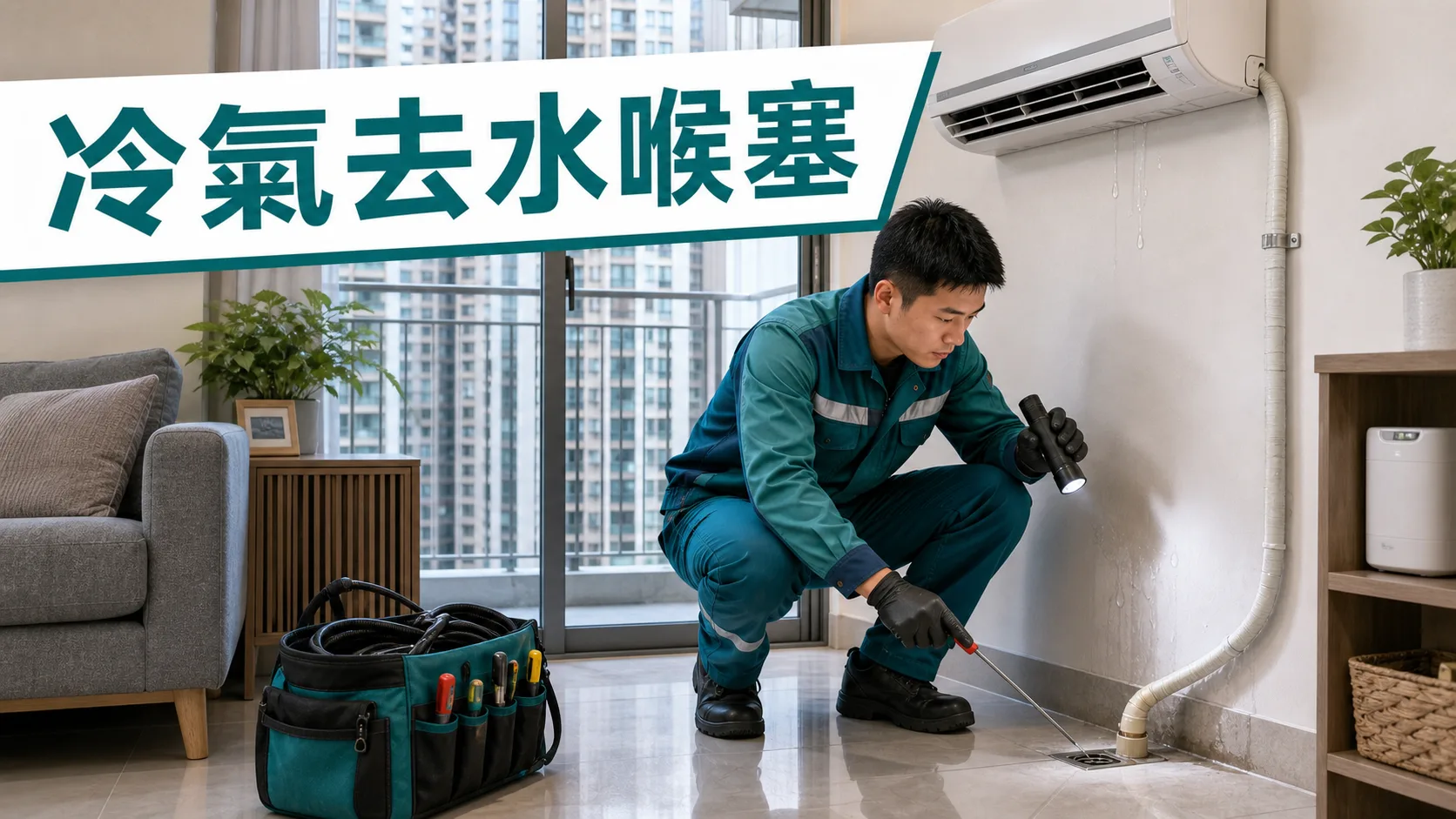
If an air conditioner starts dripping after running, or produces a musty, sour or sewage-like smell at start-up, a blocked condensate pipe is one possibility. Filters, drain pans, installation falls, floor drains and downstream pipework can also be involved. Locate the water and distinguish mustiness from sewage odour before choosing an air-conditioning technician or a drainage technician.
If the indoor unit leaks or water backs up, switch it off safely, keep clear of wet electrical equipment and contain water only where safe. If nearby floor drains also smell, back up or drain slowly, arrange a drainage assessment as well.
This guide covers common Hong Kong domestic situations and distinguishes unit cleaning, condensate clearance and drain-odour investigation.
Common signs of a blocked condensate drain
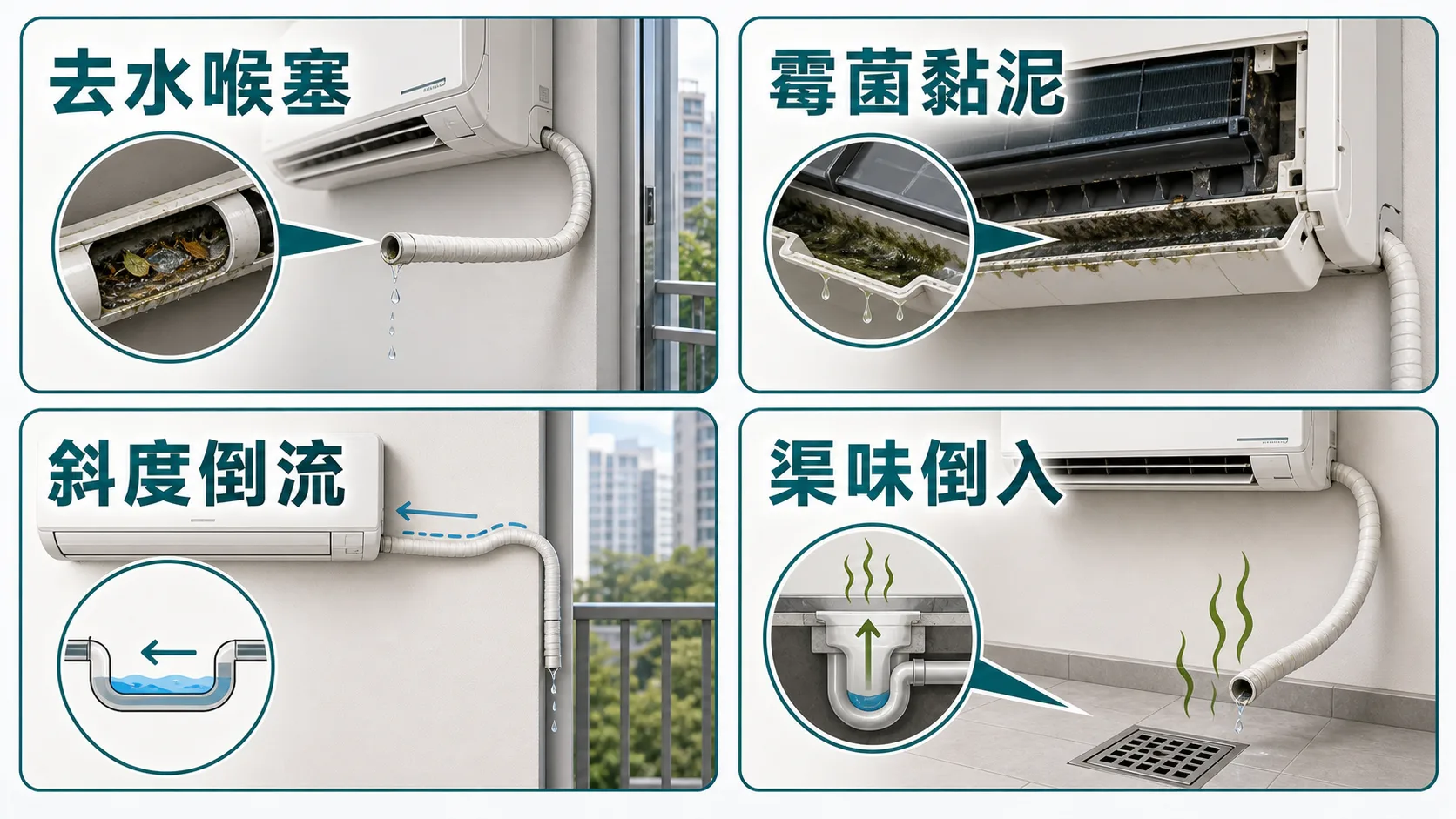
Water may drip from the indoor unit, pipe opening, false ceiling, wall or window edge after the unit has run. Condensate normally passes through the pan and drain pipe. Dust, slime, algae, renovation sediment or an unsuitable fall can hold it inside the unit or allow it to return indoors.
Musty smells often involve moisture, filters, coils, pans and slime. Sewage-like or rotten smells require checks of the drain receiving the condensate: a bathroom or balcony outlet may have a dry water seal, restricted flow or downstream odour.
Four common causes
1. Dust and slime in the pipe
Condensate combines over time with dust, microorganisms, algae and airborne dirt to form slippery deposits. A narrow pipe, poor fall and long intervals between cleaning encourage partial restriction. It may drain initially but leak once condensate accumulates during prolonged operation.
2. Dirty filters, coils or drain pan
Dusty filters reduce airflow and contribute to damp, dirty conditions. Slime or mould in the pan can cause odour even before the pipe blocks completely. Unit cleaning and internal drainage checks may be needed rather than only external pipe clearance.
3. Poor fall or connections
Dripping beginning after renovation, relocation or installation can indicate an uphill section, insufficient fall, crushed hose, loose connection or overly high discharge point. Condensate cannot drain naturally through such a route.
4. Odour from the receiving drain
Condensate may discharge near a bathroom, kitchen, balcony, external or floor outlet. A weak or dry seal, partial blockage or downstream smell may become more noticeable with airflow and humidity. Check the receiving water seal and odour source.
Four initial steps
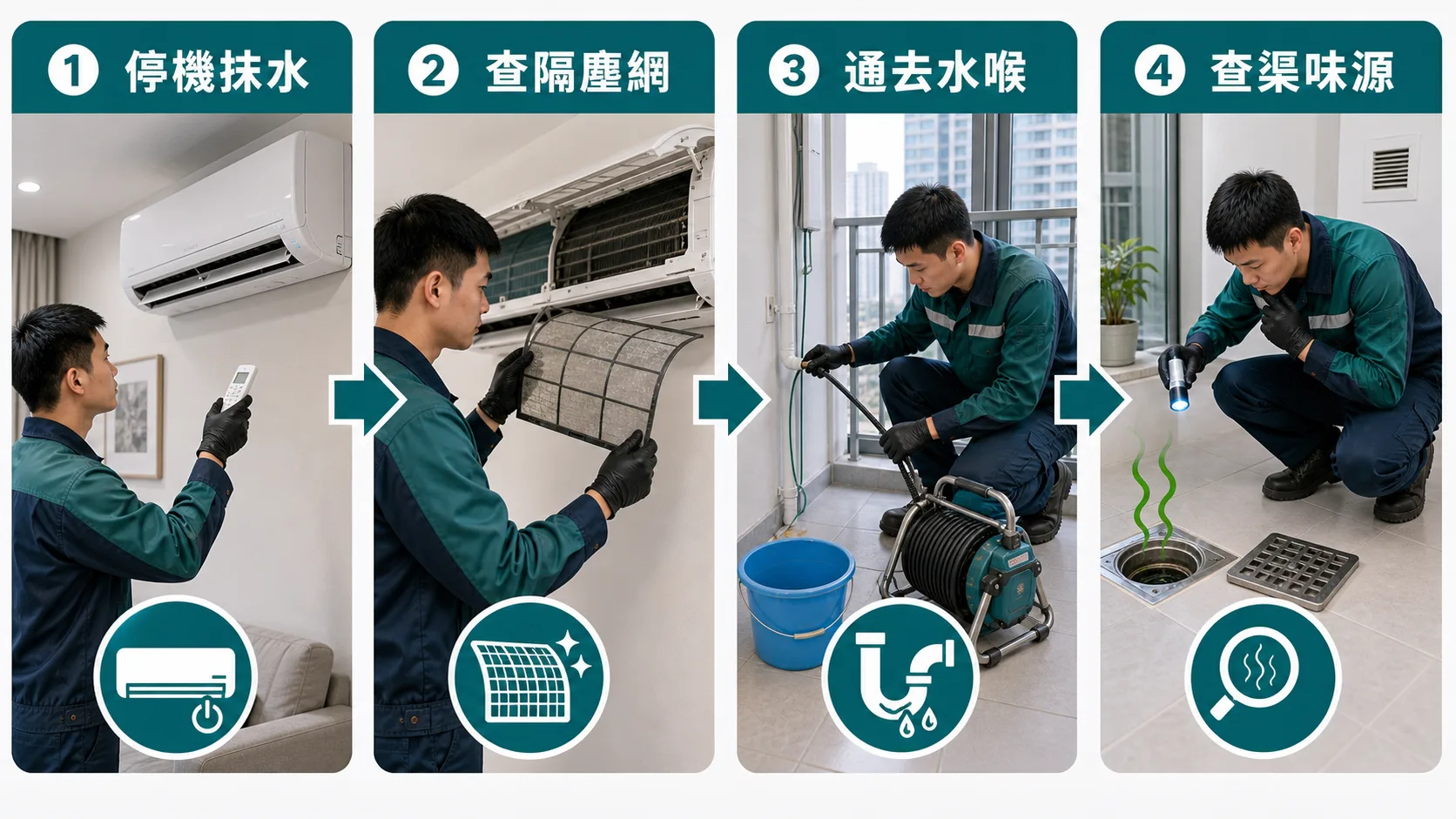
1. Switch off and protect the area
For indoor dripping, wall leakage or a wet false ceiling, stop operation safely. Keep away from wet sockets and electrical devices; remove nearby dry belongings only where safe. Do not continue running a leaking unit to test it, as water can reach components and concealed finishes.
2. Check the filter and air intake
Record heavy dust, mustiness or weak airflow. Clean removable filters according to the model's instructions or arrange servicing. If dripping or sewage odour remains, the drain route needs assessment.
3. Observe the outlet where safely accessible
Existing observations of discharge help diagnosis; do not restart a leaking unit merely to test. No outlet flow while the indoor unit drips can indicate a pan or pipe restriction. Flow at the outlet alongside a smelly floor drain points towards the receiving drain and its seal.
4. Trace smells rather than masking them
Do not rely on fragrance or disinfectant spray. Note whether floor drains, basins, balcony outlets, kitchen drains and the condensate destination also smell, gurgle or drain slowly. See bathroom odour sources and post-renovation checks.
Do not pour drain cleaner into the condensate pipe
Corrosive chemicals can damage metals, plastics, electronic components, pans and connectors, produce irritating odours or return indoors. A loose or concealed connection may allow chemical leakage above ceilings.
Do not improvise with high-pressure water, stiff wire or unsuitable tools through the indoor unit. They can force dirty water back inside or puncture flexible hose. Limit DIY work to manufacturer-approved filter care. Suspected condensate, floor-drain or downstream restrictions need suitable equipment, with pipe cleaning or internal inspection where appropriate. See chemical safety guidance.
Air-conditioning technician or drainage technician?
Usually air-conditioning work: filters, fans, coils, drain pans, unit tilt, internal leaks, refrigerant or performance issues, servicing, brackets and mechanical components.
Usually drainage investigation: odour where condensate enters a floor drain, slow or backing-up receiving outlets, simultaneous bathroom or kitchen smells, several slow drains, new drainage connections after renovation, downstream branches or shared building pipes.
Both trades may be required. Unit servicing addresses internal contamination and the pan; drainage work addresses the discharge destination, seals, branches and odour source. Clear division avoids a clean unit still drawing attention to a drain smell, or clear pipes leaving an internally dirty unit musty.
Checks after renovation
- Destination: establish whether condensate discharges externally, to a balcony, bathroom, kitchen or floor drain.
- Pipe fall: a poorly graded concealed line holds water and encourages slime.
- Water seal: a dry trap or incorrect connection can allow drain air indoors.
- Building debris: sand, mortar, plastic and protective-film fragments may remain in new drainage.
- Ceiling leakage: check affected ceilings and cupboards for retained dampness and mould where appropriate.
When to arrange inspection promptly
- Indoor-unit dripping, wet walls or ceiling stains.
- A pronounced musty, sour or sewage smell when the unit runs.
- Dripping or odour continuing after filter cleaning.
- A receiving floor drain that is also slow, smelly or backing up.
- Several bathroom, kitchen or balcony outlets affected.
- Rapid recurrence after renovation, relocation or new installation.
- Sewage contact with surfaces or belongings requiring cleaning and disinfection.
WhatsApp PipeButler on 5340 0748 with the leak location, unit model, safely accessible outlet photographs, nearby floor drains and symptom timing. We will assess unblocking, pipe cleaning, odour investigation or the need for an air-conditioning technician, and agree any drainage work before starting.
Frequently asked questions
What does a blocked condensate pipe smell like?
Pan or pipe slime may smell musty, sour or damp. Sewage-like or rotten smells warrant examination of the receiving drain, its seal and downstream drainage.
Does dripping always mean a blocked pipe?
No. Pan contamination, filters, unit tilt, installation fall, loose hoses and a restricted discharge destination can contribute. Location and the delay after start-up help distinguish them.
Can I unblock it myself?
Manufacturer-approved filter cleaning is often reasonable. Pouring chemicals into the unit or probing with hard objects is not. Internal, concealed, ceiling and floor-drain issues should be assessed by a suitable technician.
Who should investigate a sewage smell?
If confined to musty air from the unit, begin with air-conditioning servicing. If nearby drains also smell, flow slowly or back up, arrange drainage investigation.
Does leaked condensate require disinfection?
Condensate is not automatically sewage. Water passing through dirty pans, mould, floor drains or backed-up wastewater can contaminate surfaces and fabrics, which need appropriate cleaning and drying and, where justified, disinfection. Sewage odour or actual sewage backflow warrants specialist assessment.