
Loading page…
Loading page…
A basin can still smell after the bowl and waste opening are cleaned. Check the overflow passage, compatible waste fittings, seals and nearby drains separately.
WhatsApp with the problem and district, and we will confirm available timing.
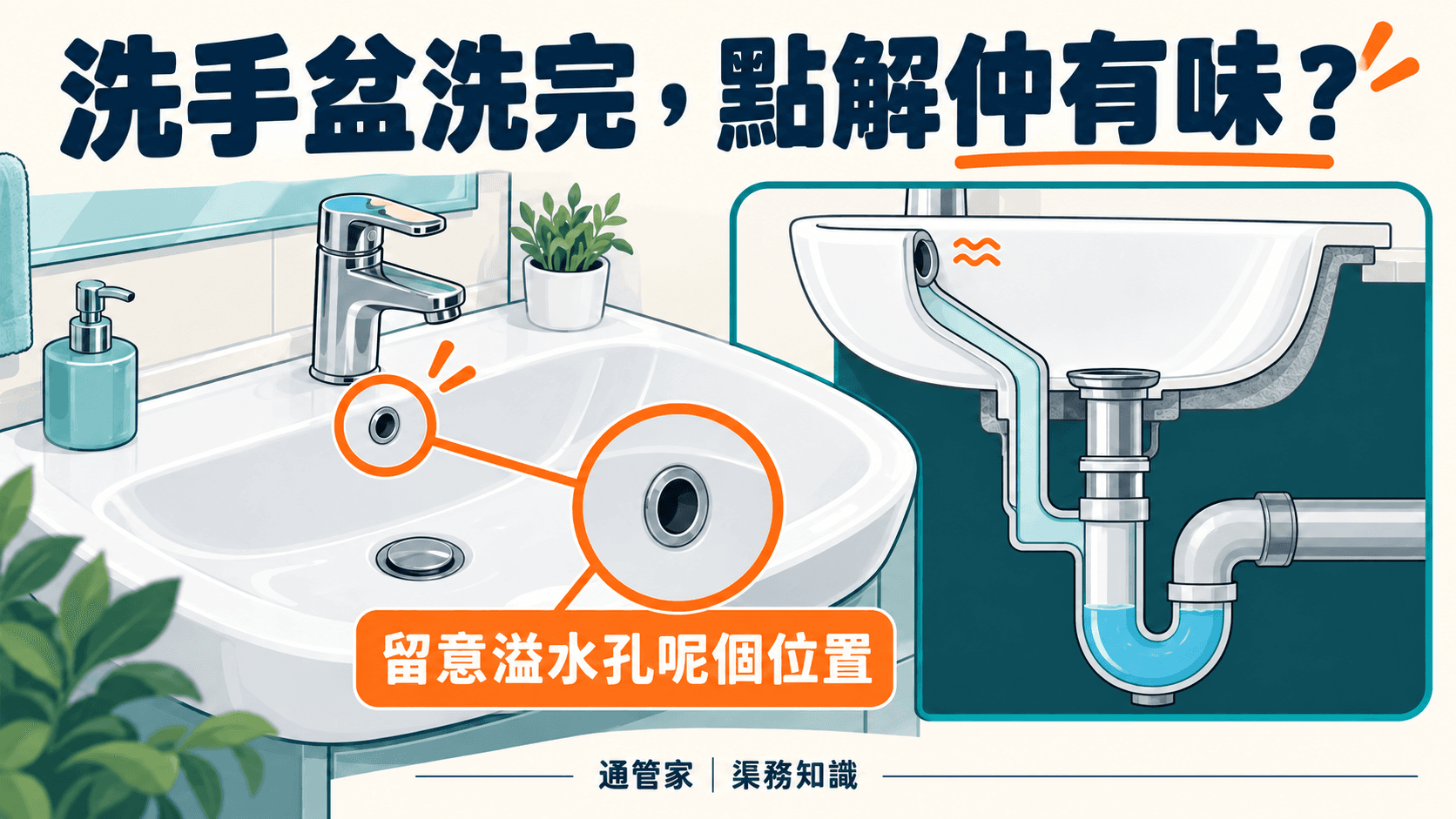
If a basin still smells after cleaning the bowl and drain opening, consider the overflow hole, but smell alone cannot identify the fault. The overflow passage, waste fitting, trap, connection seals and nearby floor drain may need separate checks. This guide focuses on the easily overlooked overflow passage to avoid cleaning the wrong place or replacing the wrong fitting.
Some basins have a small opening near the rim. Water reaching that level can travel through a passage within the basin or an external overflow assembly towards the waste fitting. The route depends on the model. Some basins have no overflow; do not drill a hole to add one.
The trap's water seal is a separate drainage feature that helps block sewer gas. An overflow is not an odour-control insert or a trap. A downstream blockage or incoming flow exceeding discharge capacity can still cause overflow, so the basin should not be left unattended with water running.
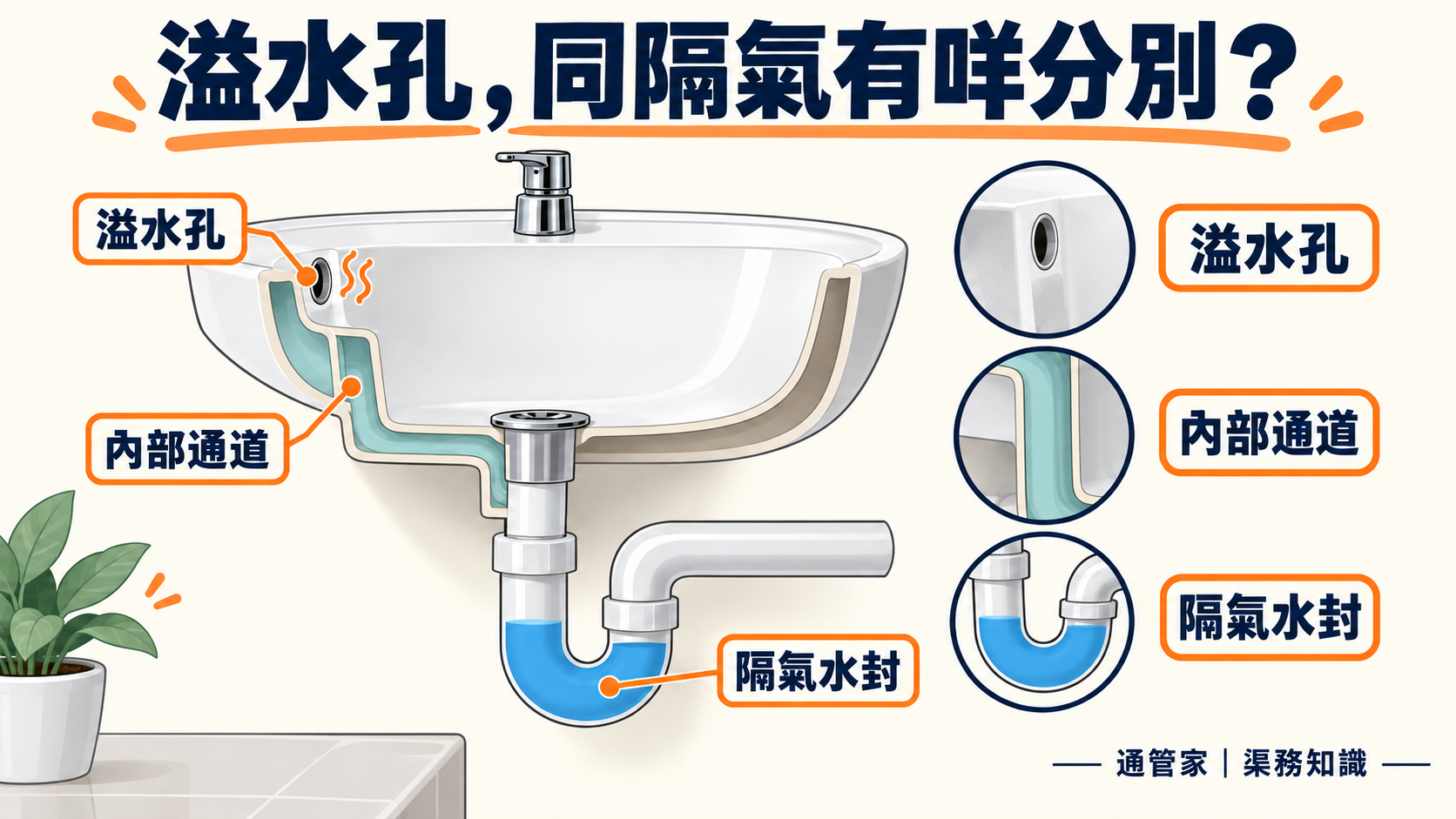
Persistent moisture, cleaning residue and attached dirt can produce odour around the opening or passage. Alternatively, the waste, trap or a nearby connection may be the source. Cabinet leakage, gurgling or odours at other outlets are reasons to investigate beyond the small opening.
Colour, smell intensity and photographs cannot identify a mould species, pathogen or pipe defect. Focus on visible deposits, drainage performance and whether the problem returns after suitable cleaning.
For slow drainage, see slow bathroom basin drainage. For a suspected water seal affected by disuse, see trap water-seal maintenance.
Check the basin and waste-assembly care instructions, using compatible mild products on accessible surfaces. Removable trim, an external overflow pipe and an integral passage require different treatment. Do not prise open an undocumented part or push rigid metal wire into a concealed passage.
Do not pour boiling water, strong acids or alkalis, or a succession of different cleaners into the opening. Cleaning products do not repair failed seals or mismatched fittings and may damage finishes or components. Persistent odour after accessible cleaning calls for inspection rather than stronger doses.
A basin with an overflow needs a waste assembly compatible with its passage. Some fittings use particular openings or external connections; similar visible dimensions do not establish compatibility. Ask the installer to check the basin model, waste specification, sealing and overflow route, as well as cabinet connections.
Kohler's instructions for one basin model show a dedicated overflow assembly. This illustrates model differences, not a universal connection method.
Provide an overall basin photograph and views of the opening, waste fitting and cabinet underside without dismantling them. Ask whether parts need removal, which sections can be checked, and whether reinstatement and flow testing are included.
Clean the bowl, opening and stopper according to the manufacturer's guidance and remove visible residue after normal use. Maintain water seals on infrequently used fixtures as appropriate. Keep fitting model numbers and installation instructions so future replacements can be checked for compatibility instead of selected only by hole diameter.
Do not use sealing as an odour remedy. It changes the intended function and hides the underlying problem. Check the passage, fittings and trap first.
Not necessarily; designs differ. Use compatible waste fittings and follow the intended use. Do not drill the basin yourself.
No. It may be another deposit. Follow cleaning instructions and investigate persistent problems.
It is not a universal remedy. Check compatibility, never mix cleaners and do not interpret reduced odour as proof a seal is repaired.
No. Its capacity and downstream flow are limited; it does not replace turning off the tap and supervising use.
If odour persists after appropriate cleaning, provide timing and fitting photographs to discuss connection and drainage checks. Send the district and records through the PipeButler contact page and confirm the available odour-investigation service scope. Specialist design, electrical work and statutory procedures require the relevant professionals.
Kohler MODERN LIFE model instructions; Geberit: basin odour and sealing; Buildings Department: healthy drainage. Prepared in September 2026.