
Loading page…
Loading page…
Ma Wan · Private estate · Village houses · Commercial & restaurants
A 0.96 km² island · 5,292 flats at Park Island · three-storey village houses
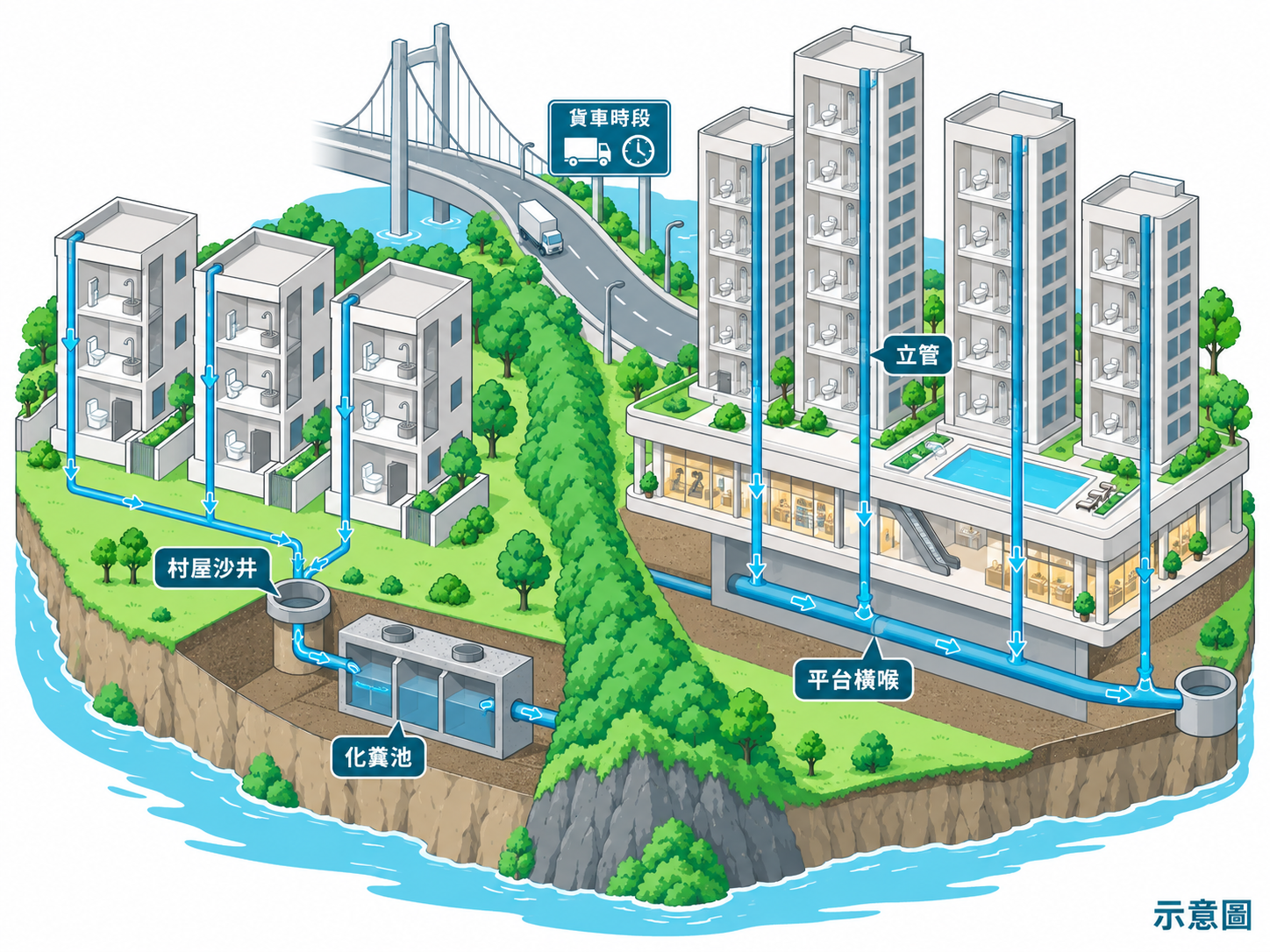
Ma Wan is a small island between Lantau and Tsing Yi, about 0.96 km² in area and administratively part of Tsuen Wan District.
Last reviewed ·
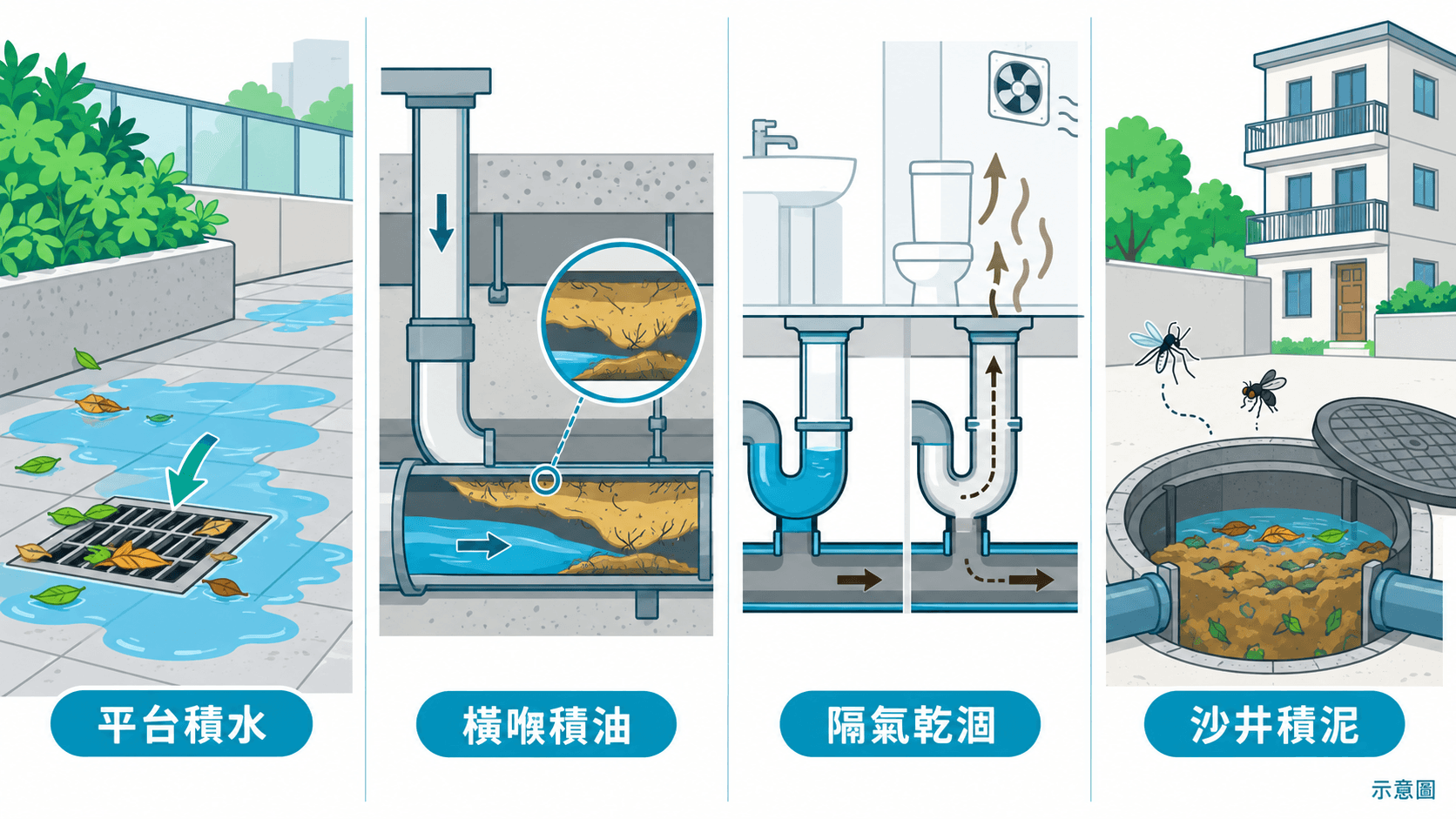
Choose the problem you are seeing to read the likely cause and next step.
According to a Hong Kong 01 report of 10 June 2026 quoting a Park Island resident's social-media post, water ponded on the ground in the estate during the recent rainstorms and residents waded or strode across it. Surface ponding and water welling up at an outlet in your flat are two different events: the first usually means a rainwater gully or catchpit choked with leaves and silt, or rainfall briefly beyond the drain's capacity; only the second is a foul-drainage problem. Ma Wan Park and the island's wooded hillsides shed a lot of leaves and silt into podium, walkway and car-park gullies, which are worth clearing before and after the wet season. Keep two separate records: where and when the outdoor water stood, and which outlet in your flat welled up, at what time and with what smell.
By design, in a development like Park Island where the flats sit above a podium, clubhouse and mall, the stacks transfer into horizontal collector pipes at podium level before reaching a manhole. Those runs have shallow falls and many bends, and kitchen grease, shampoo scum and hair settle there first, gradually narrowing the bore. The symptoms rarely show on the upper floors first: flats low down, or at the tail of the same collector, drain slowly or well up first, and stains may appear on a podium or car-park ceiling before anything shows in a flat. Tell them apart by scope — one slow fitment in one flat usually means that flat's branch pipe or trap, while several flats in the same block at once means the management office should have the shared collector and manholes checked.
The first phase of Park Island was occupied in 2002 and the last in 2011, making the estate roughly fifteen to twenty-four years old. As a general inference from building age, drainage pipes of that period are mostly uPVC, far less likely to rust through than old cast iron — so "a newer estate cannot smell of drains" is a misconception. The commonest cause of odour here is a missing water seal: the trap on a floor drain in a guest bathroom, a helper's room or a shower that is rarely used simply evaporates dry; a renovation swapped in a shallower trap or removed an anti-syphonage pipe; or the exhaust fan, with the door closed, creates enough negative pressure to draw sewer air in through a dry outlet. The Buildings Department advises pouring about half a litre of water into every floor drain at home at least once a week. If the smell is still there a day or two after doing that, the trap may be damaged or altered, or the branch pipe may be leaking.
The Food and Environmental Hygiene Department measures Aedes albopictus indices in 62 monitoring areas across Hong Kong, and one of those in Tsuen Wan District is "Ma Wan and Sham Tseng", whose first-phase gravidtrap index in September 2026 was 1.9% with a density index of 1.0. The figure itself is low, but it is a useful reminder that in a place like Ma Wan, with plenty of planting, village houses and podium gardens, standing water needs regular attention: a planter outlet choked with soil and leaves, a podium gully holding water, a mossy roof outlet, a loose manhole cover outside a village house — any of these can become a breeding spot for mosquitoes and drain flies. Small flies constantly circling an outlet usually mean a film of organic sludge on the pipe wall; insecticide alone will not end it, the wall has to be cleaned and the water seal restored.
When the Government announced the land grant arrangements for Ma Wan Park on 31 March 2021, it stated that Phase 2 would focus on preserving, restoring and renovating the old Ma Wan Village, with the old village houses revitalised into an artist village offering art studios, workshops, retail and food and beverage places; per the Chinese Wikipedia article on Ma Wan, Phase 2 later opened in March 2025 as "Ma Wan 1868". Turning a home into an eatery changes both the load and the nature of what the drains carry: a sink and floor drain built for one household now take pan-washing water, grease and food waste, so grease-trap capacity and cleaning frequency become the decisive factors. Tenants and the landholder need a clear line between the shop's own drainage and the building's shared pipes and outdoor manholes, and should keep cleaning records. Pipework around the old village is largely exposed outside the walls, which makes inspection easier, but also leaves joints more likely to be buried under debris or silt.
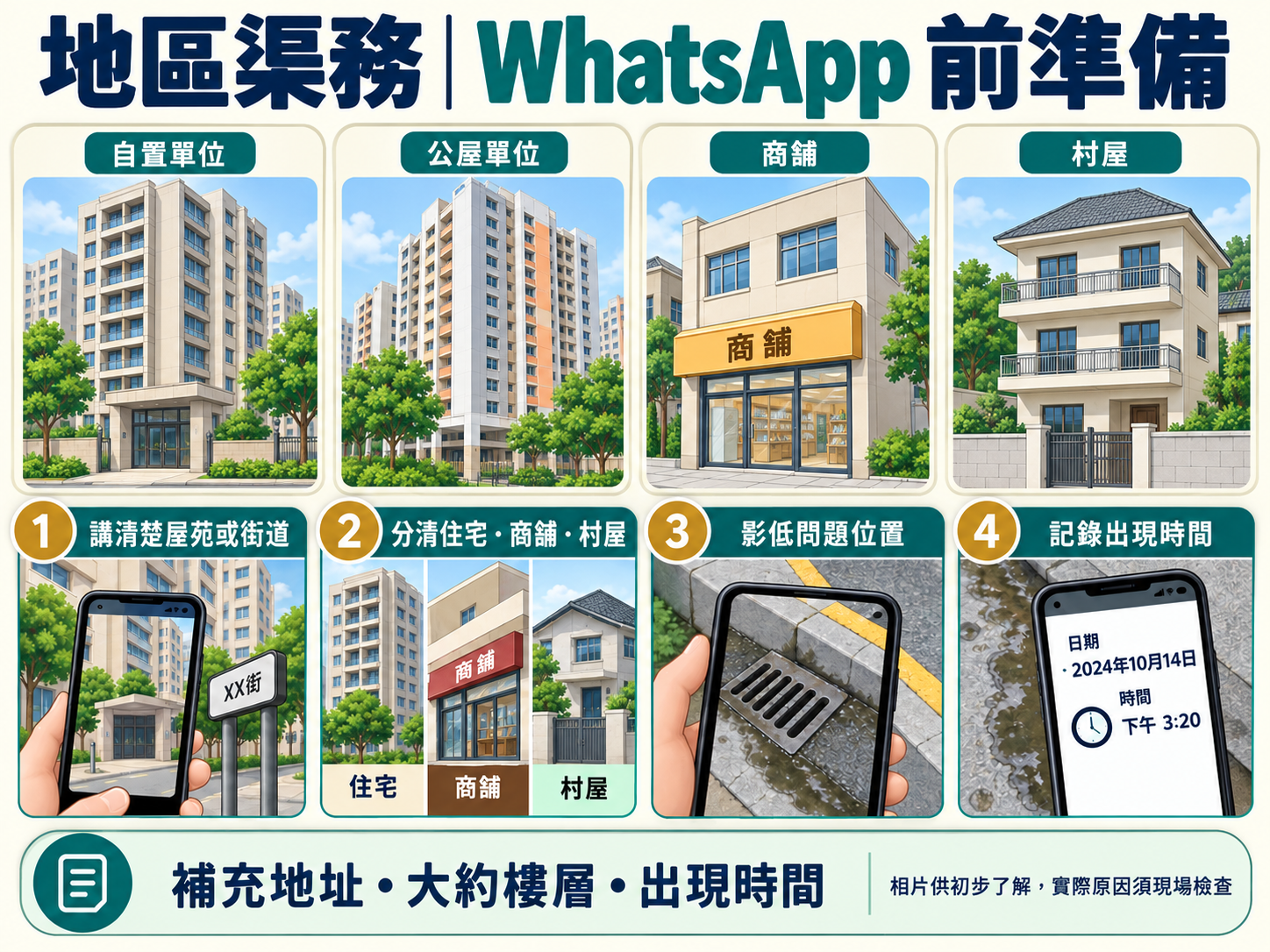
Photos or a short video on WhatsApp help us tell a single-fixture blockage from a shared-stack problem.
Ma Wan is a small island between Lantau and Tsing Yi, about 0.96 km² in area and administratively part of Tsuen Wan District. Almost all of its households live at Park Island, a private estate of 31 blocks and 5,292 flats occupied in phases between 2002 and 2011. The other side of the island is the three-storey village houses around Ma Wan Main Street Village and Tin Liu New Village, together with Ma Wan Park Phase 2 — "Ma Wan 1868" — which opened in 2025 in restored old village houses. One island, two completely different drainage worlds: on one side the stacks and horizontal collector pipes of a podium estate with a clubhouse and a mall, on the other exposed outdoor pipes, manholes and, in some houses, septic tanks still in use. Add a permit-controlled road onto the island, and everything from who to call to what time a technician can reach you works differently here from the urban districts.
Ma Wan began as a fishing village — the old village is more than two hundred years old — and building work spread across the island after the Tsing Ma Bridge opened in 1997. Sun Hung Kai Properties obtained the whole Park Island site by land exchange in 1997, and the estate was completed over four occupation dates: Phases 1 and 2 in December 2002, Phase 3 in July 2004, Phases 5A and 5B in April 2007 and Phase 6 (AnaCapri) in March 2011, giving 31 blocks and 5,292 flats at 8 Pak Lai Road. In other words, the earliest and latest blocks within one estate are about eight years apart, so pipe specifications, fittings and the repair work already done are not necessarily the same throughout. When reporting a fault, saying which phase and block you are in is usually more useful than naming the estate.
Park Island is a classic multi-phase podium development, with a clubhouse, podium garden, mall and car park beneath the flats. By design, the residential stacks do not run straight to the ground: they transfer into horizontal collector pipes at podium level before discharging to a manhole, so there are more bends and horizontal runs than in a single block, and grease, hair and debris settle more easily in those runs. If a pipe leaks, the first drip may also appear in a podium, mall or car-park ceiling rather than in a flat. As a general inference from building age, drainage pipes in estates built in the 2000s are mostly uPVC, whose joints age more slowly than old cast iron, so odour and slow draining here more often come from water seals — a dry trap, or one altered during renovation — and from build-up in horizontal runs, rather than from a stack rusting through. On a coastal island exposed year-round to salt-laden wind, metal pipe brackets, drain covers and podium rainwater gratings also tend to corrode and work loose sooner; that too is an inference, to be confirmed by inspection.
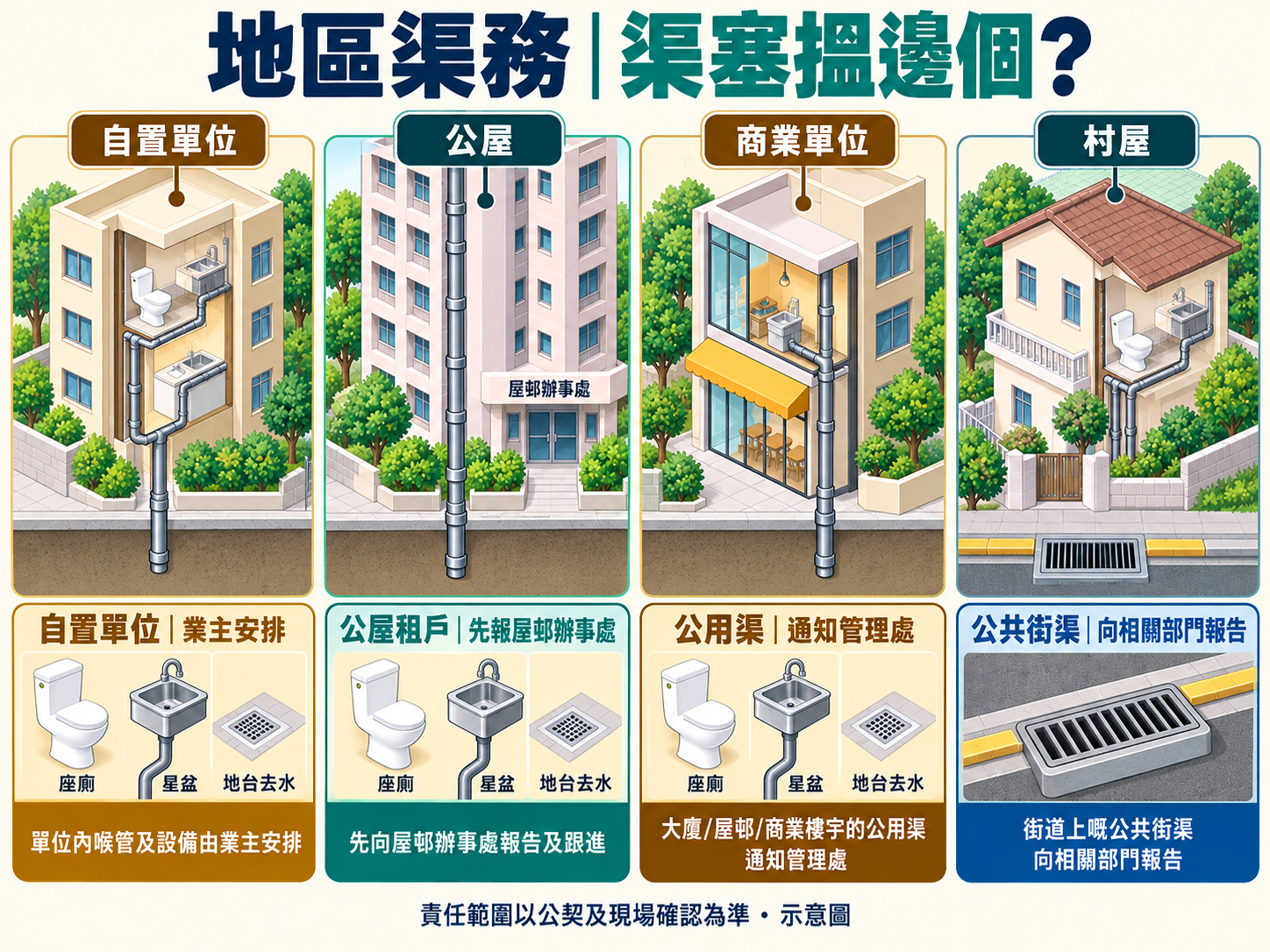
The other side of the island is a different world. Per the English Wikipedia, Ma Wan Main Street Village and Tin Liu are both recognised villages under the New Territories Small House Policy, and when Park Island was developed the villagers were rehoused in the northern part of the island, the compensation package offering either a three-storey traditional village house of about 2,100 sq ft or three separate units of about 700 sq ft each in one block. According to a Hong Kong 01 feature of November 2025, the old Ma Wan Village was closed off in April 2021 and a resident interviewed said only two or three households still live there. Drainage in a village house is nothing like that of a tower: as a general inference from village-house design, it is usually exposed pipework outside the walls with manholes in front of or behind the house, and some houses may still be on a septic tank, which has to be checked house by house. Where a three-storey house is used floor by floor by different households, a blocked top-floor or roof outlet sends water down the external wall or the stairwell to the floors below. The old village itself is being revitalised as an artist village under the Government's 2021 land grant arrangements, with studios, retail and food and beverage places — a group of houses built as homes now carrying the grease load of restaurant sinks and grease traps. The Housing Authority rental estates listed for Tsuen Wan District on Wikipedia do not include Ma Wan, so the department's paid unblocking service for public rental tenants is not available on the island: at Park Island and in the village houses alike, owners have to arrange the work themselves.
Note: statements based on building age and type are general inferences, not findings for any particular flat.
Choose an enquiry route for your premises and work scope.
Pantry, washroom and shared-drain enquiries, with scope agreed before work
Scope and booking detailsUnit outlets, shared pipes and chamber enquiries assessed with site access
Scope and booking detailsDiscuss a defined maintenance scope using assets, usage and incident records
Scope and booking detailsA clear process from enquiry and assessment to an agreed scope of work
Tell us the drain problem and district and ask about available timing.
Confirm timing based on the district and schedule, then inspect the blockage or odour issue.
Explain the proposed approach, scope and price before agreed work begins.
Use suitable tools for the site conditions and agreed scope of work.
After the agreed work, test drainage and explain the observed result and any next steps.
PipeButler is an independent drain-service provider with no affiliation to the developer, owners' corporation, management company or Housing Department of the places above. Facts come from public sources checked on the dates shown; work on common drains or common parts follows the management office's and deed of mutual covenant's arrangements.
WhatsApp with the problem and district, and we will confirm available timing.