
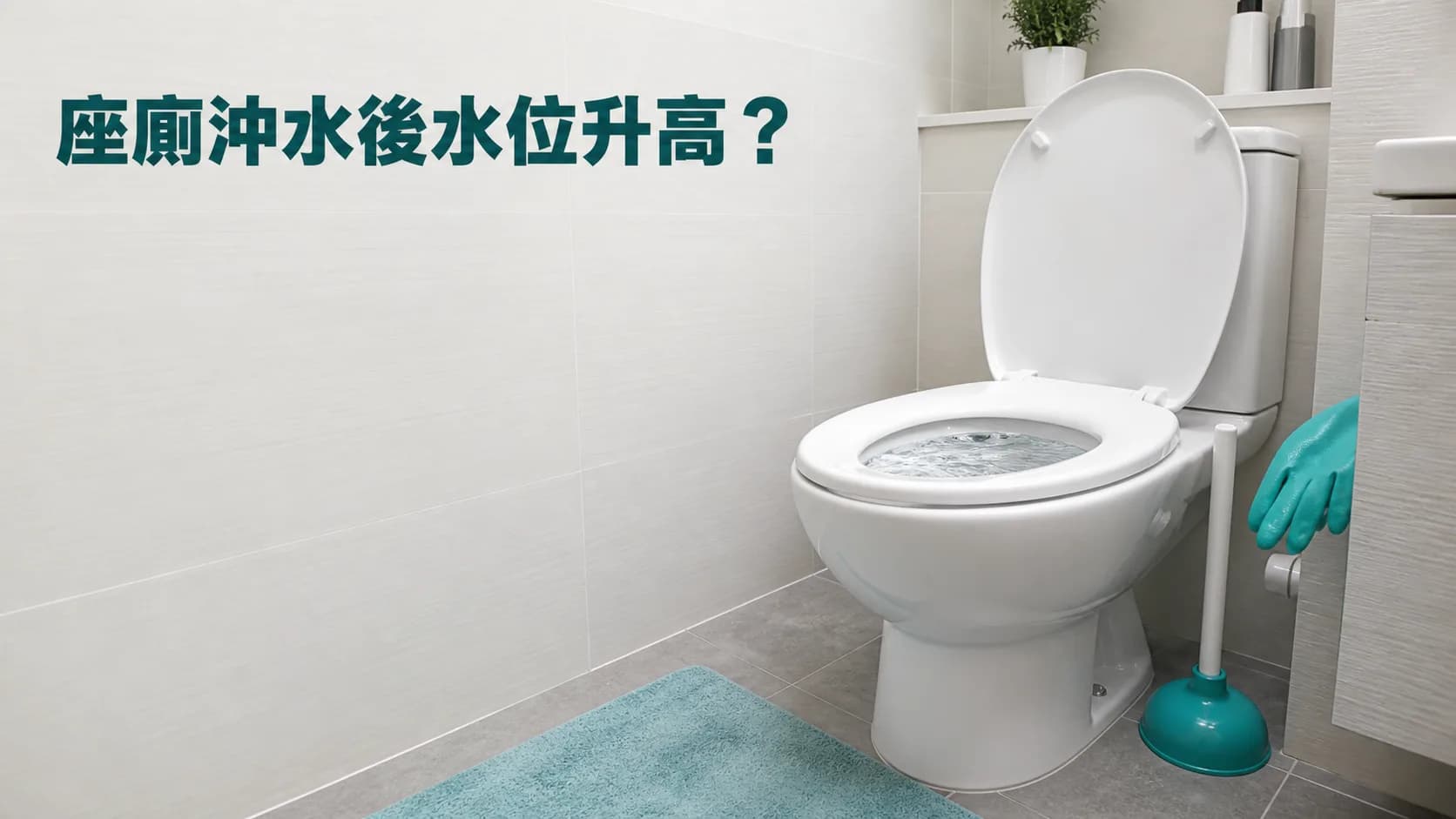
If toilet water rises after flushing and approaches the rim, stop flushing. Water is entering faster than the drain can carry it away, and another flush increases overflow risk. Let the level recede before considering whether the problem may be paper, wipes, a hard object or a deeper restriction.
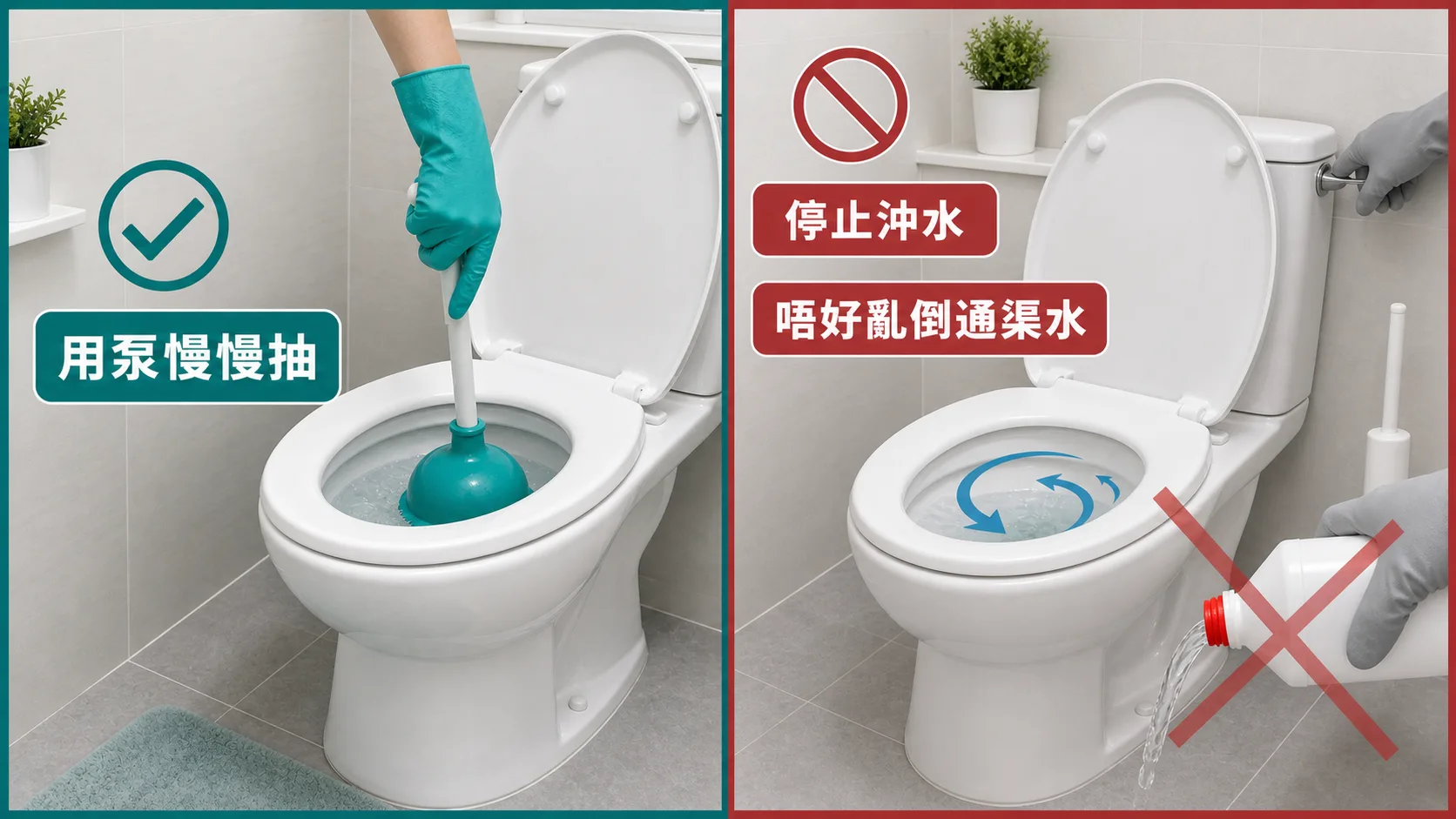
Do not flush again, add drain cleaner or push rigid objects into the bowl. A suitable toilet plunger may be used gently only where there is enough space to avoid splashing, no chemical has been added and a hard object is not suspected. Stop and seek help if water will not recede, an object is suspected or chemicals are present.
What does a rising water level mean?
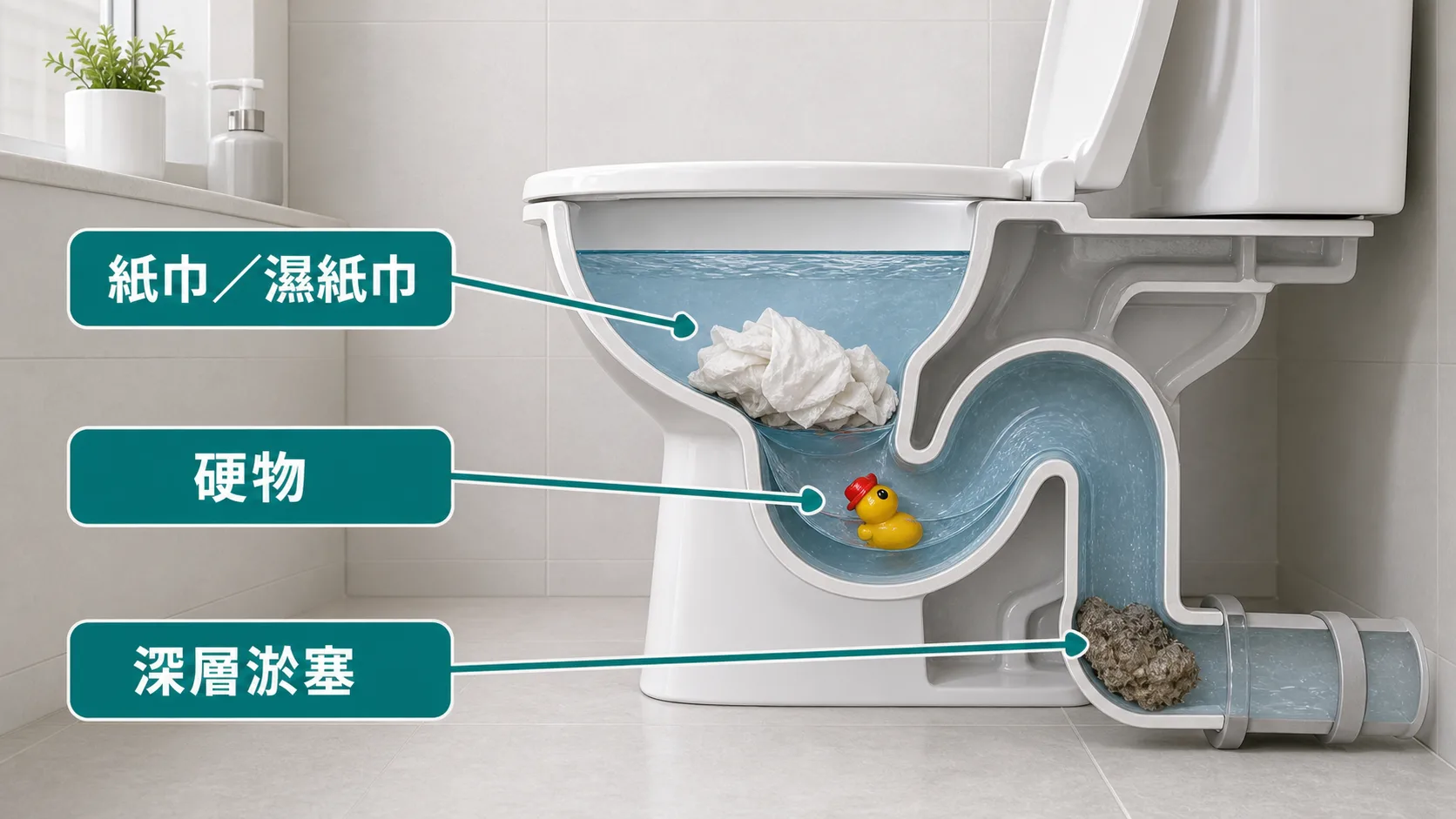
During a normal flush, water passes through the toilet trap and waste pipe promptly. A rise followed by slow recession often means a small passage remains but is restricted by paper, wipes or deposits. Little or no recession, or an immediate near-overflow, should be treated as a more serious obstruction.
If the basin or bathroom floor drain also gurgles or backflows, investigate beyond the toilet itself: a downstream or shared building drain may be involved.
Immediate steps
- Stop flushing: do not try another flush while the water remains high.
- Move nearby items: remove towels, mats and toilet paper from the potential spill area.
- Observe recession: gradual lowering over five to ten minutes may indicate a partial restriction, but does not confirm its cause or severity.
- Use a suitable plunger cautiously, if appropriate: keep the cup over the outlet and use controlled vertical movements without forceful splashing. Do not plunge if chemicals or a hard object may be present.
- Make only a small controlled check after the level falls: stop immediately if it rises again; do not repeatedly test with full flushes.
Why avoid casual use of drain cleaner?
Many drain cleaners and caustic-soda products are corrosive and may harm skin, eyes or airways. In a full toilet, the product may remain in the water instead of reaching the restriction. Subsequent plunging or professional work can splash the contaminated liquid.
Chemicals do not make toys, toothbrushes, plastic lids or other hard objects disappear. Repeated dosing adds risk without resolving that type of obstruction.
Common causes
Too much paper: a large amount of toilet paper, or thicker paper not intended for flushing, can obstruct the trap.
Wipes and sanitary products: wipes can contribute to blockages even where packaging describes them as flushable. Keep wipes, cotton buds and sanitary products out of the toilet.
Dropped objects: toys, toothbrushes, lids and cleaning-brush heads generally require retrieval. Do not try to dissolve them or push them deeper with a coat hanger.
Deeper drainage faults: repeated blockage soon after clearing, especially with other affected fixtures, can indicate a downstream pipe, common drain or chamber problem.
When to call a professional
- Water does not recede or is close to overflowing.
- A hard object is known or suspected to have fallen in.
- A brief cautious attempt with an appropriate plunger does not help; do not continue forcefully.
- Drain cleaner or another chemical has already been added.
- The same toilet blocks repeatedly over a short period.
- Other outlets also gurgle, smell or backflow.
Send PipeButler the water level, drainage behaviour and existing footage through WhatsApp 5340 0748. Disclose any chemicals or dropped objects and agree the investigation and work scope before proceeding.
Reducing recurrence
- Flush only toilet paper and human waste; put wipes, tissues and sanitary products in a bin.
- Avoid flushing large amounts of paper at once. Do not add further flushes when drainage is already restricted.
- Keep the lid closed when appropriate to reduce the chance of children dropping toys into the bowl.
- Have noticeably weak cistern operation checked early.
- Investigate recurring problems instead of relying on repeated emergency clearing.
Frequently asked questions
If the level eventually falls, is everything normal?
No. A small remaining passage can allow slow recession while a restriction remains. If a cautious initial response does not restore normal operation or the problem returns within days, arrange further inspection.
Can hot water help?
Avoid boiling water because thermal stress can affect ceramics and components. Do not combine warm water with chemical drain cleaner or add water to a bowl that is already high.
Why can flushable wipes still block a toilet?
They may not disperse as readily as toilet paper and can catch at traps, bends and other deposits. Putting all wipes in the bin is the conservative approach.
Can PipeButler handle rising toilet water?
PipeButler handles toilet, floor-drain, basin, kitchen-sink, chamber and building-drain blockages. The appropriate tools and scope depend on whether objects, local restrictions or deeper faults are found. Arrange an assessment through the contact page.