
Loading page…
Loading page…
Yuen Long Town Centre / Yuen Long Station · Private estate
Completed 2004–2017 · Midtown and Grand YOHO towers on a mall podium · backflow on the lowest floors above it & balcony odour
YOHO Town (8 Yuen Lung Street), YOHO Midtown (9 Yuen Lung Street) and Grand YOHO (9 Long Yat Road) are three estates Sun Hung Kai Properties built in stages around MTR Yuen Long station, completed in 2004, 2010 and 2016–2017 respectively.
Last reviewed ·
Choose the problem you are seeing to read the likely cause and next step.
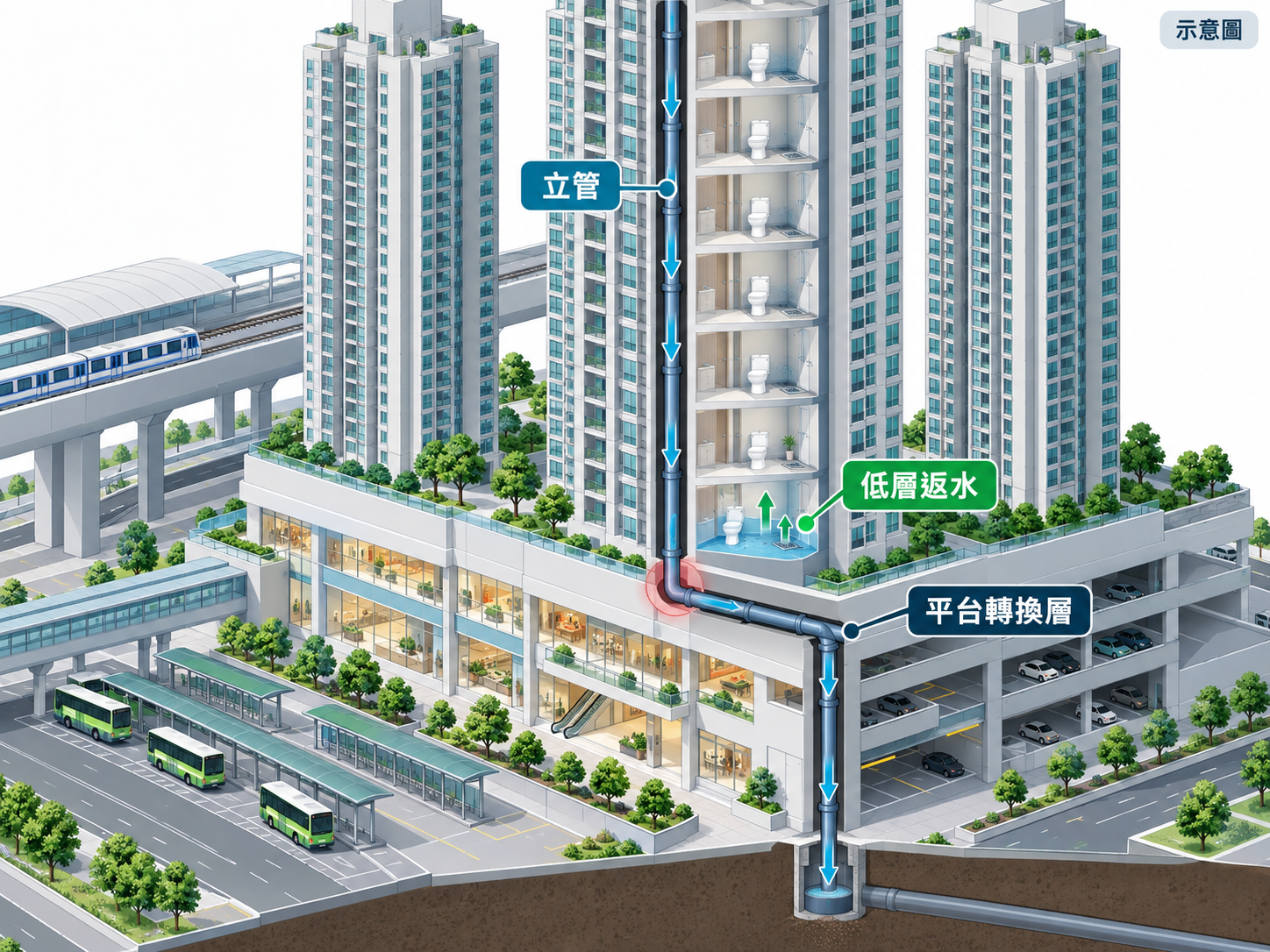
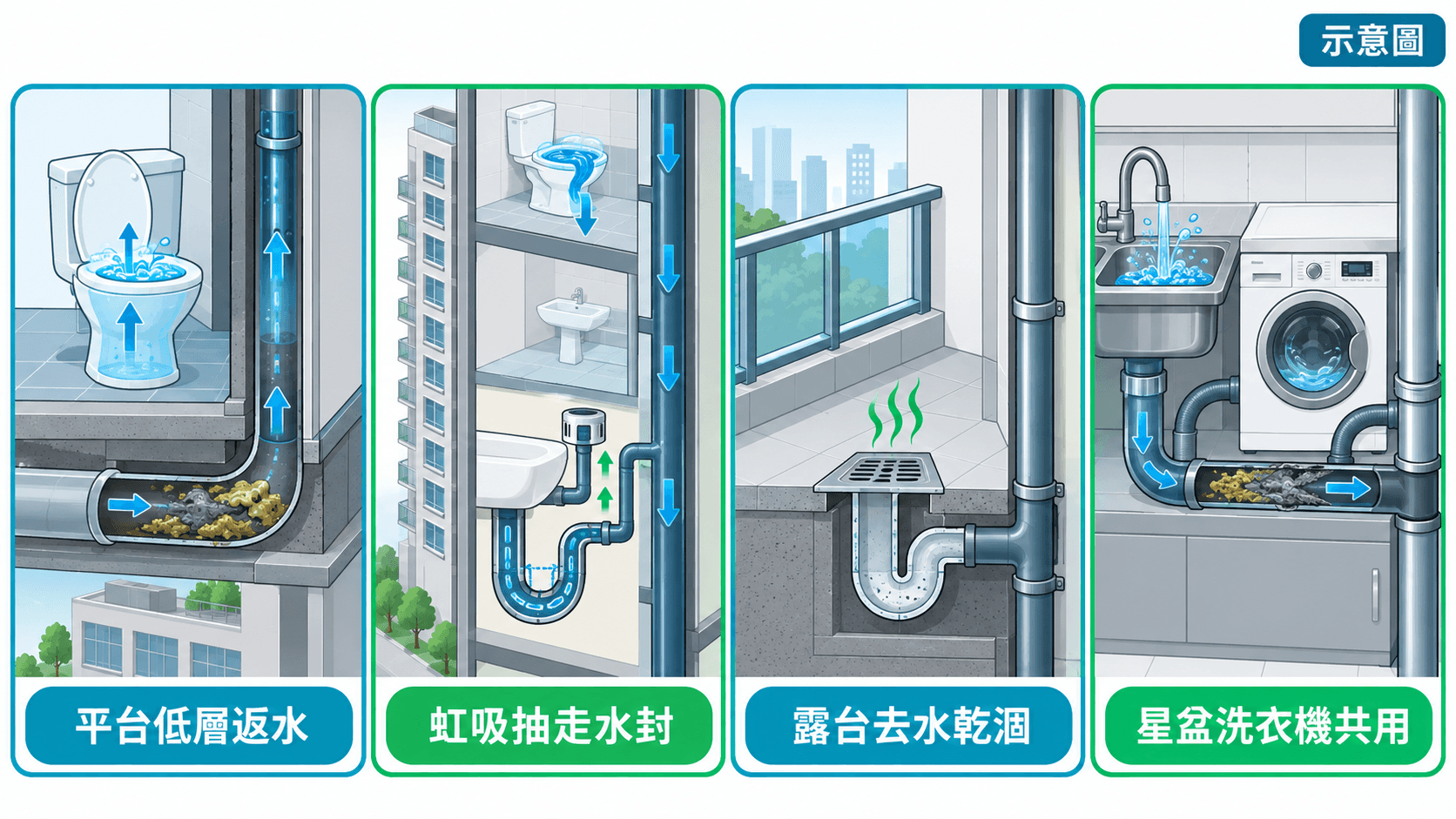
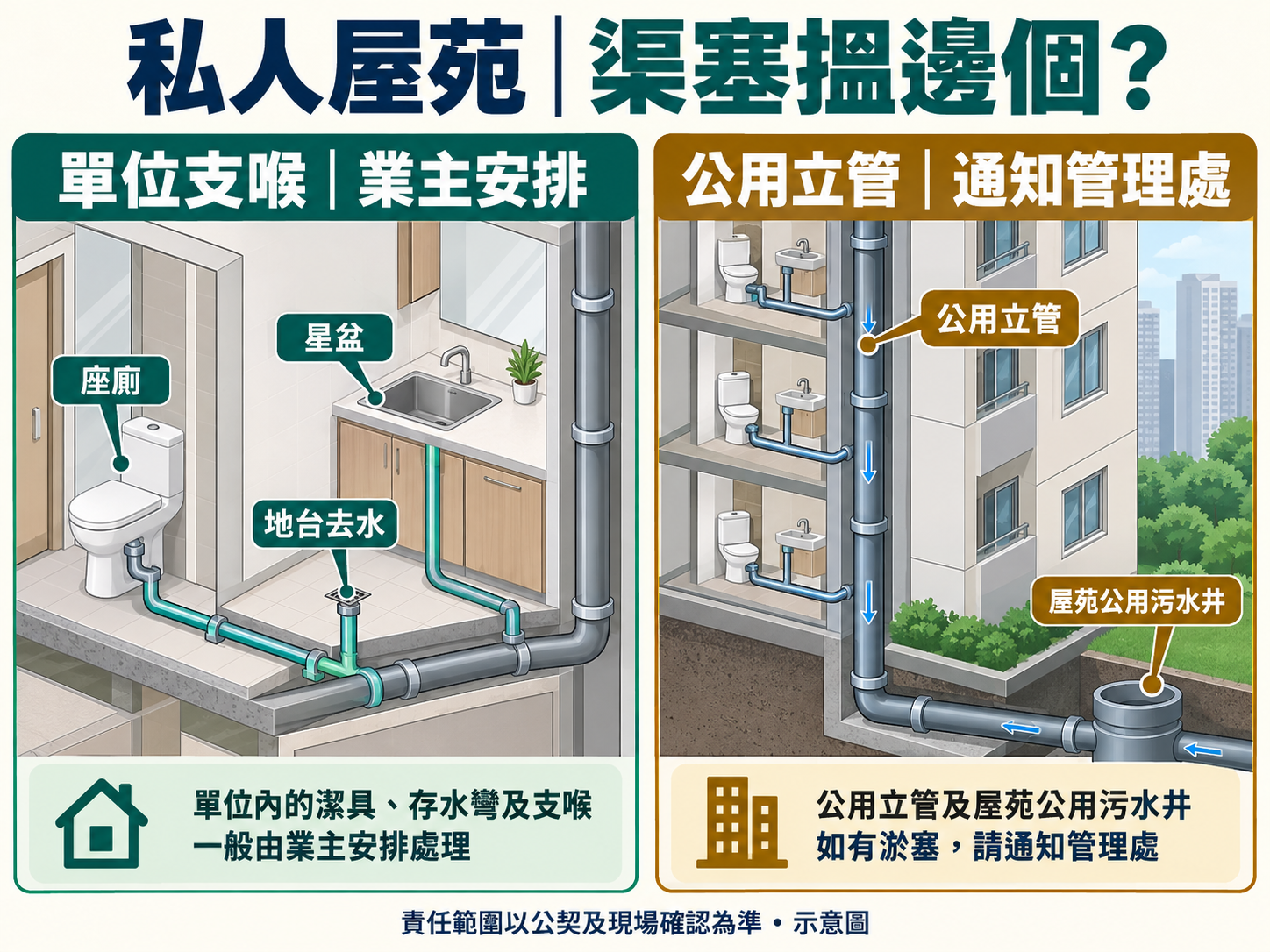
Grand YOHO Phase 1 flats start on 6/F, directly above the podium, and YOHO Midtown also sits on five podium levels. As an inference from the design, the stack changes direction where it enters the podium, and if that bend or the horizontal run is narrowed by grease, tissue or renovation debris, the flats closest to the podium are the first to see the toilet water level rise, the floor drain overflow or a sewage smell when the floors above discharge heavily. If the toilet and floor drain react together, mostly at the morning and evening peaks, report it to the management office first so the shared stack can be checked. If only one outlet is slow, the flat's own branch pipe is the likelier cause and you can book a call-out.
Grand YOHO Towers 9 and 10 have flats numbered up to 51/F, and the tallest YOHO Midtown tower has 42 storeys above the podium. The Buildings Department explains that when an upper flat discharges a large volume, siphonage creates negative pressure in the branch pipes of flats below, strong enough to pull the water seal out of their traps; the anti-syphonage pipe or air admittance valve is there to balance that pressure. If your basin or bath gurgles when someone upstairs flushes, or the toilet water level suddenly drops and a smell follows, check whether the trap and anti-syphonage valve under the basin have been removed or replaced with the wrong type. Altering these fittings is minor works and must be done by a registered contractor.
Every YOHO Midtown flat has an environmental balcony, and most Grand YOHO flats have a cross-ventilated balcony as well as a utility platform. Floor drains in these spaces rarely take water, and none of the three estates was designed under the newer rule that uses basin or bath water to top up floor-drain seals, so the water in the trap slowly evaporates and sewer air drifts in through the balcony door or from the utility platform. The Buildings Department asks residents to top every floor drain up with roughly half a litre of water at least weekly. The sales brochure also notes that common pipes run past the balcony, utility platform or air-conditioning platform of some flats; if the smell or a leak comes from one of those common pipes rather than the drain outlet, leave it to the management office and do not box in or drill into the pipe yourself.
The kitchen appliance schedule in the Grand YOHO Phase 1 sales brochure includes a washer-dryer, the kitchen has a stainless-steel sink, and Wikipedia notes that every flat has a separate kitchen. As an inference from the design, the washing machine usually discharges into the same branch pipe as the sink. Cooking grease coats the pipe wall, lint and detergent residue from the machine build on it, and the branch pipe narrows until the sink backs up or bubbles whenever the machine empties. Start by cleaning the lint filter and checking that the machine's drain hose is not squashed or pushed in too far. If the sink is already slow in everyday use, the build-up in the branch pipe needs clearing; drain cleaner alone may not shift a mix of grease and lint.
YOHO Town was occupied in 2004 and is over 20 years old. As a general inference from its age, a good number of flats will have changed hands or been refitted, and the most common after-effects of a new bathroom or kitchen are cement slurry and tile fragments washed into floor drains, and original traps swapped out or anti-syphonage valves removed. The Buildings Department warns that unauthorised changes to the drainage system can make the water seal in a trap disappear and let foul air into the flat, and that altering traps, anti-syphonage pipes or drain positions requires a registered contractor under the Minor Works Control System. If slow draining or a smell started after the renovation, check the traps and connections of the newly fitted fixtures first.
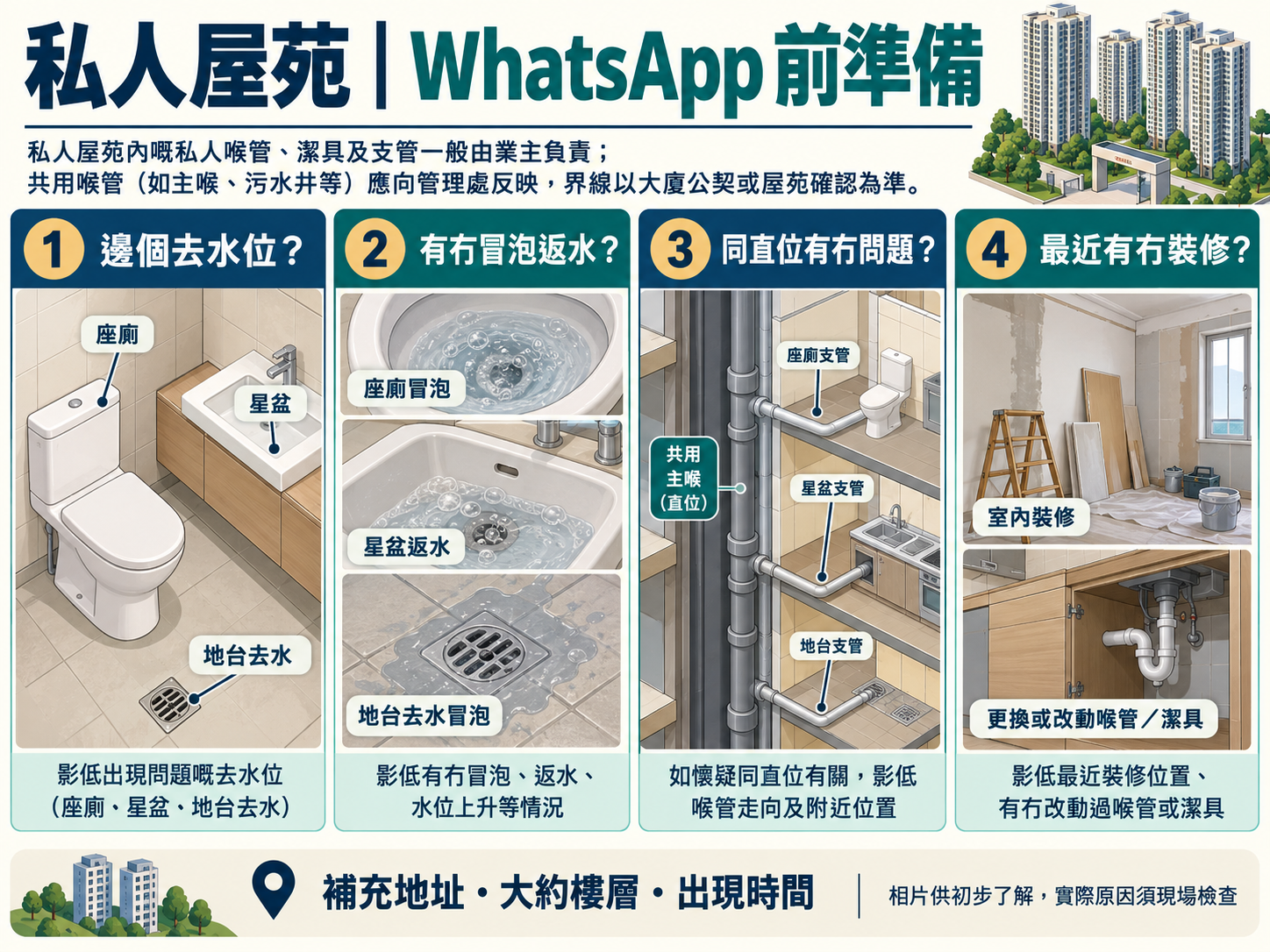
Photos or a short video on WhatsApp help us tell a single-fixture blockage from a shared-stack problem.
YOHO Town (8 Yuen Lung Street), YOHO Midtown (9 Yuen Lung Street) and Grand YOHO (9 Long Yat Road) are three estates Sun Hung Kai Properties built in stages around MTR Yuen Long station, completed in 2004, 2010 and 2016–2017 respectively. At YOHO Midtown and Grand YOHO the residential towers stand on a multi-level podium holding the YOHO MALL and car parks, rising thirty-odd to forty-odd storeys, and flats in the same vertical line share a soil stack. When a toilet backs up, an outlet gurgles, or the balcony or kitchen sink smells of drains, the first step is to work out whether the fault lies in the flat's own traps and branch pipes or in the building's shared pipes, and then decide between unblocking, odour work or reporting to the management office.
All three estates are the residential parts of Sun Hung Kai Properties' YOHO series. YOHO Town (whose Chinese name was formerly 新時代廣場) was the first phase and has a podium garden and a clubhouse. YOHO Midtown was occupied in stages from late October 2010; Buildings Department records show eight residential towers over five podium levels, and the podium mall, according to Wikipedia, is YOHO MALL, which opened in September 2015. Grand YOHO Phases 1 and 2 were completed in 2016–2017; Phase 1 flats start on 6/F, above podium floors from G/F to 5M/F, and of the nine blocks originally planned the English Wikipedia article says only seven have been completed.
As an inference from the design, in towers built on top of a podium each soil stack has to pass down through the mall and car-park floors before it reaches the ground-level manholes, and on the way it usually changes direction or runs horizontally for a stretch. Water slows at these bends and horizontal runs, so grease, tissue and debris tend to collect there. Buildings Department practice note APP-164, first issued in April 2021 and applying to drainage plans submitted for approval after 31 August 2021, bars any drainage connection within 1,000 mm above a stack bend (for a building over five storeys) and within 2,500 mm of it horizontally, and requires a connection to the main anti-syphonage pipe below the lowest branch discharge pipe and above the bend. All three estates were designed before these rules, so do not assume the buildings have this protection, particularly in the first few floors of flats above the podium.
The estates are more than a decade apart in age. YOHO Town has been occupied for over 20 years; as a general inference from its age, original plastic traps and waste fittings are starting to wear, and many flats have changed hands or been renovated, so trap types and connection points may no longer match the originals. YOHO Midtown is about 16 years old and Grand YOHO about 9, where blockages caused by everyday use, and little-used drains drying out, are more common. The Grand YOHO Phase 1 sales brochure lists an enamelled cast-iron bathtub in every bathroom and a stainless-steel sink in the kitchen, and puts the washer-dryer on the kitchen appliance schedule. The actual condition of any flat depends on its own and its tower's maintenance history, not on the estate name.
Note: statements based on building age and type are general inferences, not findings for any particular flat.
A clear process from enquiry and assessment to an agreed scope of work
Tell us the drain problem and district and ask about available timing.
Confirm timing based on the district and schedule, then inspect the blockage or odour issue.
Explain the proposed approach, scope and price before agreed work begins.
Use suitable tools for the site conditions and agreed scope of work.
After the agreed work, test drainage and explain the observed result and any next steps.
PipeButler is an independent drain-service provider with no affiliation to the developer, owners' corporation, management company or Housing Department of the places above. Facts come from public sources checked on the dates shown; work on common drains or common parts follows the management office's and deed of mutual covenant's arrangements.
WhatsApp with the problem and district, and we will confirm available timing.