
Loading page…
Loading page…
Northern Yuen Long (Tai Sang Wai) · Private estate · Low-density houses
5,024 houses of up to three storeys · garden manholes shared by house groups · estate sewage plant
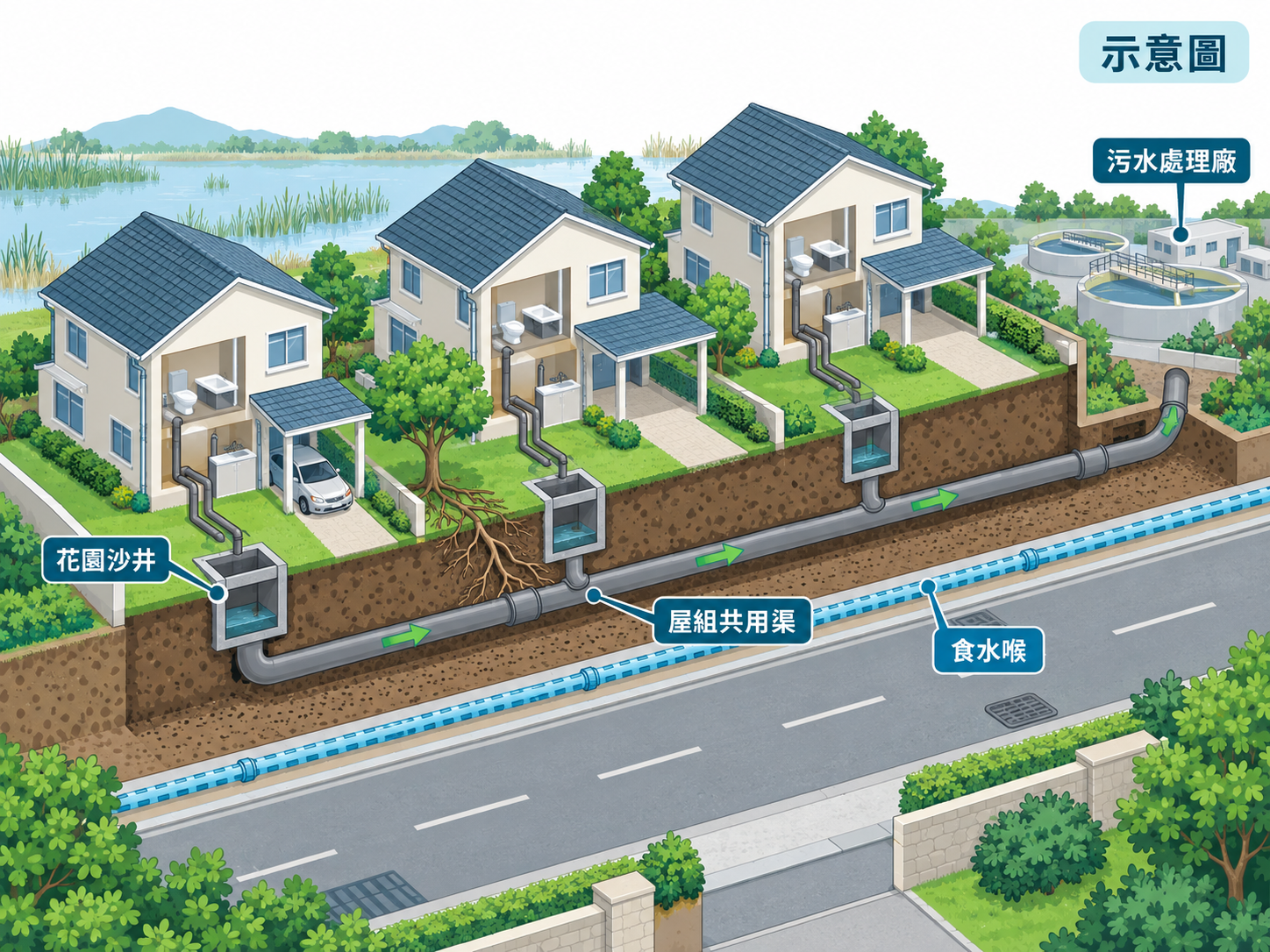
Fairview Park (錦綉花園, also often written 錦繡花園) lies around Tai Sang Wai in Yuen Long and, according to the management company's website, was completed in stages from 1979, with 5,024 garden houses of up to three storeys.
Last reviewed ·
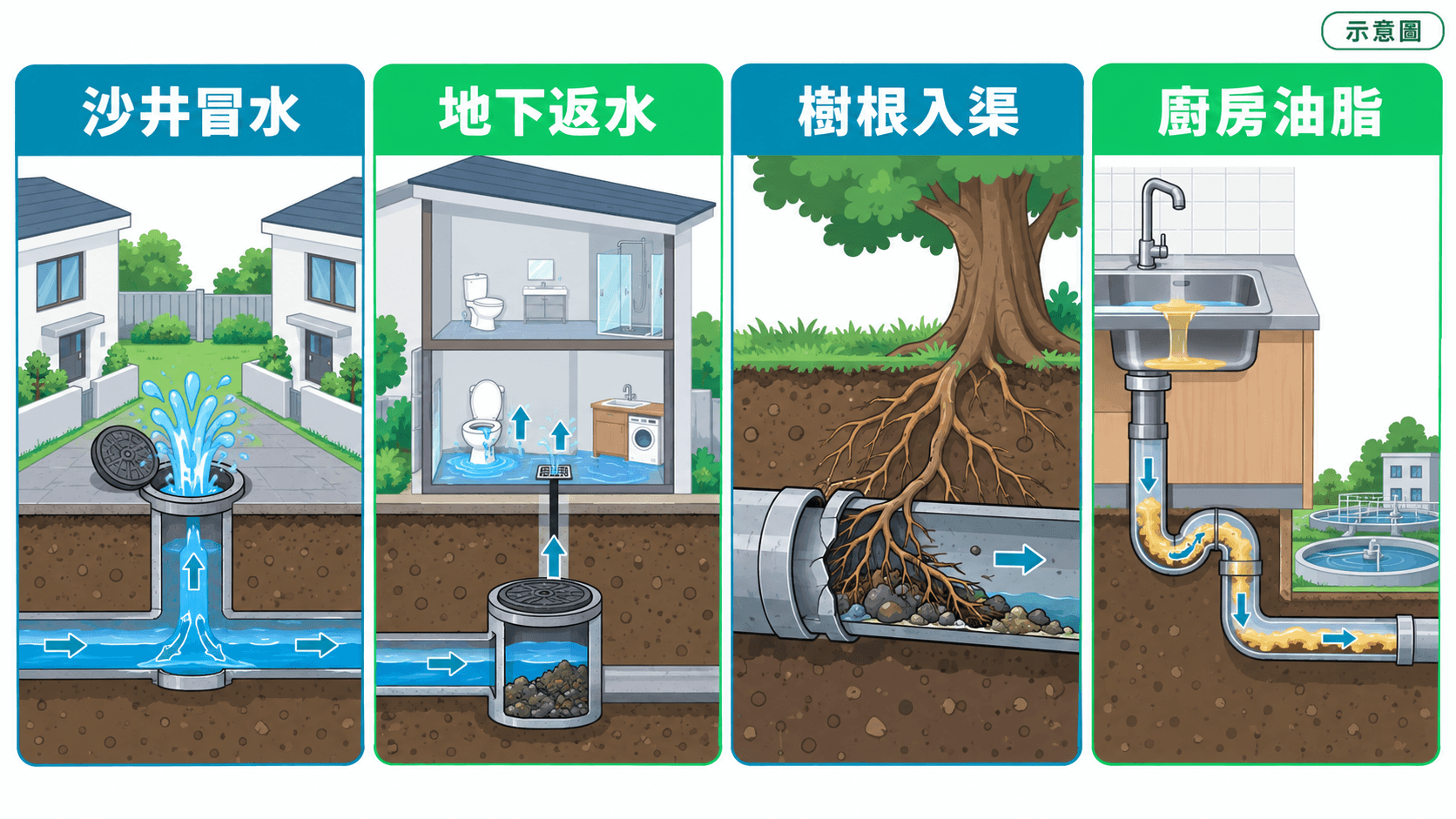
Choose the problem you are seeing to read the likely cause and next step.
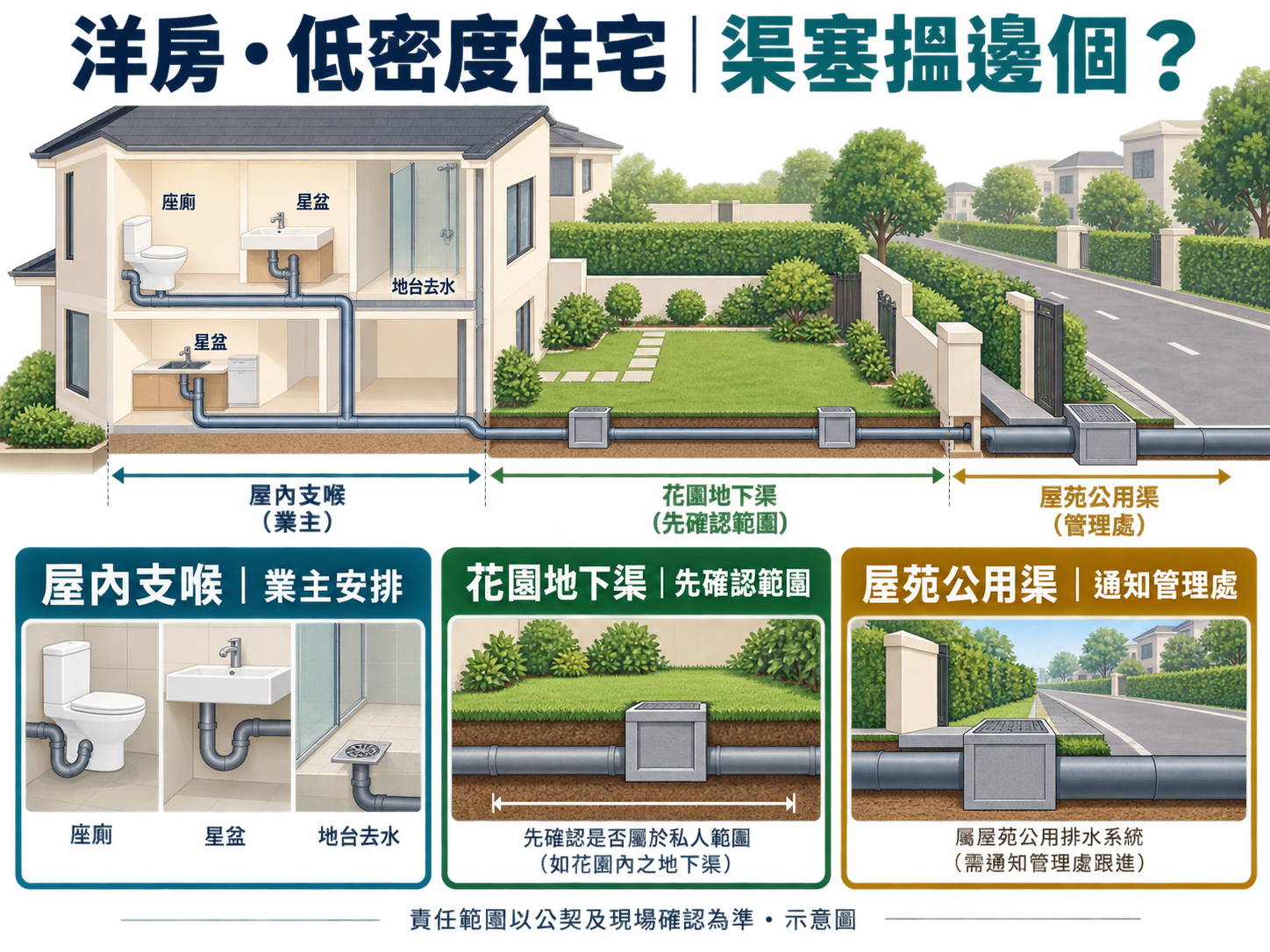
Under the Estate Rules, garden manholes are part of a drainage system shared by several houses. If a manhole or the shared drain downstream is narrowed by silt, grease or debris, houses in the same group may all drain slowly at once, and the water level in the manhole may rise or even overflow. A manhole cover buried under planters, paving or clutter also slows down inspection and clearing. If a manhole overflows, tell the management company first and do not go down the manhole yourself; if only one fixture in the house is slow, the problem is more likely in the house's own branch pipe.
Judging by the house design, the ground-floor toilet, floor drains and kitchen outlets are the lowest points and the closest to the garden manhole. When the manhole or shared drain downstream is blocked, water from an upstairs flush or a heavy downpour comes up first through the lowest outlet, while the upper floors may seem completely normal. So 'water used upstairs, water rising downstairs' usually points to the section after the pipe leaves the house; if only one fixture is slow, check that fixture's trap and branch pipe first. Floors that sewage has flowed back onto should be disinfected after cleaning.
The management company describes the estate as having a great many trees, and it was built on filled fishponds, with the earliest houses now more than 40 years old. As an inference from age and site history, joints in underground garden drains may be displaced or cracked by root intrusion or ground settlement, letting silt in and causing repeated blockages. Drain cleaner will not solve this; it usually takes high-pressure jetting and then a CCTV drain survey to locate the fault before deciding on a local repair. When planting trees or extending a garden, keep clear of manholes and drain runs.
Grease poured into the sink cools and builds up inside the pipe; the EPD says grease deposits reduce the capacity of sewers and cause overflows and odour. At Fairview Park, sewage leaves the house through the house group's shared drain and goes to the estate's own treatment plant, so grease, food waste and wet wipes do not only block your own branch pipe but also add to the load on the shared drains. If the sink is slow, check the trap under it and the kitchen branch pipe first, and do not pour in large amounts of strong acid drain cleaner.
The estate stands on former fishponds, and the management company says its Maintenance Department operates and maintains the estate's pump house and river-embankment tidal gate. As an inference from the low-lying, filled-pond terrain, surface drainage is slower when a rainstorm coincides with a high tide, and if garden gullies, parking-space drains or canopy downpipes are also clogged with leaves and silt, rainwater pools in front of the house and may even come in through the door or a low-level outlet. Clearing garden gullies and downpipes before the rainy season works better than dealing with it after a downpour; if the pooled water smells of sewage, the manhole may be surcharged by rainwater, and the management company should be told.
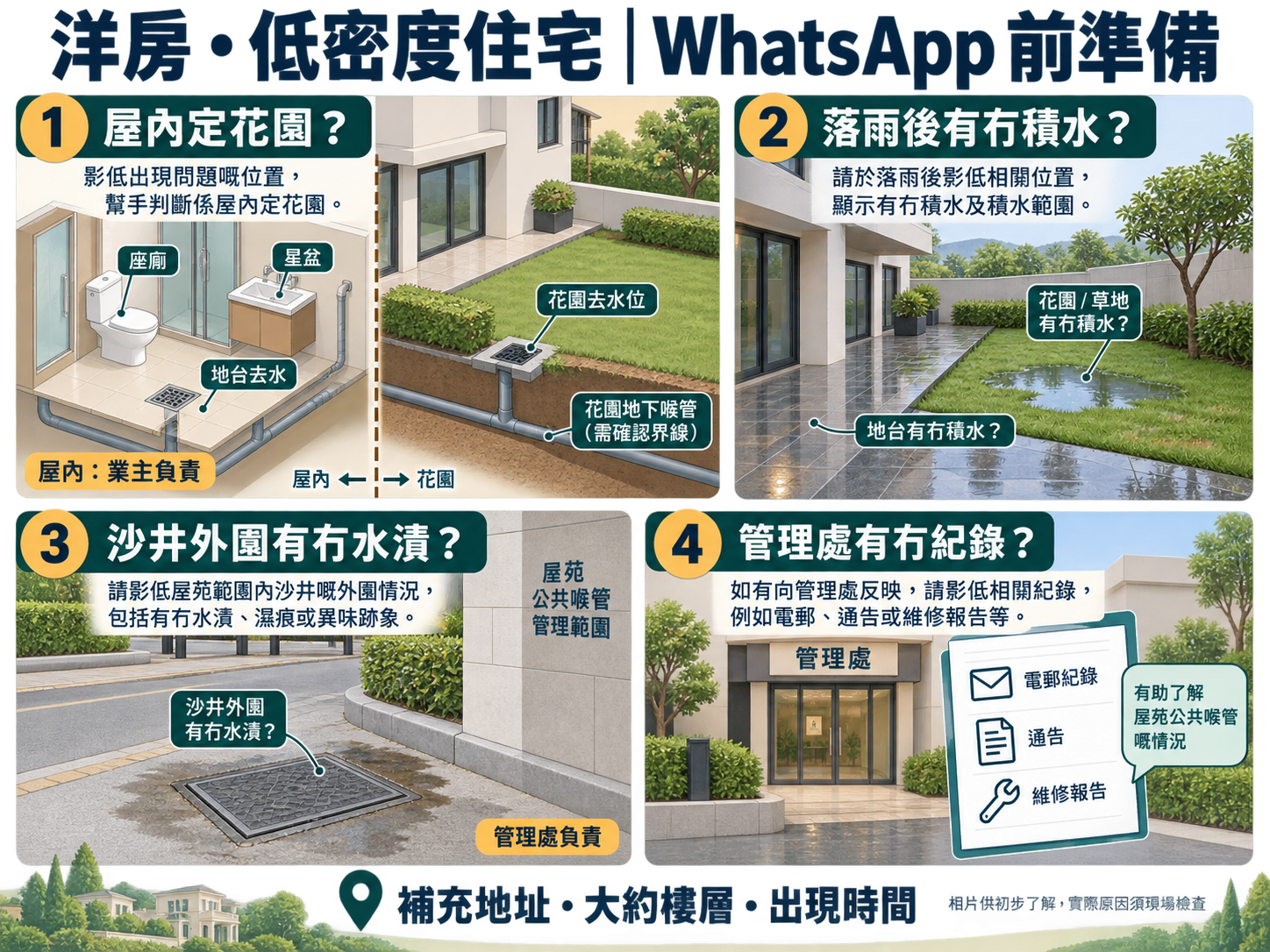
Photos or a short video on WhatsApp help us tell a single-fixture blockage from a shared-stack problem.
Fairview Park (錦綉花園, also often written 錦繡花園) lies around Tai Sang Wai in Yuen Long and, according to the management company's website, was completed in stages from 1979, with 5,024 garden houses of up to three storeys. There are no tall vertical stacks here as in a high-rise estate: waste from each house passes through garden manholes into underground drains shared by several houses, and ends at the estate's own sewage treatment plant. So when a ground-floor toilet backs up, a garden manhole overflows or the kitchen sink drains slowly, the first step is to work out whether the problem is in the house's branch pipes, the shared manhole, or the estate drains further downstream.
Fairview Park was built on filled fishponds around Tai Sang Wai. According to the management company's website, it was completed in phases from 1979, has 5,024 garden houses, and has 112 streets with a total length of about 27 km. Each house has no more than three storeys, there are 13 house types, and every house has front and back gardens. In other words, drainage here runs horizontally rather than vertically: each house has only two or three floors of fixtures, and once waste leaves the house it runs under the garden to a manhole, then into the shared drains under the estate streets.
The Estate Rules state that garden manholes are an integral part of the communal drainage system for a group of houses, and owners must not seal the covers by any means, so that the system can be repaired and maintained. Domestic sewage is treated at the estate's own plant; the management company says it runs round the clock and that treated water is reused for street cleaning and watering plants. An EPD press release of August 2018 said the plant is licensed under the Water Pollution Control Ordinance, that a surprise inspection that February found its discharge exceeded the licence standards, and that the licensee, Fairview Park Property Management Limited, was fined HK$10,000. The same release said the company had promptly inspected, repaired and replaced damaged parts and restored normal operation.
The estate sits near the Deep Bay wetlands. The management company says its Maintenance Department operates and maintains the estate's pump house and river-embankment tidal gate, and the Estate Rules require carport canopies to have a gutter and downpipe so that rainwater does not drain outside the house boundary.
The overhaul and water-loss problem in recent news concern underground fresh-water supply pipes, not drains; the Water Supplies Department's February 2026 statement likewise refers to leakage in the estate's internal water supply system. Blocked drains, overflowing manholes and drain odour belong to a separate system and will not be solved by replacing the water pipes.
Note: statements based on building age and type are general inferences, not findings for any particular flat.
A clear process from enquiry and assessment to an agreed scope of work
Tell us the drain problem and district and ask about available timing.
Confirm timing based on the district and schedule, then inspect the blockage or odour issue.
Explain the proposed approach, scope and price before agreed work begins.
Use suitable tools for the site conditions and agreed scope of work.
After the agreed work, test drainage and explain the observed result and any next steps.
PipeButler is an independent drain-service provider with no affiliation to the developer, owners' corporation, management company or Housing Department of the places above. Facts come from public sources checked on the dates shown; work on common drains or common parts follows the management office's and deed of mutual covenant's arrangements.
WhatsApp with the problem and district, and we will confirm available timing.