Loading page…
Loading page…
Tai Wai · Private estate · HOS / PSPS · Tenants Purchase Scheme estate · Public rental housing · Village houses
Developed from 1981 · MTR-top towers, a TPS estate and valley village houses
Tai Wai sits in the valley at the top of the Shing Mun River and grew with the new-town plan of the early 1980s.
Last reviewed ·
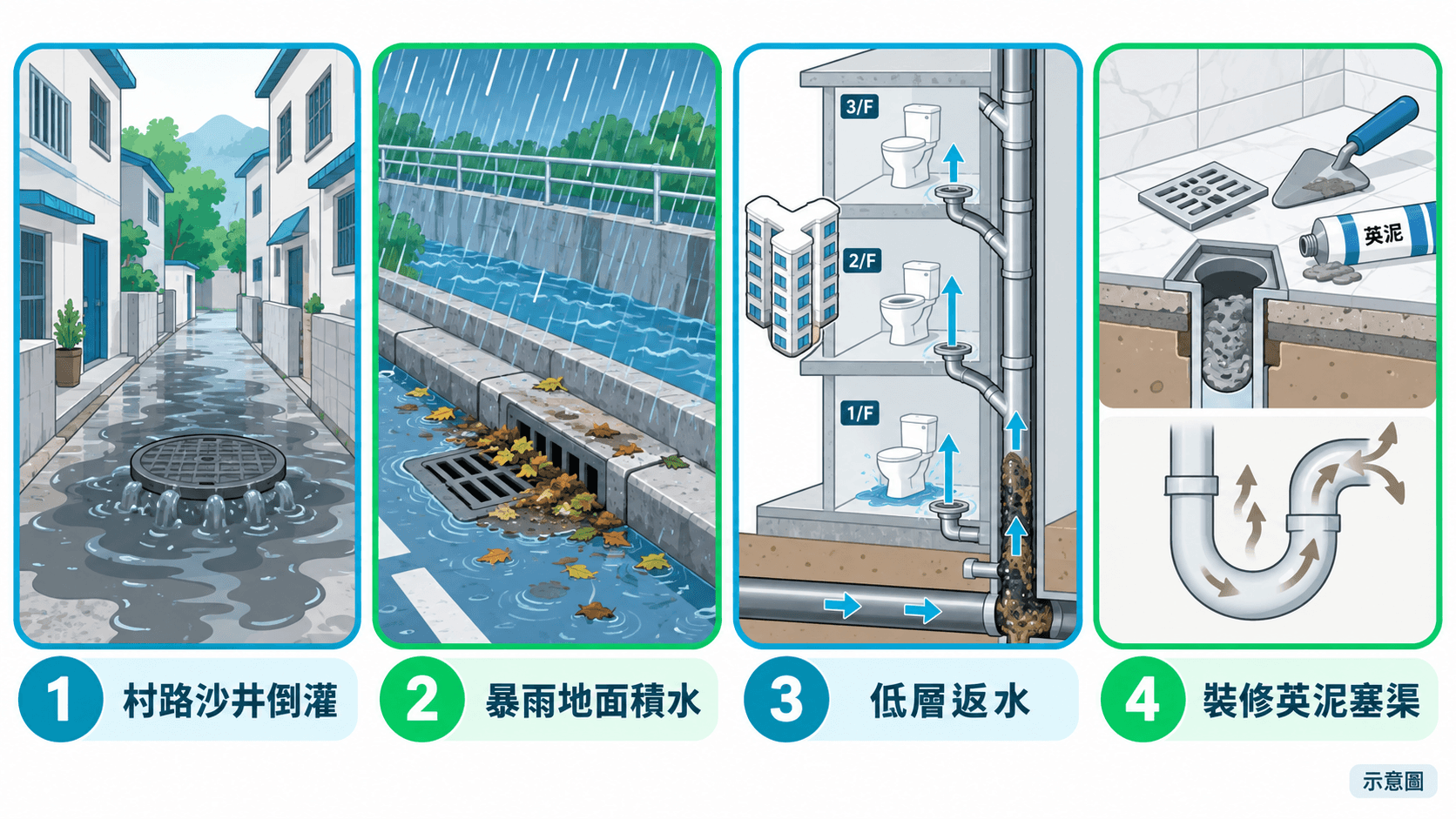
Choose the problem you are seeing to read the likely cause and next step.
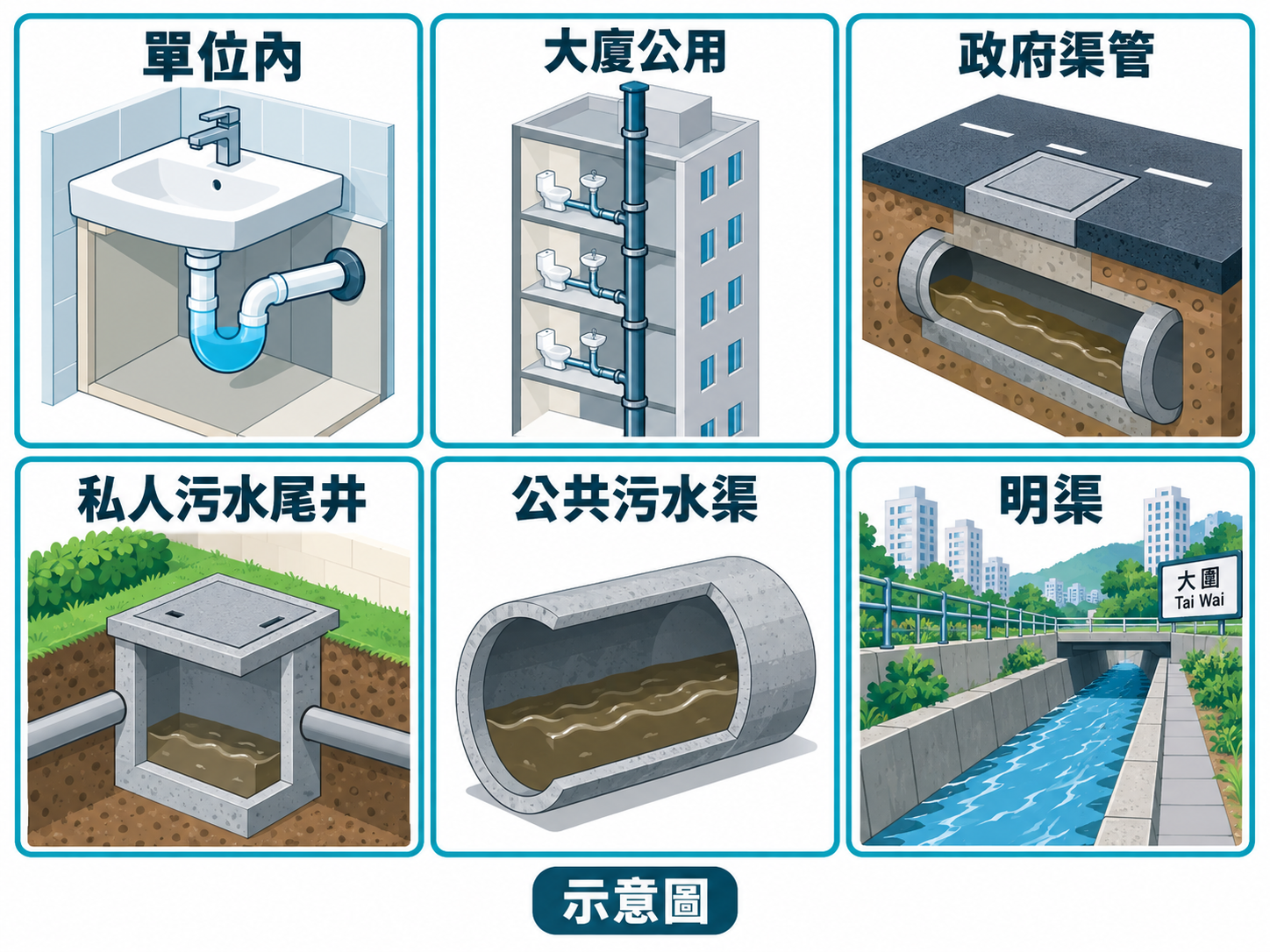
Sing Tao Headline reported on 10 September 2024 that in Sha Tin Tau Village, near Che Kung Temple Station in Tai Wai, manholes in the village footpaths were often choked and backing up; the village head said close to a hundred households were affected and a resident described it happening three or four times a month. The Drainage Services Department told the paper that a public sewerage system has been laid for the village, with sewage reaching the village's gravity system through private terminal manholes. It had received 15 requests or enquiries about choked sewerage facilities at the village that year up to September: 4 concerned facilities inside the village expansion area and were referred on, and of the remaining 11, nine were blockages in private terminal manholes while two were public sewerage facilities its own staff went out to clear. In other words, when a village manhole overflows, clearing it is usually the owner's own arrangement rather than a government call-out.
On 8 June 2026, during this year's first black rainstorm, Sing Tao Headline reported that the Observatory recorded over 100 mm of rain an hour in Sha Tin, and that one of the four flooding reports confirmed by the Drainage Services Department by 9pm that night was at Tsang Tai Uk, beside Pok Hong Estate east of Tai Wai in the same river valley. The Tai Wai Nullah runs through the town centre, and a Legislative Council press release of 24 June 2025 records DSD telling members that the revitalisation works would include improving the channel downstream to reduce the build-up of sediment. Inferring from the local topography, extreme short-duration rain loads the road gullies, the podium drains and the nullah at the same time, and surface flooding usually comes from leaves and silt blocking an inlet. If a toilet indoors is also slow in the same week, the two need not share a cause and should be checked separately.
The Housing Authority's Tenants Purchase Scheme list shows Hin Keng Estate's 8 blocks as Y2, Y3 and Y4 types, occupied from 1986 to 1988, with 5,876 flats offered for sale. As a general inference from building age, stacks in service for close to forty years collect grease and soap scale on their inner walls year after year. Inferring from the design, the flats in each wing of a Y-type block share one stack, so when its lower part narrows, low-floor toilets and floor drains are the first to rise. The Buildings Department's practice note APP-164 requires the sanitary fitments on the floor where a stack discharges to a manhole — and, in a building over 20 storeys, those on the floor above as well — to be given separate pipework discharging directly to a manhole. It covers only drainage plans submitted to the Building Authority for approval after 31 August 2021 and works commenced under the Minor Works Control System after that date, so 1980s designs do not have that arrangement. Since one block can hold both owners and tenants, say which you are when you report a fault.
Festival City has been handing over flats since 2011 and The Pavilia Farm since its first two phases were completed in 2022 and 2023. As a general inference from building age, the pipes in these flats are still new, and the usual trouble is what renovation leaves behind. The Buildings Department's drainage guideline treats a serious blockage by material such as cement separately from an ordinary one: a minor blockage can usually be cleared by a high-pressure water jet or by rodding, while a length set solid with cement may have to be opened up and replaced. Sealing every outlet during the fit-out is therefore far more practical than putting it right afterwards. The other thing to watch is that a new flat usually stands empty between completion and the day someone moves in, so the water seals in its floor-drain traps evaporate. Running water into every outlet before you move in, watching how fast it drains and whether it smells, costs far less than finding the fault after the fit-out. Altering a trap or an anti-syphonage pipe is minor works and needs a registered contractor.
Restaurants cluster in Tai Wai, and the stretch along Chik Chuen Street has long been known as the Tai Wai food street. The Environmental Protection Department advises checking a grease trap at least every three days, cleaning it as soon as grease builds up beyond three tenths of the liquid in the trap, and keeping a written record of each cleaning; it also states plainly that grease-trap waste must not be dumped into a toilet, a rainwater inlet, a nullah or a manhole. Inferring from how densely the restaurants sit here, a stale-oil smell in the flats above, or white congealed grease at a back-lane gully, usually points to a nearby kitchen's waste pipe or trap rather than to a trap in your own flat. For the restaurants themselves, the early warning is a sink branch pipe and a floor drain slowing down together.
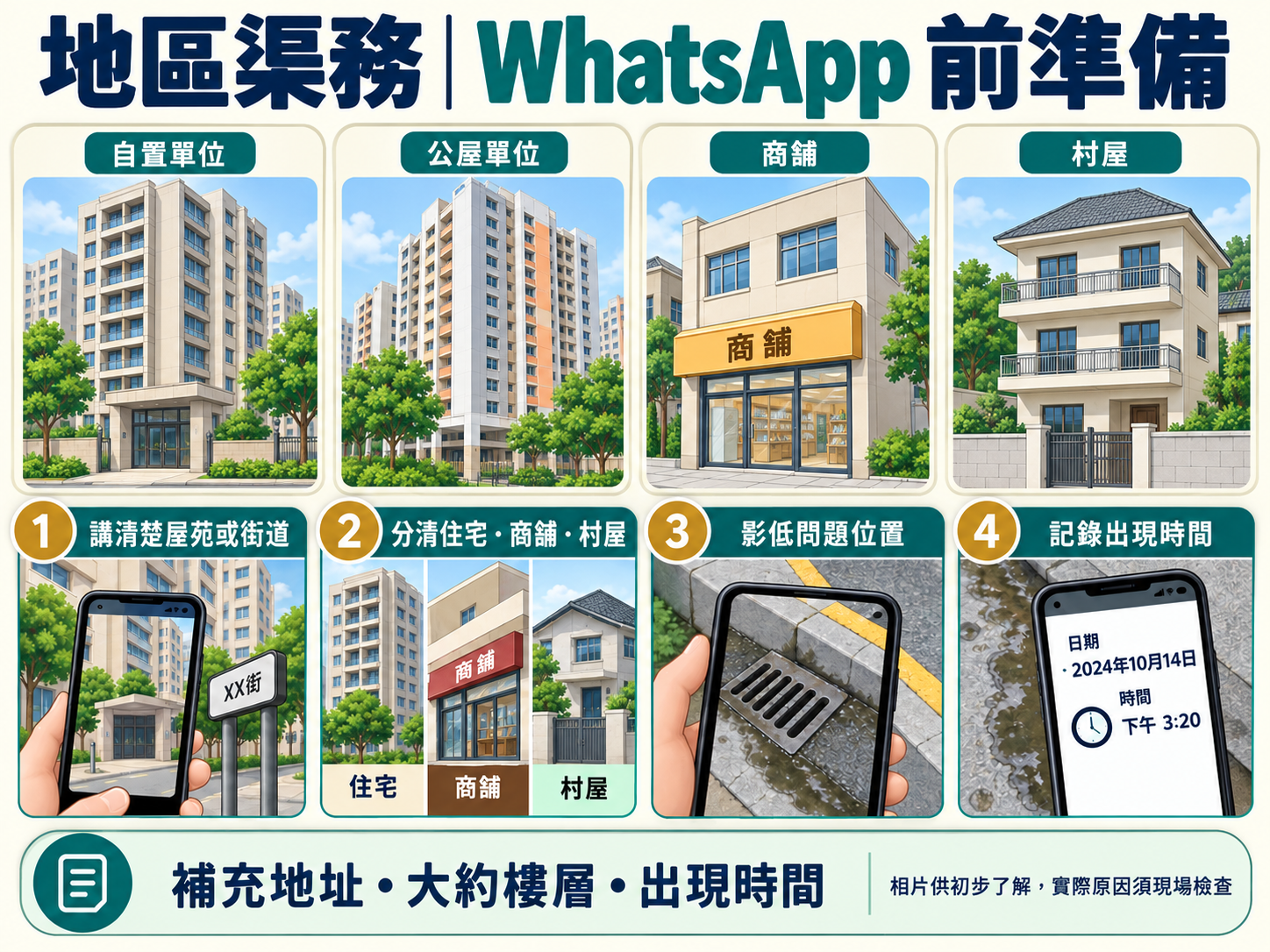
Photos or a short video on WhatsApp help us tell a single-fixture blockage from a shared-stack problem.
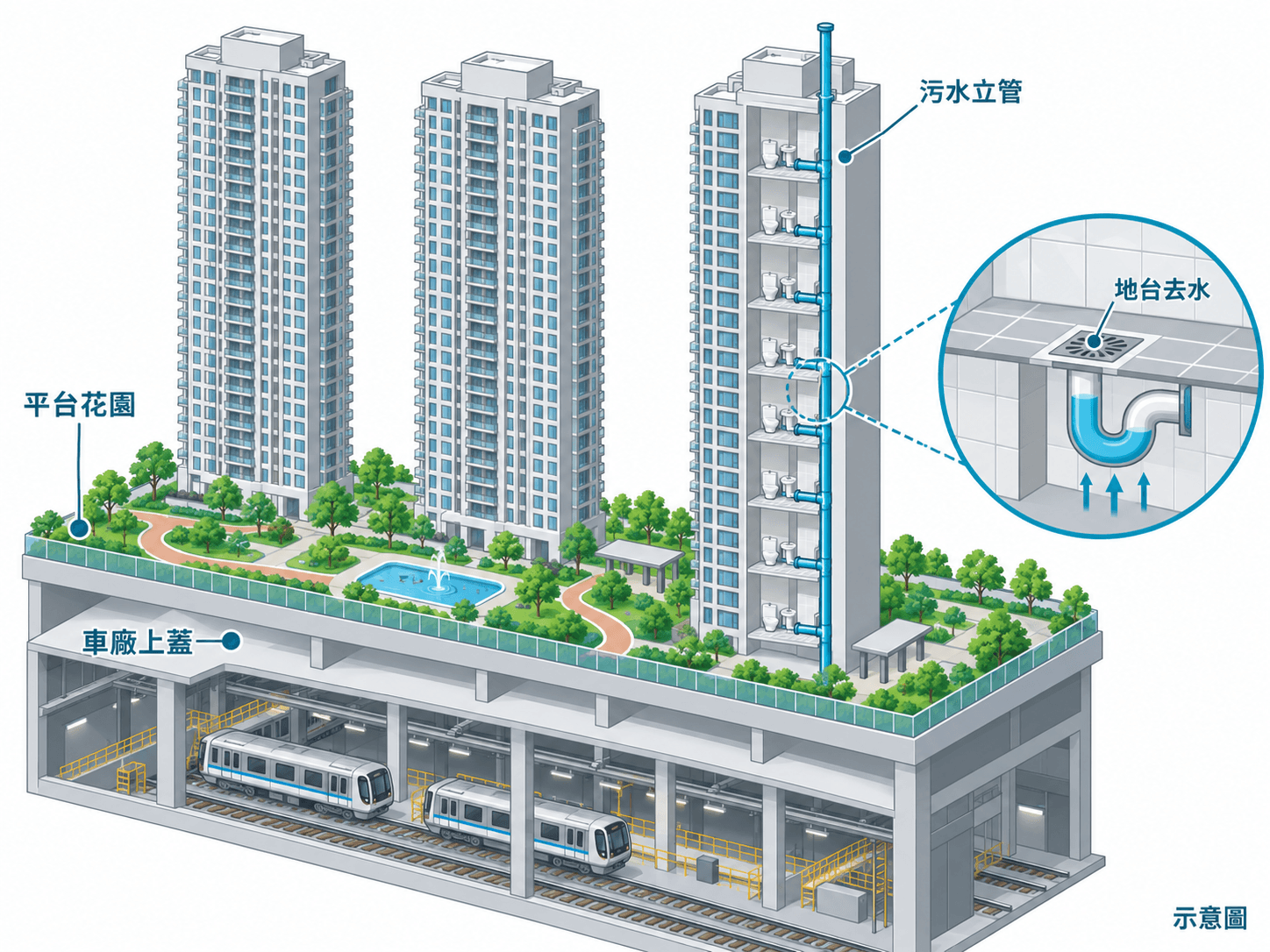
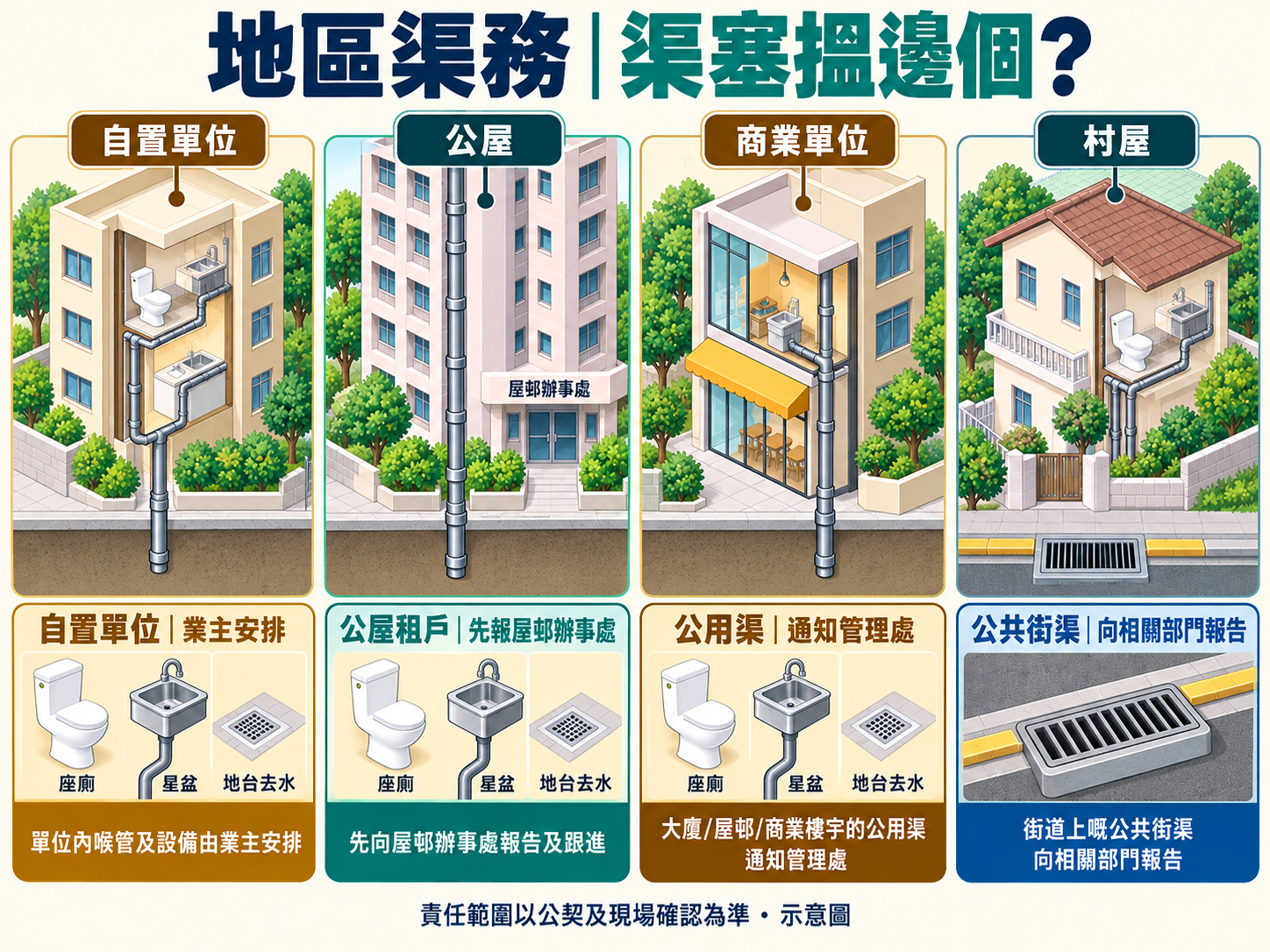
Tai Wai sits in the valley at the top of the Shing Mun River and grew with the new-town plan of the early 1980s. One community now holds the MTR-top developments of Festival City and The Pavilia Farm, the 1980s blocks of Hin Keng Estate and Mei Lam Estate, several subsidised-sale courts, and the village houses of Tai Wai Village, Tai Wai New Village, Kak Tin and Sha Tin Tau. One street here can take you from a village house to a tower on a railway deck, so when a drain blocks, a bathroom smells or a manhole overflows, the thing to settle first is which system governs your home — not what the symptom looks like. That is what decides whether you call the management office, the estate office, the Drainage Services Department or a contractor of your own.
Few Hong Kong neighbourhoods span so many building ages. Wikipedia records that Tai Wai Village, or Chik Chuen Wai, was founded in the second year of the Wanli reign (1574) and still has more than three hundred households and close to a thousand residents. Only in the early 1980s did new-town planning concentrate development on both sides of the valley: Mei Lam Estate was occupied in 1981, Sun Chui Estate in 1983 and Hin Keng Estate between 1986 and 1988, while Mei Tin Estate only followed in 2006. The town centre north of the station still mixes two- and three-storey village houses, five- and six-storey tenements and high-rise blocks, so one street away the pipe generation and the rules that govern it can be completely different.
The changes of the past fifteen years have concentrated over the railway. Festival City sits on top of the Tai Wai depot with 12 towers of 46 to 54 storeys, occupied in phases from 2011, and The Pavilia Farm sits over Tai Wai Station with 3,090 flats, its podium mall The Wai opening in July 2023. Festival City has a page of its own, listed below. The other private estates span the 1980s to the present; as a general inference from building age, a good share of them are medium-density blocks of the 1980s and 1990s, with pipework of the same generation as the public estates nearby. The subsidised-sale courts include Ka Tin Court, Ka Keng Court and Mei Shing Court, and public rental housing is concentrated around Mei Lam, Mei Tin and Sun Chui. Repairs inside the flat work differently in each of the three, and the responsibility section below takes them one at a time.
Hin Keng Estate is the unusual case. The Housing Authority's Tenants Purchase Scheme list shows 8 blocks of Y2, Y3 and Y4 types, occupied from 1986 to 1988, with 5,876 flats put up for sale, so a single block can hold both owners who bought and households who still rent. As a general inference from building age, the soil stacks and shared branch pipes of that generation have been in service for close to forty years. Inferring from the design, flats in a Y-type block are arranged around a central core and each group shares a stack, so when the lower part of a stack narrows, low-floor toilets and floor drains back up first. The village houses of Tai Wai Village, Kak Tin and Sha Tin Tau follow another system altogether: the government lays the public sewer, but the length from the house to its private terminal manhole is built and maintained at the owner's own cost.
Note: statements based on building age and type are general inferences, not findings for any particular flat.
A clear process from enquiry and assessment to an agreed scope of work
Tell us the drain problem and district and ask about available timing.
Confirm timing based on the district and schedule, then inspect the blockage or odour issue.
Explain the proposed approach, scope and price before agreed work begins.
Use suitable tools for the site conditions and agreed scope of work.
After the agreed work, test drainage and explain the observed result and any next steps.
PipeButler is an independent drain-service provider with no affiliation to the developer, owners' corporation, management company or Housing Department of the places above. Facts come from public sources checked on the dates shown; work on common drains or common parts follows the management office's and deed of mutual covenant's arrangements.
WhatsApp with the problem and district, and we will confirm available timing.