
Loading page…
Loading page…
Ma On Shan · HOS / PSPS
Private-sector participation HOS · 17 blocks, 3,942 flats · seawater flushing · owner-run repairs
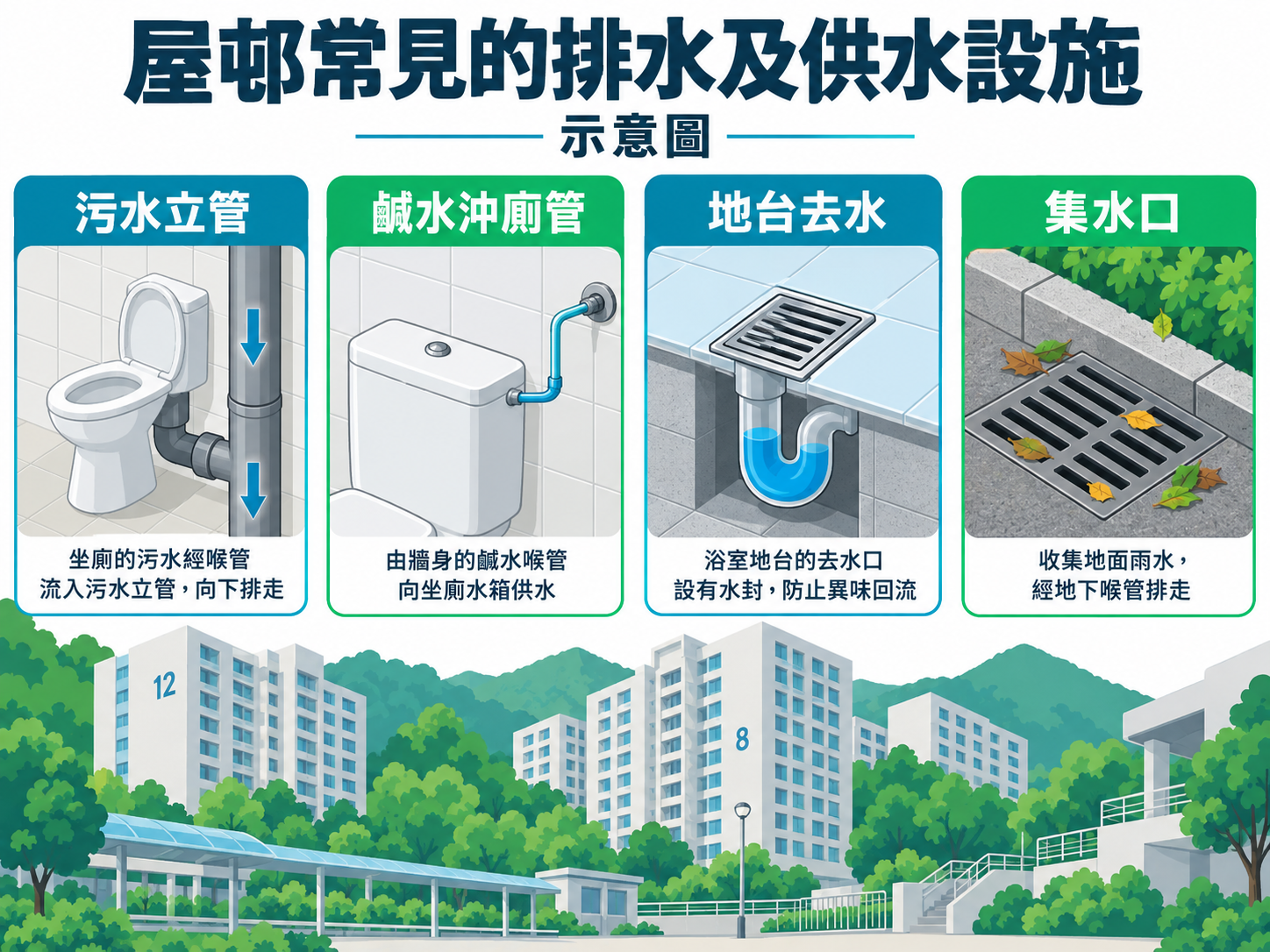
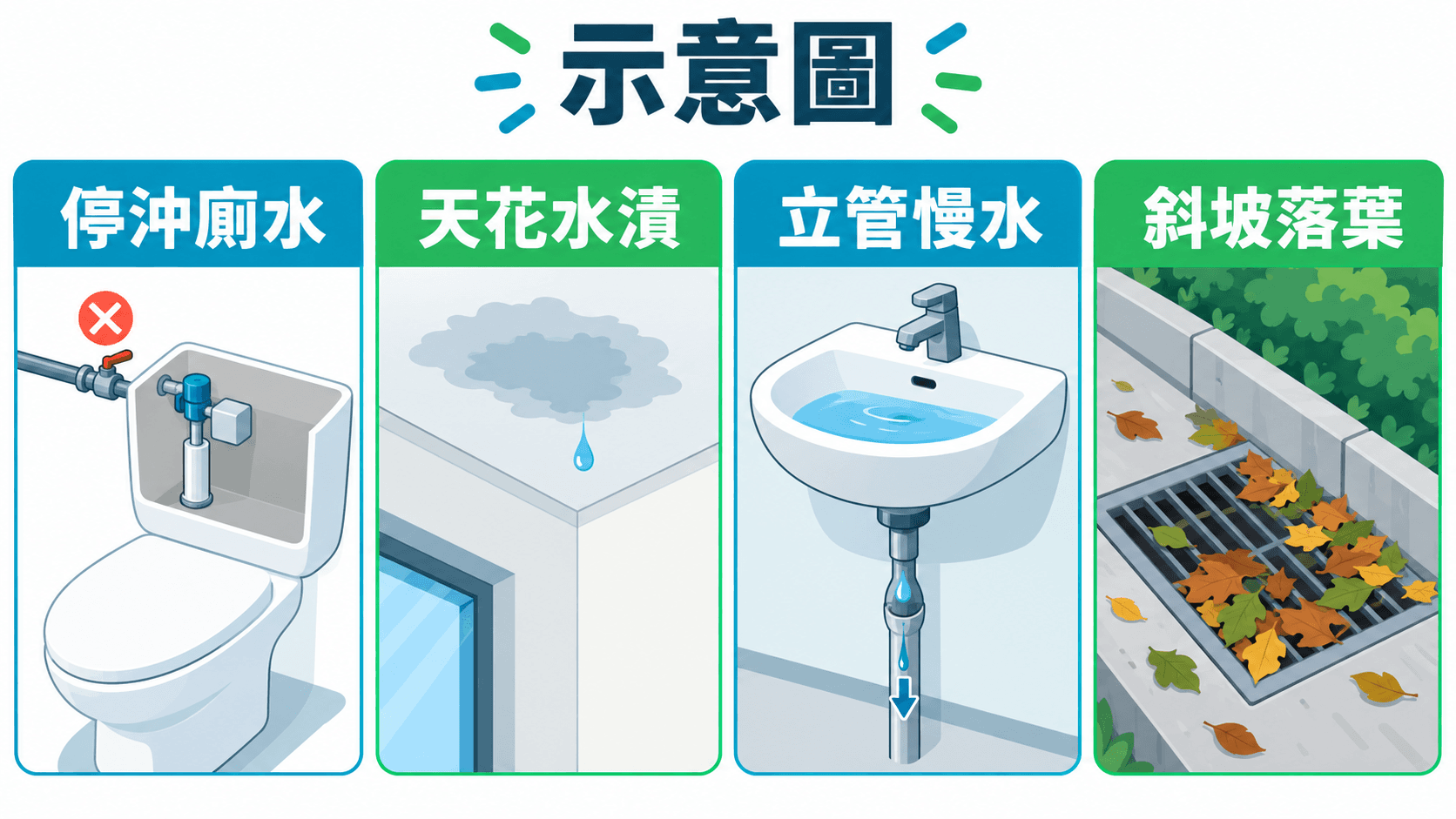
Choose the problem you are seeing to read the likely cause and next step.
According to a Sing Tao Headline report of 17 March 2026, a pipe burst on the pavement outside the estate on Hang Shun Street at about 5pm that day, and the Water Supplies Department confirmed it was a salt-water main supplying flushing water to Tai Shui Hang Village and Chevalier Garden, with repairs and restoration targeted for 6pm the following day. To be clear: a burst supply main is a water-supply incident, not a broken drain. But during a day or two without flushing water, people flush with a bucket or sparingly, and too little water fails to carry solids and paper away, so a blockage or slow drain can appear days later; the first draws after restoration may also bring rust and sediment. While supply is off, flush with one full bucket in a single pour and put paper in the bin; once supply returns, flush a few times with clean water and watch how quickly the toilet clears.
According to a Hong Kong 01 report of 29 November 2016, about half a metre square of concrete fell from a bathroom ceiling in one flat, exposing the reinforcement; the report quoted the district councillor for the area at the time, Michael Yung Ming-chau, saying that there were a number of similar cases in the estate, usually large areas of render on kitchen or bathroom ceilings, and that after Buildings Department staff had inspected, some cases were confirmed as neither an upstairs leak nor a pipe leak. So a stain does not automatically mean a broken drain above. In practice: dripping only after someone upstairs showers usually points to waterproofing; clean water dripping continuously even when the flat above uses none points to a supply pipe; a smell that worsens when water is used or a toilet is flushed upstairs is the pattern that fits a leaking drain. The department to approach and the way costs fall differ in each case, so photograph and time-stamp rather than guess.
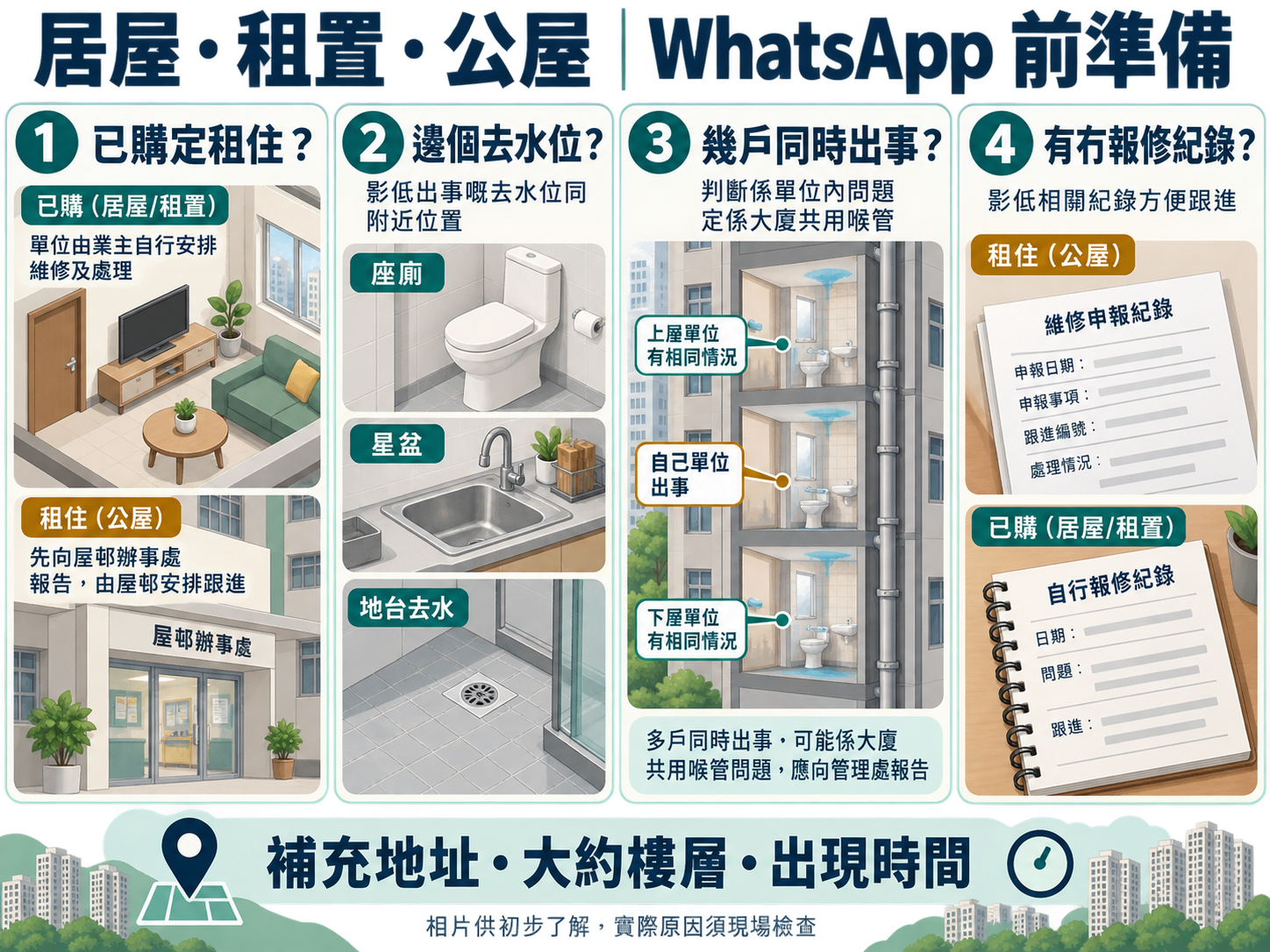
According to a Hong Kong 01 report of 11 December 2016, an owners' general meeting at Chevalier Garden voted on external-wall seepage, concrete spalling and roof waterproofing and rejected repairs "at this stage" by a large majority. Collective decisions like that affect when the shared pipework is inspected and renewed, but they do not change responsibility inside a flat: an owner can still have a technician check and clear their own branch pipes. As a general inference from building age, once scale builds up inside stacks completed in 1987–88, the low-floor flats in a vertical line are the first to see the water level rise and hear gurgling. The giveaway is scope: if only one fitment is slow, the branch pipe or trap is the likely cause; if the toilet, floor drain and kitchen sink slow together and it worsens while flats above use water, report a building drain to the management office rather than simply pouring drain cleaner in at home.
The Chinese Wikipedia records that Chevalier Garden was built on natural ground rather than reclamation, with the hillside and Tai Shui Hang Village behind it and the sea in front. Inferring from that setting, heavy rain washes leaves, fine sand and mud off the slope into the gullies along planters, footpaths and podiums first; if the water drains away slowly it stands on the surface and, at worst, runs into ground-floor shops or a car-park entrance. These are rainwater gullies and are not connected to the foul drain serving your toilet: surface ponding should be reported to the management office so the catchpits and gratings are cleared, whereas an indoor floor drain welling up with a drain smell belongs to the foul system. Walking the estate before and after the wet season and photographing where leaves collect makes follow-up much faster.
Flats here have saleable areas of 39–55 m² and small bathrooms, and, inferring from their age, most will have been renovated at least once over nearly forty years — typically replacing the bathtub with a shower, moving the washing-machine outlet to the kitchen or a worktop, or relocating the basin. By design, such changes alter the length and fall of the branch pipes: more joints and a flatter run make it easier for hair and soap scum to settle. Some jobs also fit a shallower trap or remove the anti-syphonage pipe, so a flush upstairs pulls the water seal out. The Buildings Department stresses that altering a drainage system must be done by a registered contractor under the Minor Works Control System. If the odour or slow draining began after a renovation, check the altered points first — it is usually quicker than working through every section from scratch.
Photos or a short video on WhatsApp help us tell a single-fixture blockage from a shared-stack problem.
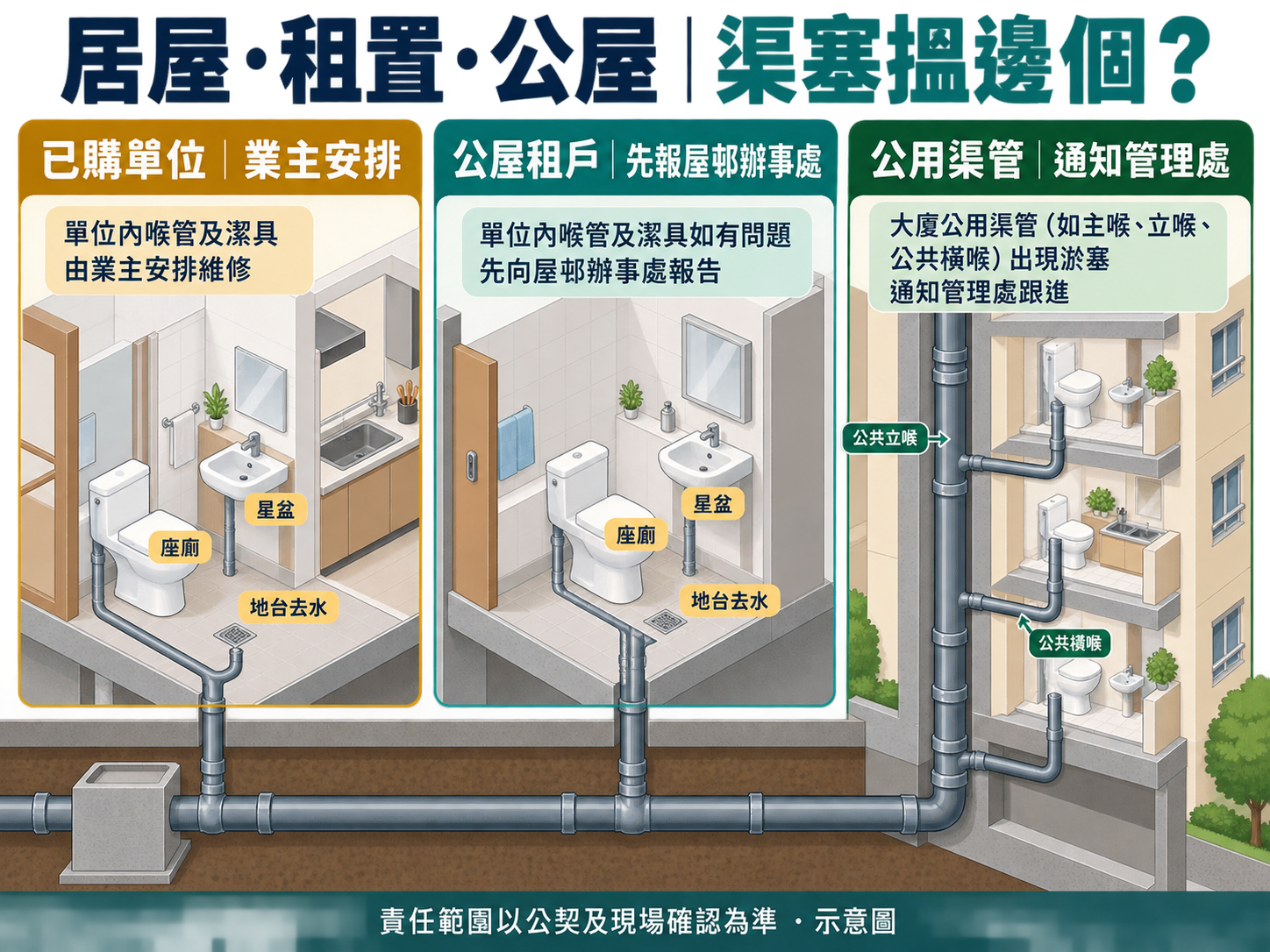
Chevalier Garden stands at 2 Hang Shun Street, Tai Shui Hang, Ma On Shan. It is a Home Ownership Scheme court built under the private-sector participation scheme by a joint venture of Chevalier (Hong Kong) and Kokudo Kaihatsu of Japan, with 17 blocks and 3,942 flats in two phases, occupied in 1987 according to the Chinese Wikipedia. The biggest difference from public rental housing is that there is no Housing Department call-out: the toilet, basin, kitchen sink and floor drains inside a flat are the owner's to arrange, while the timing of any inspection or renewal of the shared pipework is decided by the owners' corporation. So when something drains slowly, smells, or leaves a stain on a ceiling, the first step is not to break open concrete but to work out whether the fault lies inside the flat, in the shared stack, or in the flat above.
Chevalier Garden was the Chevalier Group's first public-housing project; the same group later built Charming Garden in Mong Kok and Saddle Ridge Garden in Ma On Shan, among others. The Chinese Wikipedia records occupation in 1987, the English Wikipedia says the 17 blocks were built between 1987 and 1988, and the Housing Authority's own record gives the intake year as 1988; the two phases were sold under HOS Phase 8C and Phase 9B, with 10 blocks and 2,010 flats in Phase 1 and seven blocks and 1,932 flats in Phase 2. For residents the meaningful difference is not the phase but the tenure: these are sold HOS flats, with no Housing Department charged call-out as in public rental housing, so every drain inside a flat is the owner's decision and the owner's bill.
Saleable areas run from 39 to 55 m², so bathrooms and kitchens are small and the floor drain sits close to the exhaust fan — once the water seal dries out the smell arrives quickly. As a general inference from building age, the original soil and branch pipes of blocks completed in 1987–88 are typically cast iron or early plastic; the Buildings Department's practice note APP-133 records that cast iron pipes in some existing buildings have shown premature rusting, leakage and corroded fixing brackets, and inferring from that age, scale on the inside wall narrows the effective bore year by year. Add the Water Supplies Department's confirmation that this area flushes with seawater, and by design the stretch behind the WC and the horizontal run are likely to scale up more than they would on fresh water. Flats in one vertical line share a stack, so when its lower section narrows, the rising water level usually appears first in a low-floor flat rather than in the flat that caused it.
The ground matters too. The Chinese Wikipedia notes the estate was built on natural ground rather than reclamation, with the hillside and Tai Shui Hang Village behind it and the sea in front; in heavy rain, leaves and silt washed off the slope collect in ground-level gullies and podium outlets, and clearing those is part of maintaining the common parts. As for when the shared pipework gets overhauled: according to a Hong Kong 01 report of 11 December 2016, the estate held an owners' general meeting that day on whether to join the Urban Renewal Authority's Smart Tender pilot scheme and whether to appoint contractors for external-wall seepage, concrete spalling and roof waterproofing; more than 1,300 owners attended and the meeting voted by a large majority against repairs "at this stage". In other words, the pace of common-part works is set collectively, and until such works begin, slow drains, odour and leaks inside a flat still have to be dealt with flat by flat — which is exactly where residents here differ from those in public rental or Tenants Purchase Scheme estates.
Note: statements based on building age and type are general inferences, not findings for any particular flat.
A clear process from enquiry and assessment to an agreed scope of work
Tell us the drain problem and district and ask about available timing.
Confirm timing based on the district and schedule, then inspect the blockage or odour issue.
Explain the proposed approach, scope and price before agreed work begins.
Use suitable tools for the site conditions and agreed scope of work.
After the agreed work, test drainage and explain the observed result and any next steps.
PipeButler is an independent drain-service provider with no affiliation to the developer, owners' corporation, management company or Housing Department of the places above. Facts come from public sources checked on the dates shown; work on common drains or common parts follows the management office's and deed of mutual covenant's arrangements.
WhatsApp with the problem and district, and we will confirm available timing.