
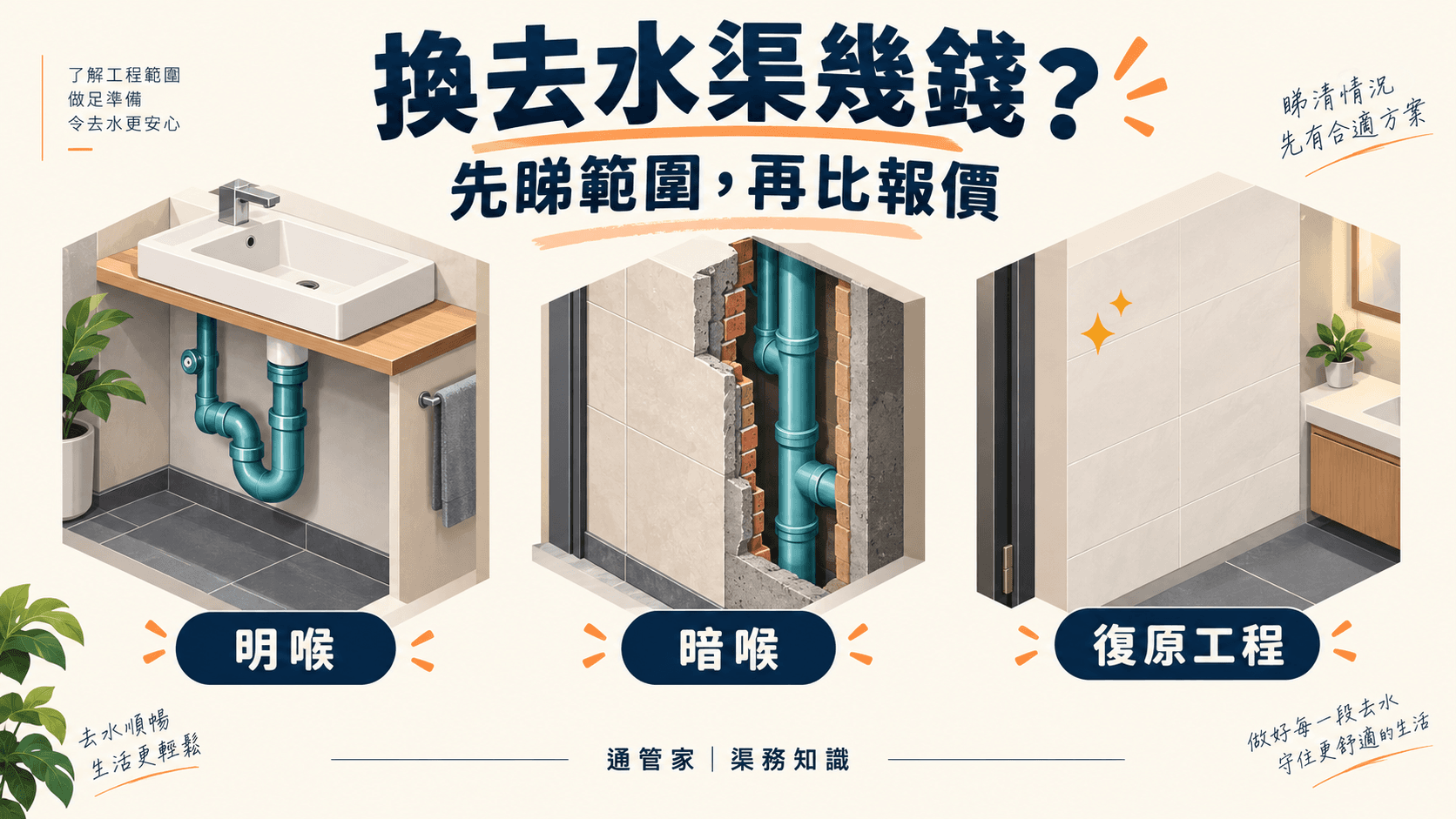
Replacing a drain pipe can mean very different work. It may involve one accessible section beneath a cabinet, or opening walls, floor waterproofing, shared drainage and reinstatement. First establish which section needs attention, why replacement is proposed, how it can be reached and the required finished condition.
This article covers drainage from basins, kitchen sinks, sanitary fixtures and related waste pipes. Fresh-water supply, flushing-water supply and supply-pressure tests are different work. Slow flow alone does not establish a need to replace an entire pipe: first assess whether unblocking or investigation is appropriate.
Is replacement necessary, or does the cause need investigation?
Deposits, loose joints, ageing seals, local cracks and deformation of a whole section have different remedies. Ask for the location, visible evidence and proposed options. A telephone assertion that every pipe in an old building needs replacement is insufficient. Concealed sections may not be fully assessable in one visit; separate established work from unresolved questions.
- Mainly deposits: consider whether clearing or cleaning is sufficient.
- A local connection fault: ask whether a fitting or short section alone needs replacement.
- Damage or displacement: establish the affected length, supports and adjoining connections before comparing local and wider repairs.
- Recurring backflow of uncertain origin: consider CCTV inspection, recognising its access and visibility limits.
Exposed, concealed and external pipes need different planning
Exposed pipes: accessible does not mean simple
Visible or under-cabinet pipes are often easier to inspect, but cabinet removal, equipment movement, cramped access, fitting dimensions, supports and existing joints still matter. Clarify whether traps, seals, brackets and waste removal are included in the work.
Concealed pipes: the complete condition may emerge only after opening
Pipes inside walls, beneath floors or above false ceilings may need locating, openings, protection and reinstatement. Agree a change-control process for additional damage: photographs, a defined revised scope and approval before continuing. A vague reference to actual site conditions is not enough.
External and shared pipes: establish management and access requirements
External-wall work may require arrangements for working at height, use of common areas and management coordination. One resident may not be able to authorise it alone. Identify the contractors, professionals and procedures required for the actual work rather than treating a shared building drain like a short indoor pipe.
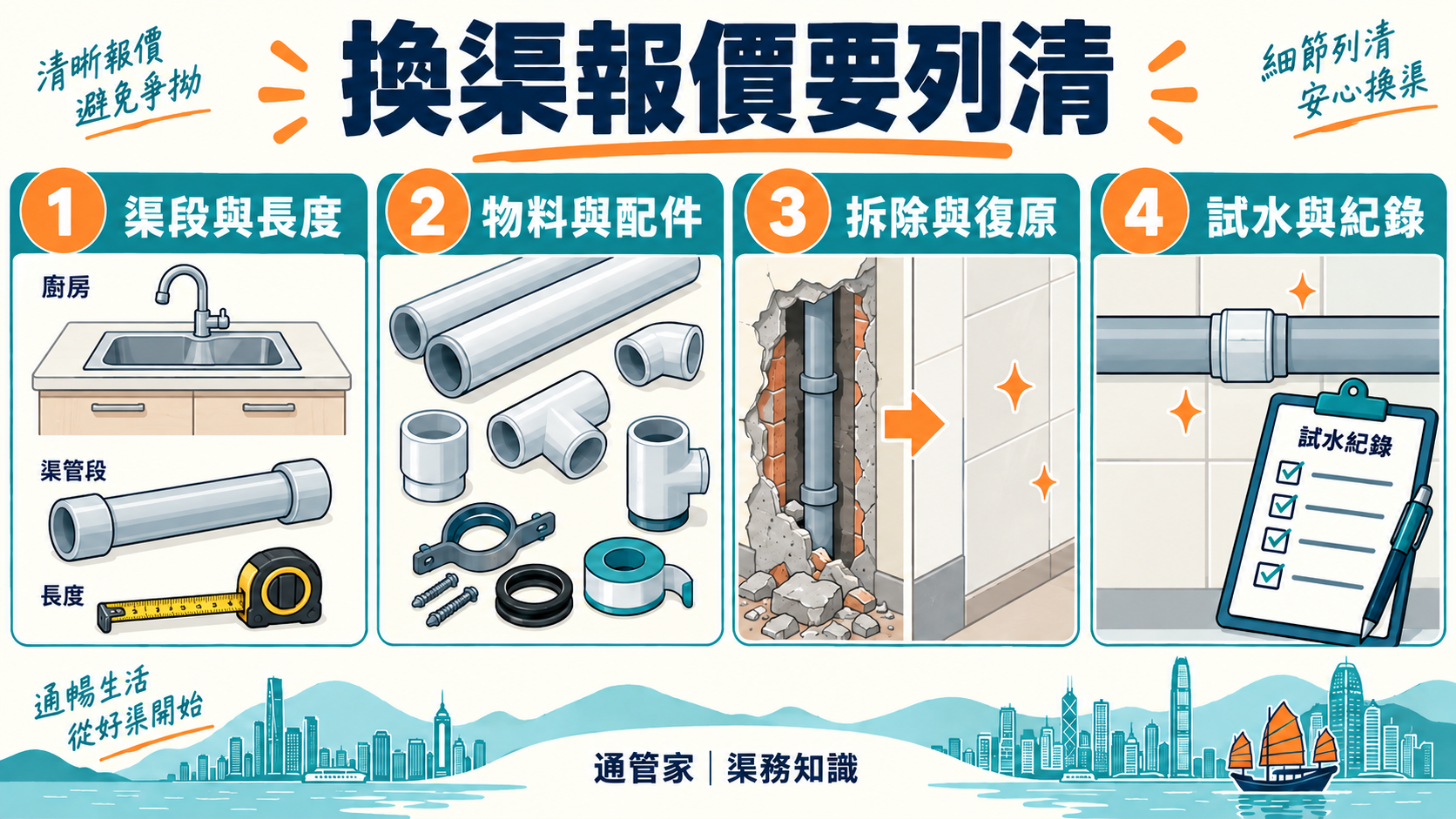
Eight items to define in a replacement proposal
- Pipe section: start, end, approximate length, diameter and connected fixtures, ideally marked on photographs.
- Reason for work: confirmed defects separately from uninspected areas.
- Materials and fittings: specifications and quantities for pipes, joints, traps, supports and seals.
- Access work: cabinet removal, wall openings, tile removal and ceiling access.
- Reinstatement: who handles plaster, paint, tiles and waterproofing and supplies materials; old tiles may not have an exact match.
- Site arrangements: affected fixtures, unavailable periods, waste removal and protection.
- Acceptance: agreed fixture flow tests, joint checks, photographs and untested limitations.
- Approvals and follow-up: authorisation stages, changes and warranty inclusions and exclusions.
Compare proposals on an equal scope
One proposal may cover only a short cabinet pipe and flow test; another may also include cabinet removal, a new trap, reinstatement and waste removal. Compare them against the eight items and request missing details before deciding. This is a planning example, not a PipeButler case study.
The Consumer Council's drainage-service guidance encourages clarity about additional work, risks and warranty responsibilities. A document saying warranty included does not explain which subsequent problems will receive follow-up.
Completion checks beyond water draining away
Agree a test method suited to the work. Observe repaired connections, cabinet undersides and nearby areas for leaks, recording which fixtures were tested. One normal flow test cannot guarantee the condition of every concealed pipe. Record limitations where floor voids or adjacent sections could not be observed.
- Retain photographs before work, after opening, before closing and at completion.
- Confirm that inspection points, traps and maintainable joints remain accessible.
- List outstanding reinstatement and agreed completion dates.
- Keep the work description, fitting information, documentation and follow-up contact.
Frequently asked questions
Can photographs establish the whole work scope?
They help assess visible sections. Concealed routes, damage revealed after opening and common-area arrangements may need a site visit. Identify confirmed and provisional items clearly.
Must concealed pipes be rerouted as exposed pipes?
No. Compare feasible routes, access, appearance, disruption and applicable requirements. Convenience alone does not justify changing the drainage system.
Is replacing a trap the same as replacing a drain?
No. A trap is one component and its replacement may not address downstream cracks or restrictions. Specify the actual replacement location.
What should I ask if all pipes are said to need replacement?
Request the inspection evidence, limits of local repair, proposed scope and alternatives. Obtain another site assessment if needed.
Who is responsible for shared or rented-property pipe work?
Check management documents, the lease, pipe location and cause. Outlet location alone cannot determine responsibility. Coordinate with management and relevant owners before starting.
Arrange an assessment
Prepare photographs of the problem, existing pipes and proposed access points. Send the district and fault records through the PipeButler contact page and confirm the available replacement and installation scope. Electrical work, specialist design and statutory procedures require the relevant professionals.
Sources
Buildings Department: healthy drainage; Consumer Council: drainage-service guidance. Prepared in September 2026.